Family History Questions That Open Real Conversations with Your Relatives
Most of us know our grandparents' birthdays, hometowns, and job titles. But do we know what they felt on their first day of school, how they met their closest friend, or what kept them hopeful during hard years? The best family history questions are not the ones that fill in a family tree—they are the ones that let you sit beside a relative and see their life through their eyes. Whether you have an afternoon or a week, this guide will help you ask the kind of questions that turn a simple chat into a lasting record of your family's history.
Why the Right Questions Matter
When you ask a relative about their past, you are doing more than collecting facts. You are sending a message: Your life matters to me. Older relatives especially appreciate being listened to in a focused, unhurried way. A good interview gives them a chance to reflect, to tell stories they have not told in years, and to connect with you on a deeper level.
The challenge is that many well-meaning interviews fall flat because the questions are too broad ("Tell me about your childhood") or too narrow ("What year did you get married?"). The first produces a one-sentence answer. The second produces a date with no story. The sweet spot is a question that is specific enough to jog memory, yet open enough to invite storytelling.
Getting Started: Setting the Scene
Before you jump into your list of family history questions, create a comfortable setting. Choose a quiet place with few distractions. Have your phone or recorder ready, but do not let it become the center of attention. If your relative is hesitant about being recorded, start by just taking notes. You can always ask permission later.
Begin with a simple statement: "I've been thinking a lot about our family's story, and I would love to hear some of your memories." Then ease in with a light question about something you know they enjoy—a favorite meal, a beloved pet, or a place they love. This helps everyone relax.
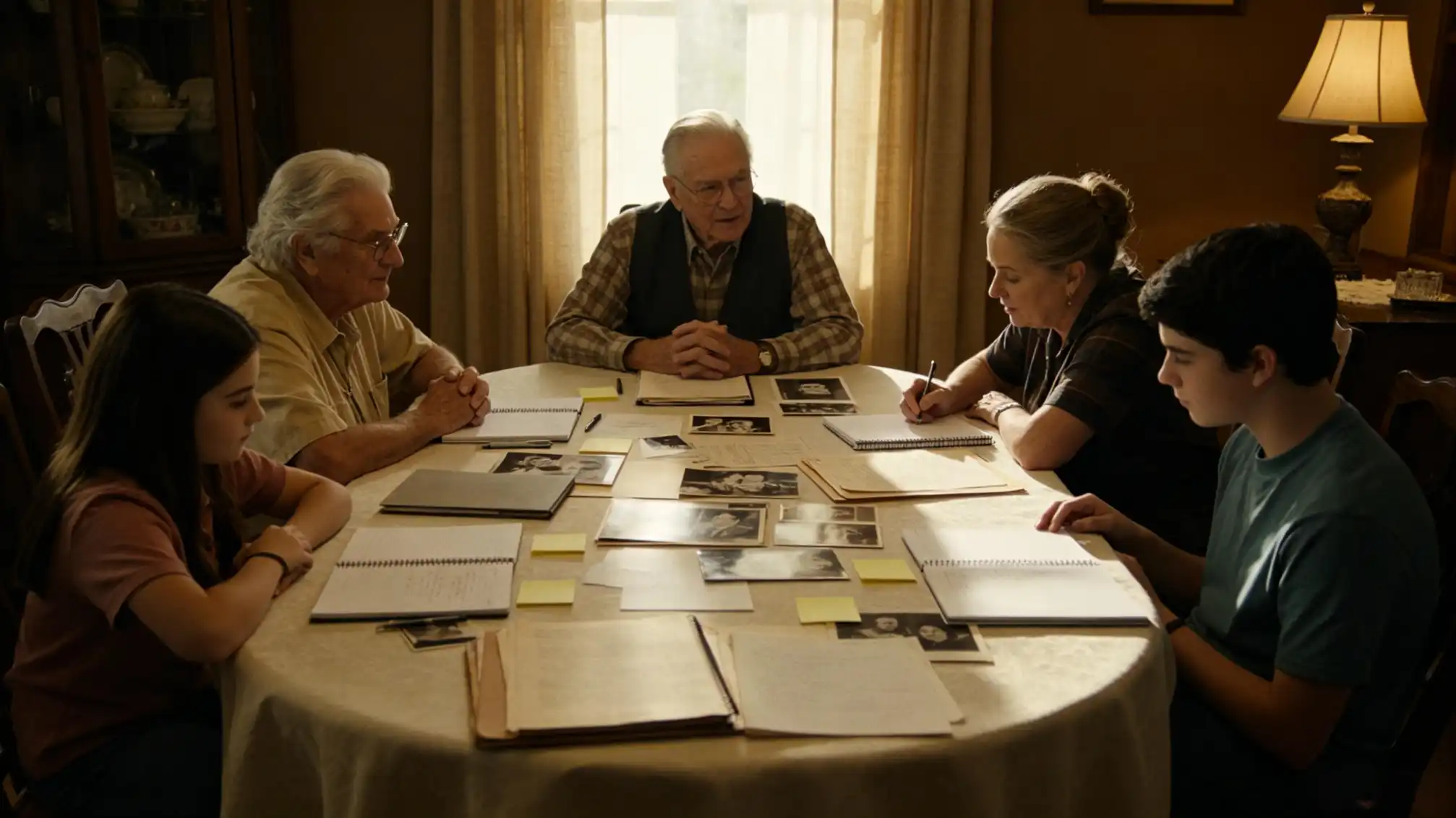
Family History Questions for Childhood and Growing Up
These questions help you picture your relative as a child and understand the world that shaped them.
- What is your earliest memory?
- What did your bedroom look like when you were ten?
- What sound or smell instantly takes you back to your childhood home?
- What was a typical weekday like in your house when you were young?
- Who was your favorite grown-up when you were a child, and why?
- What did you and your friends do for fun that kids today might not understand?
- What was school like in your town? What was your favorite subject and why?
- What were some of the rules you had to follow at home?
- Did you ever get into trouble? What happened?
These kinds of questions often reveal surprising details. A simple question about a bedroom might lead to a story about sharing a bed with three siblings, or the name of the faraway city on a wallpaper pattern. Let the conversation wander. The real value of family history questions is not in the answer itself but in the door it opens.
Questions About Parents, Grandparents, and Family Traditions
Relatives are the bridge between you and the generations before you. These questions invite them to share what they remember about the people who raised them.
- What kind of person was your mother? What do you think she was like before she became a parent?
- What did your father do for work? What did he enjoy doing in his free time?
- What traditions did your family celebrate during holidays?
- What did your grandparents teach you, either on purpose or just by example?
- Was there a family saying or phrase that you hear in your head from time to time?
- What do you know about your grandparents' early life?
- Who was the relative you were closest to, and what did they mean to you?
- What family recipe or dish do you remember most from your childhood?
If your relative does not know the answer to questions about older generations, ask them to guess or imagine. Sometimes the most interesting family history comes from a thoughtful guess: "I never knew my grandfather's full name, but I remember he always wore a hat." That memory is still worth recording.
Questions About Love, Work, and Major Life Changes
Big life events are natural milestones, but the stories around them are what make history personal. These family history questions help relatives open up about the turning points of their lives.
- How did you meet your partner? What did you think of them at first?
- What was your first job? How did you get it?
- What did you dream about doing when you were in your twenties?
- What was the hardest decision you ever had to make?
- What were you most afraid of when you were young, and how did you face it?
- Was there a moment when you realized your life was going to be very different from what you expected?
- What is one thing you would tell your younger self?
These questions are more emotional, so always follow your relative's lead. If they get quiet or change the subject, do not push. The goal is to create a safe space, not to force a confession. Sometimes the best answer comes later, after they have thought about it for a while.
Practical Tips for a Comfortable Interview
You do not need to be a professional journalist to record your family history. You just need to listen well. Here are some practical suggestions to keep in mind:
- Ask one question at a time. Avoid piling two or three questions together.
- Pause more than you normally would. Give your relative time to think before they speak.
- Use follow-up phrases like "What happened next?" "How did that feel?" or "Why do you think you remember that so clearly?"
- Do not correct or interrupt. If they get a date wrong, let the story continue. You can check facts later.
- Keep the session short. Forty-five minutes to an hour is plenty. Stop while the energy is still good.
- End with gratitude. Thank your relative for sharing their time and memories with you.
As you collect these stories, you may want to share them with family members near and far. A great way to bring everyone together is to visit the family storytelling page at FamilyLove Stories and see how others are preserving their family narratives. You can also use it as a source of inspiration for your own recording project.