Why an Online Family Tree Is the Best Tool for Busy Family Historians
Few things bring a family closer than a shared story. But the old way of preserving family history—a cardboard box of photographs, a hand-written genealogy chart, and one relative who knows every branch—usually ends with the same problem: information gets scattered, memories fade, and no one knows where to look.
An online family tree changes that. It does not simply store names and dates; it turns family history into a living document that everyone can see, update, and enjoy. If you are comparing online family tree tools, you already know that there are many options. The challenge is choosing one that matches how your family actually works.
What an Online Family Tree Should Do for You
A good family tree platform acts like a shared workspace. It gives you a clear view of your whole family structure, from grandparents to cousins, while also supporting deeper layers of evidence. When you upload a photo, attach a census record, or add a note about a wedding story, that information stays connected to the right person.
In the past, genealogists had to manage separate charts, paper files, and photo albums. A digital family tree combines all of those into one system. You can zoom out to see the full tree, then zoom in to read the digitized marriage certificate of your great-great-grandparents.
The most useful platforms make it easy to:
- Keep a clean, visual tree that can be viewed as a chart, a map, or a timeline.
- Attach images, documents, audio clips, and source citations to each person.
- Invite family members with different levels of permission so everyone can contribute safely.
- Export and back up your data so your work is never locked inside one website.
- Discover record hints from census, birth, marriage, and death collections.
When you compare online family tree tools, pay attention to these fundamentals before looking at flashy extras. A tool that supports source citations, multimedia, and collaboration will serve your family much better than one that only builds a basic chart.
Collaboration Turns a Tree into a Family Project
Most genealogy mistakes happen because one person has all the answers and no one else can verify them. With an online family tree, the entire family can be part of the research process. An aunt in another city can correct a birthdate. A cousin can add a photo of a grandfather she recently digitized. A grandparent can leave a voice note that would otherwise be lost.
This collaborative layer is what separates a digital family tree from an old spreadsheet. Instead of hunting through email threads, your family history has one central place. You can comment on changes, ask questions, and watch the tree grow in real time.
For families spread across more than one country, collaboration is even more valuable. An online family tree becomes the shared bridge between relatives who rarely see each other. It gives younger members a reason to ask questions and older members a comfortable place to share memories before they fade.
For many families, the best way to begin is not with a giant database but with the people they know best. A shared family page—like the one at FamilyLove Family—can serve as a warm starting point. It gives you a space to collect the basics, talk about shared memories, and decide how much detail you want to put into a dedicated genealogy platform.
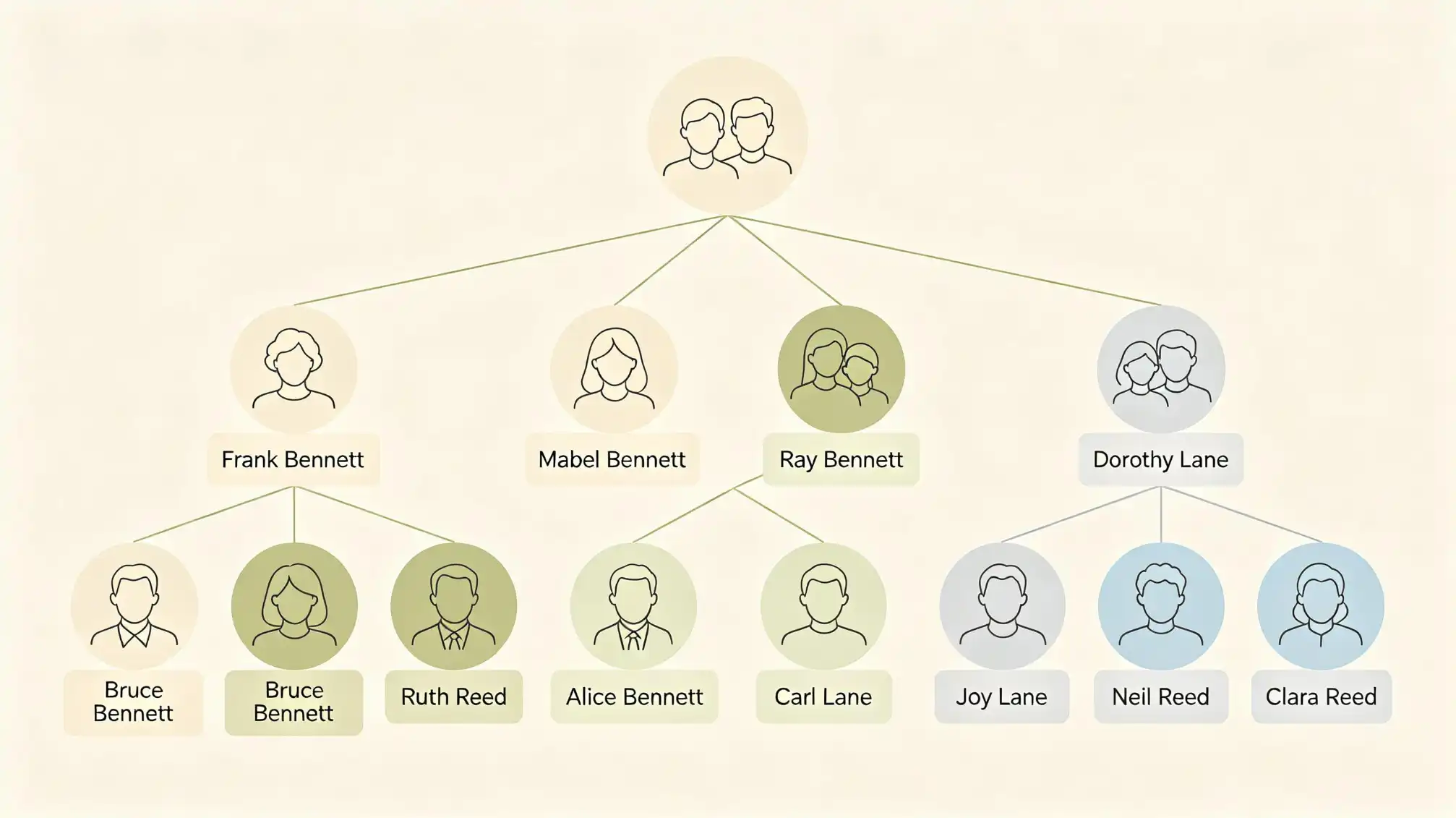
Privacy and Control: Why You Need Clear Boundaries
One major concern when comparing online family tree websites is privacy. Some platforms make your information public by default to drive record matching. That can be useful, but only if you understand who can see what. The best tools let you set granular privacy controls. You can keep living people private, limit what is shown in search results, and control whether trusted relatives can edit profiles.
Look for a platform with an obvious privacy dashboard. If you cannot easily see how your data is stored and shared, choose another provider. Your family's names, birth dates, and personal stories deserve careful treatment. You should also check whether the service lets you download a GEDCOM file or another backup format. That becomes your insurance policy if the website ever changes or shuts down.
Accessibility Makes Family History Continue
A paper family tree is fragile. One move, one damp basement, or one lost binder can erase years of work. An online family tree, by comparison, is accessible on a phone, tablet, or laptop wherever you go. Easy access means family history no longer lives in a drawer.
It also means the youngest members of the family can become involved. A teen who loves photography can upload scans. A younger child can listen to a recorded interview with a great-grandparent. When family history is easy to reach, it stays relevant for the next generation.
Since online tools are automatically updated, you don't have to wait for a family reunion to share a new discovery. You can post a photo or a source record from a cemetery visit, and your relatives can respond immediately.
Research Tools That Keep You Honest
Family history is not just about filling in names. It is about verifying relationships and sources. Good genealogy tools will suggest potential records already connected to your ancestors. They will also remind you when two relatives appear under similar names, helping you avoid duplicates and false connections.
Use these tools wisely. Instead of accepting a hint without review, look at the original record when possible. A hint is only a starting point. The real benefit of an online family tree is that it keeps all your evidence attached to the right profile, so you can retrace your steps later.
Some platforms also create timelines and maps from the locations in your tree. Those visual views can reveal migration patterns that are easy to miss in a list. When you see that three generations moved from Ohio to Texas together, you begin asking better questions about why.
How to Compare Online Family Tree Tools Without Getting Stuck
With so many genealogy websites available, you do not need to choose permanently right away. Begin by testing two or three services with a small branch of your family. Add about ten people, attach a few photos, and invite a relative to edit. This test will expose the user experience quickly.
Consider the following when making your comparison:
- Is the free tier truly useful, or does the core feature disappear behind a paywall?
- Can you import and export your family tree in GEDCOM format?
- Does the tool provide easy mobile access through an app or responsive site?
- Are source citations treated as essential or optional?
- Is there a clear, simple way to share the tree with relatives who are not tech-savvy?
Always read recent user reviews in family history forums. Online family tree tools differ in how they handle user experience, record databases, and long-term preservation. The right choice is the one that your family will actually keep using.
At the same time, remember that a tool is only as good as the family participation it encourages. A simple platform with several active members can preserve more than a complex platform that only one person touches.