Why Family Photos Deserve a Second Life
Every old photograph is a small doorway into your family history. A faded portrait, a wedding crowd, a child holding a birthday cake: these images carry the faces, places, and moods of the people who came before you. Yet most families keep these treasures in shoeboxes and drawers, where moisture and time slowly erase them. The good news is that you do not need a museum budget or professional training to protect them. With a few thoughtful steps, you can preserve old family photos for family history in a way that feels personal, manageable, and even joyful.
Family photos are also proof that life goes on. When you look at your grandparents’ wedding photo or your mother’s school portrait, you see the community they belonged to and the ordinary moments that shaped them. By caring for these images, you are making a quiet promise to remember them. That is what makes this project different from simple spring cleaning.
Start With What You Have
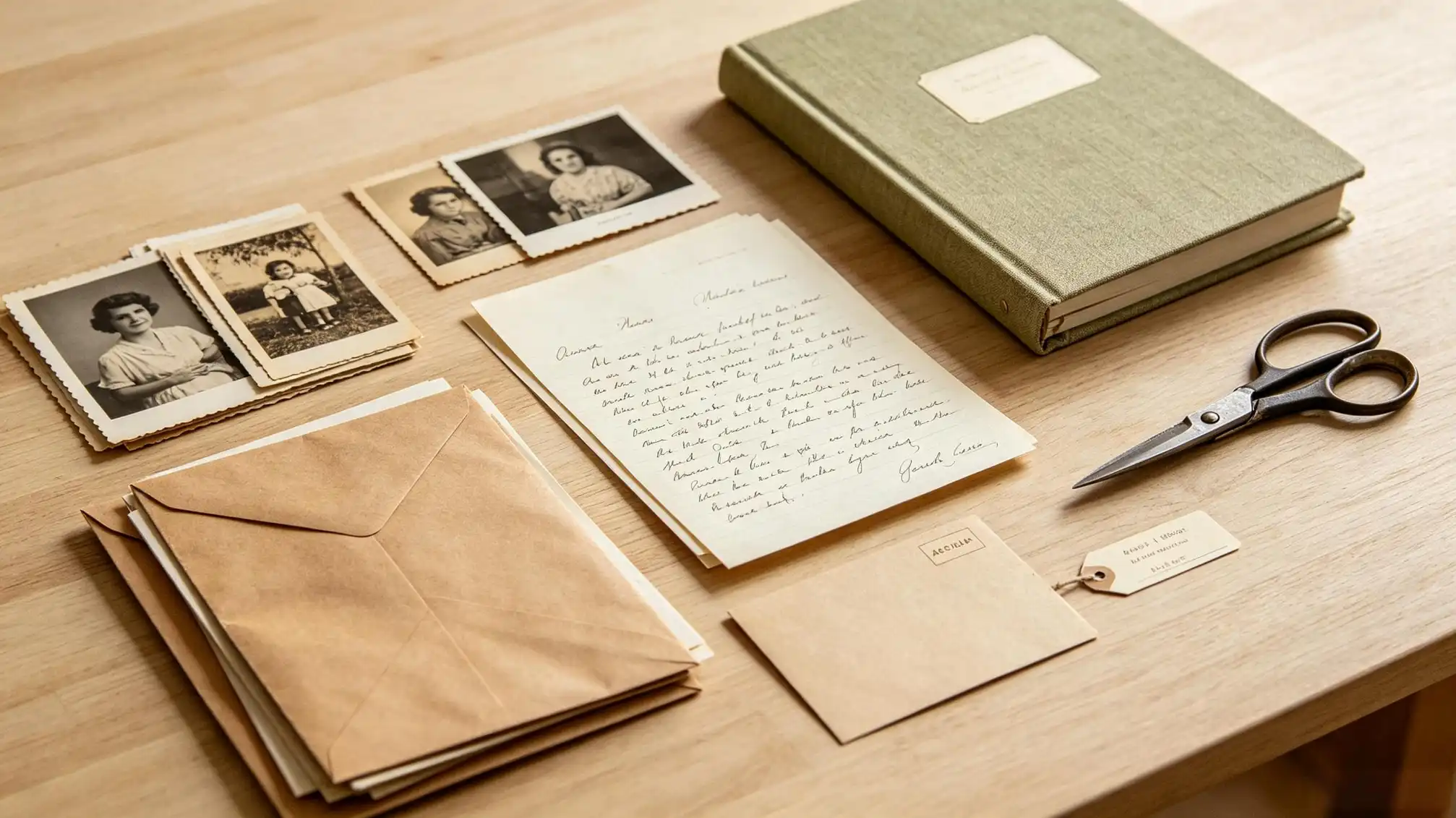
Begin with a simple goal: get every photo into one place. Go through drawers, albums, envelopes, and the pockets of old purses. You might find duplicates, negatives, or photos tucked inside old books. That is all part of the story. As you sort, create three piles: keep, digitize, and share. For family history purposes, keep original prints even if they are damaged. Scratches and creases are not flaws; they are evidence of a photo that was loved and carried around.
If possible, note the names and dates on sticky notes placed next to each photo. Avoid writing directly on the back unless you use a soft pencil, and even then, write gently near an edge. A better idea is to make a simple checklist on paper or a note in your phone: “Box 1 – Grandma’s 50th birthday, June 1978.” This small step will save you hours when you scan and share the photos later.
Store Originals the Right Way
Old family photos are sensitive to light, humidity, and heat. The best places in your home are cool, dry, and dark: a closet shelf, a fireproof box, or a drawer away from radiators. Avoid attics and basements, where temperature swings can cause photos to buckle and stick together. Use archival-quality boxes, plastic-free polypropylene sleeves, or acid-free paper folders. If you cannot buy supplies right away, a simple three-ring binder with clear sleeves works well for protection. The key is to keep photos flat, away from direct sunlight, and separated by acid-free tissue when stacked.
Even a small amount of effort here can make a huge difference. A photo stored in a dark drawer at a stable room temperature can last for many more decades than one left on a sunny windowsill. Think of this as giving your ancestors the same comfort you would want for yourself.
Digitize With the Future in Mind
Preserving family history means more than keeping the original print. It means making copies that can be shared, printed, and passed on. Most home scanners are good enough for this task. For regular prints, scan at 300 to 600 dpi (dots per inch). If you want to zoom in on small details later, use a higher resolution. Save your scans as TIFF for long-term archiving, or as a high-quality JPEG for everyday sharing. If you have old negatives or slides, consider using a scanning service or a dedicated film scanner to capture every bit of detail.
Naming files is just as important as scanning them. Use a pattern like Lastname_Year_FirstName_Location. For example, “Nguyen_1962_Lan_Hanoi.jpg.” Add keywords in the file metadata so your future self and your grandchildren know exactly who is in each photo. This is the kind of small work that turns a pile of scans into a genuine family archive.
Turn Photos Into Family Stories
Your older relatives are living archives. Set aside time to look through the photos together. Ask questions like: Who is standing next to your grandmother? What was this celebration? Why are those children laughing? Record the answers on your phone with their permission. These voice notes can become the audio layer of your family history, adding warmth and personality to the images.
Once you have identified the people and places, consider writing short family stories inspired by the photos. You can create a shared family album or contribute to our family stories page to keep the memories close to your family network. This turns photographs from objects into shared family history, and it gives younger relatives a way to connect with people they may have never met.
Make Digital Copies Last
Digital scans can disappear in a heartbeat if your computer crashes. Use the 3-2-1 rule: keep three copies of your files, on two different storage types, with one copy offsite. That might mean one copy on your computer, one on an external drive, and one in cloud storage. Choose an online service that you trust and that will remain accessible to family members.
Do not forget to update your backups. Once a year, review your photo folders, add any newly scanned images, and make sure the external drive still opens. It is a small habit that protects the work you have already done and keeps your family archive healthy for the long run.
Create Something to Pass On
Preserving old family photos is not only about storage; it is about passing on memories in a way that feels alive. You can print a small album for older relatives who prefer paper, make a digital slideshow for a family gathering, or design a simple photo book for each branch of the family. Share scans by email or through a private family group, and invite everyone to add their own captions and recollections.
Family photos become family memories when they are seen and talked about. By organizing the prints, scanning the most precious images, and gathering the stories behind them, you are building a bridge between the past and the future. Every time someone says, “That’s Aunt Rosa!” or “That was the summer we built the porch,” you will know your effort was worth it.