The hardest part of tracing your ancestors is not the research itself — it is knowing where to start. Too many beginners jump into online databases and immediately hit a wall of names that may or may not be related to them. The truth is that the most reliable clues are usually sitting in a box in your own home, waiting to be noticed. Before you type a surname into a search engine, take a breath and survey what you already have. That humble pile of documents and photographs is the foundation of every good family tree.
Genealogy at its core is a detective exercise. You are looking at evidence, weighing it, and forming conclusions about people who lived decades or centuries before you. A step-by-step approach keeps that process honest and productive. You do not need a genealogy degree to get started, but you do need a method. This guide walks you through that method, from the moment you pick up your grandmother’s photo album to the moment you add a new name to your chart.
Start With the Footprints You Already Have
Open that shoebox. Go through the bottom drawer. Look between the pages of the family Bible. Birth certificates, wedding invitations, funeral cards, letters, diaries, and insurance papers all carry names and dates that anchor your ancestors in specific times and places. Do not overlook the backs of photographs. Handwritten captions like “Mary’s wedding, 1931” or “Uncle Joe on the farm” are gold in genealogy. They give you personal details no database can offer.
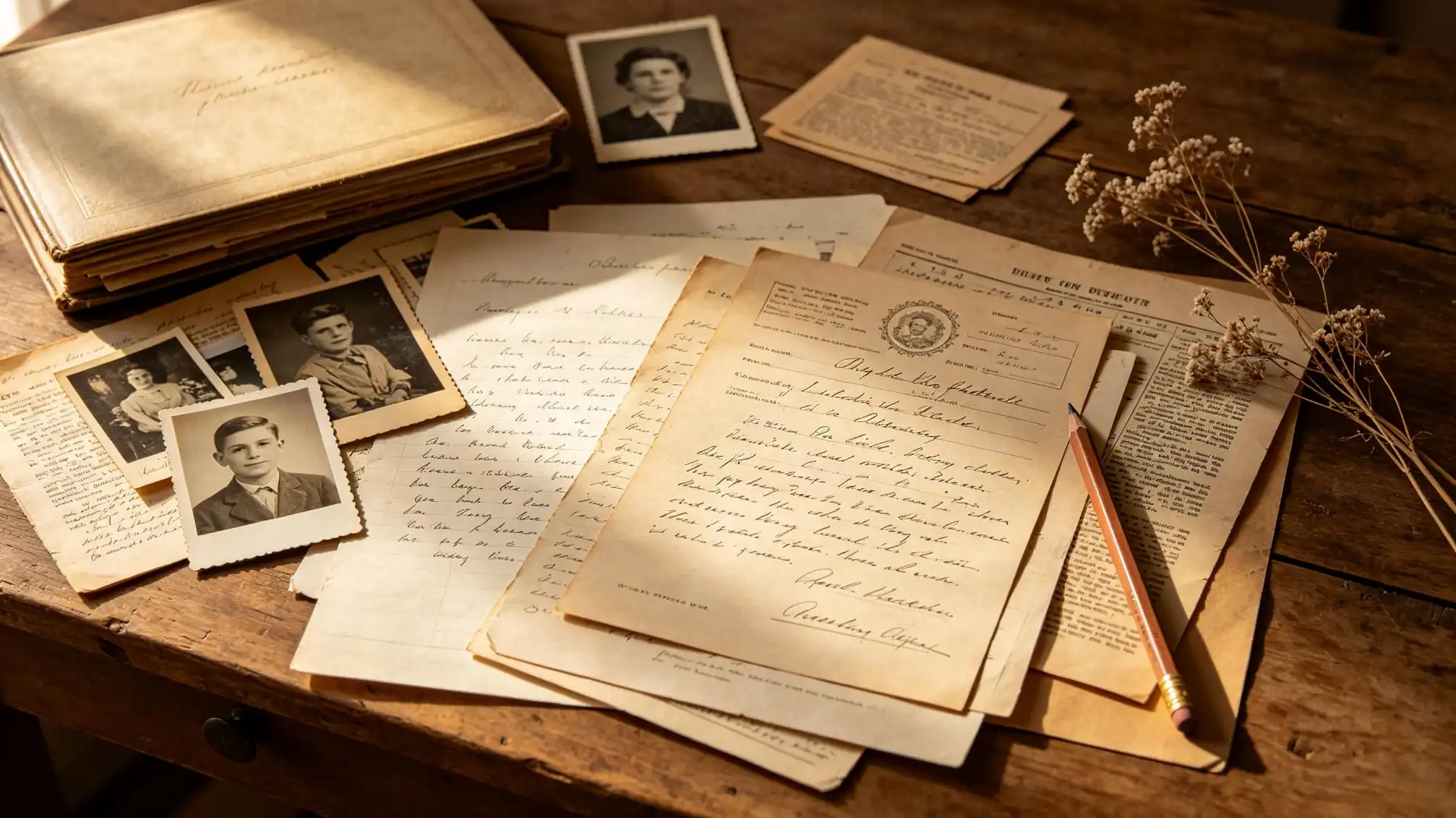
When you gather these home sources, make two piles: originals and copies. Keep the originals safe, but work with copies as you research. Note every name, date, and place you find. Even a partial date or a misspelled town tells you where to look next. This step also prepares you for future interviews because you will know enough to ask informed questions.
Interview the Elders Before Their Stories Vanish
Oral history is not a soft supplement to paper records; it is a primary source. The memories of your oldest relatives can break down brick walls that census records cannot. Choose a quiet time and record the conversation if you have permission. Ask open-ended questions: Where were you born? What do you remember about your grandparents? Who did your parents argue about? What were your family’s moving stories? These conversations often reveal family nicknames, neighboring families, and even tragic losses that shaped migration patterns.
Do not worry if some memories are fragmentary. A single snippet — “they came from the old country by boat” — can lead you to passenger lists. A vague phrase like “Grandpa’s brother had a farm in Ohio” gives you a county to search. As you collect these stories, you might find it helpful to read how other families preserve their memories. You can see practical examples of combining narratives with records at Family Love Stories, which can inspire you to ask better questions and record your own family lore accurately.
Build a Working Family Tree With Sources
As soon as you have a handful of names, put them into a chart. Use a software program, a website, or even a paper template if you prefer. The key is consistency. For each person, include full name, date of birth, place of birth, date of marriage, and death information. Next to every fact, note the source: the document name, the date you accessed it, and where it is located. This source list will be your lifeline when you revisit a conclusion six months later.
A working family tree is not a finished family tree. It is a living hypothesis. When you find a name, add it with low confidence until the documents support it. This prevents you from accidentally merging two different people with the same name. Remember that spelling is flexible in old records. Search for alternate spellings, abbreviations, and phonetic variants. If the census says “Jacob Borns” but his tombstone says “Jacob Burns,” keep both and note the discrepancy.
Use Vital Records to Anchor Every Generation
Once your home sources and interviews have given you a starting point, turn to official vital records. Birth, marriage, and death certificates are the bread and butter of serious genealogy. They contain parents’ names, ages, occupations, and exact locations. Start with your most recent generation and work backward. You cannot understand a great-grandparent’s birth record until you know their marriage record and census entries.
When searching vital records, always try to view the original image. Indexes are great for finding a document, but they are full of transcription errors. The original certificate might include a middle initial, a witness name, or a burial place that changes your whole research path. Order records from the correct state or county office, but check free indexes first. Many archives have placed their vital records online with searchable images.
Move Into Census Records and City Directories
If vital records are the spine of genealogy, census records are the flesh. A census tells you who lived in a household, their ages, occupations, and sometimes their parents’ birthplaces. Combining census years gives you a snapshot of a family over time. Pay close attention to neighbors too. Families often migrated together, and a neighbor in one census may turn out to be a son-in-law or a close cousin in the next.
City directories fill the spaces between census years. They list adults by name and address, and many include occupation and spouse’s initials. Some directories cover rural areas as well as cities. Use them to track a person’s movements year by year. If your ancestor disappears from one directory and appears in another town, that is your clue to follow them.
Add Historical Context to Break Brick Walls
A birth record makes sense in the context of its time. Wars, crop failures, epidemics, and land policies all affected where people lived and what records they left behind. If you are stuck on a man born around 1830, learn about the county laws and land grants of that era. Look at military pensions if he served. Pensions often contain astonishingly detailed family histories, including marriages, children’s birth dates, and residences after service.
Do not skip probate records. Wills and estate inventories name heirs and relatives, and they often clarify relationships that official vital records obscure. Courthouse records like deeds, court minutes, and naturalization papers can also help you piece together migrations. The goal is to understand your ancestor’s world well enough to predict where the records live.
Incorporate DNA Testing as a Powerful Lead Generator
DNA testing does not replace documents, but it can reinvigorate a stalled tree. An autosomal test from a major provider gives you a list of genetic cousins with whom you share segments of DNA. By comparing your tree with theirs, you can find a common ancestor. Then you can work backward to fill the gap. This is especially useful for breaking through adoption or surname-change brick walls.
When you receive a promising match, start with a message. Be courteous and share what you know. Many genealogists have broken strict brick walls simply because a distant cousin happened to have a letter or a photograph in their attic. DNA does not lie, but it also does not interpret itself. You must combine it with evidence. Treat every predicted relationship as a hypothesis to test with paper records.
Keep a Research Log and Cite Everything
You can feel confident about your ancestors when you can prove them. That requires a research log. Each time you search a database, record the repository, the collection, the keywords you used, and what you found — or did not find. This log prevents you from repeating fruitless searches. It also helps you notice patterns, such as a name that only appears with a certain nickname.
Citations do not have to be academic, but they must be specific. At minimum, note the book, film, database, and exact page or image number. If you take a screenshot, name the file with the ancestor’s name and a date. This may feel tedious, but it is the only way your family tree can be audited. Future generations will thank you for it.
As you wrap up the research phase, remember that tracing your ancestors step by step is not a race. The value lies in the journey as much as the destination. Every record you retrieve and every story you record makes your family history more alive. Some days you will find a new name after hours of searching. Other days you will stare at a blurry page and wonder why you started. Stay steady. The ancestors you are seeking were people with their own hopes and mistakes. Recovering them is an act of respect.