Family history has a way of feeling both urgent and impossible at the same time. You know the stories are there, tucked in old photograph boxes, whispered across kitchen tables, and pressed into the margins of worn letters. But where do you begin when your goal is not simply to trace names and dates, but to hold onto the full texture of your people’s lives?
Start with What You Already Know
The easiest step in any family history effort is to turn off the computer and open your own memory. The most valuable interviews you may ever conduct are with yourself. Sit down with a notebook and write down every family slice you remember: your grandmother’s hands rolling dough, your father’s whistle when he thought no one was listening, the exact way your aunt laughed at her own jokes. These details may not appear on a family tree, but they are the heartbeat of your family history.
Once you have captured your own impressions, bring out any documents, photographs, and keepsakes you already own. Look at the backs of photographs for handwritten names and dates. Notice the postmarks on envelopes, the handwriting in recipe cards, the inscriptions inside books. Every artifact is a clue that helps you build a fuller picture of your ancestors and the world they inhabited.
Create a Simple Family Tree First
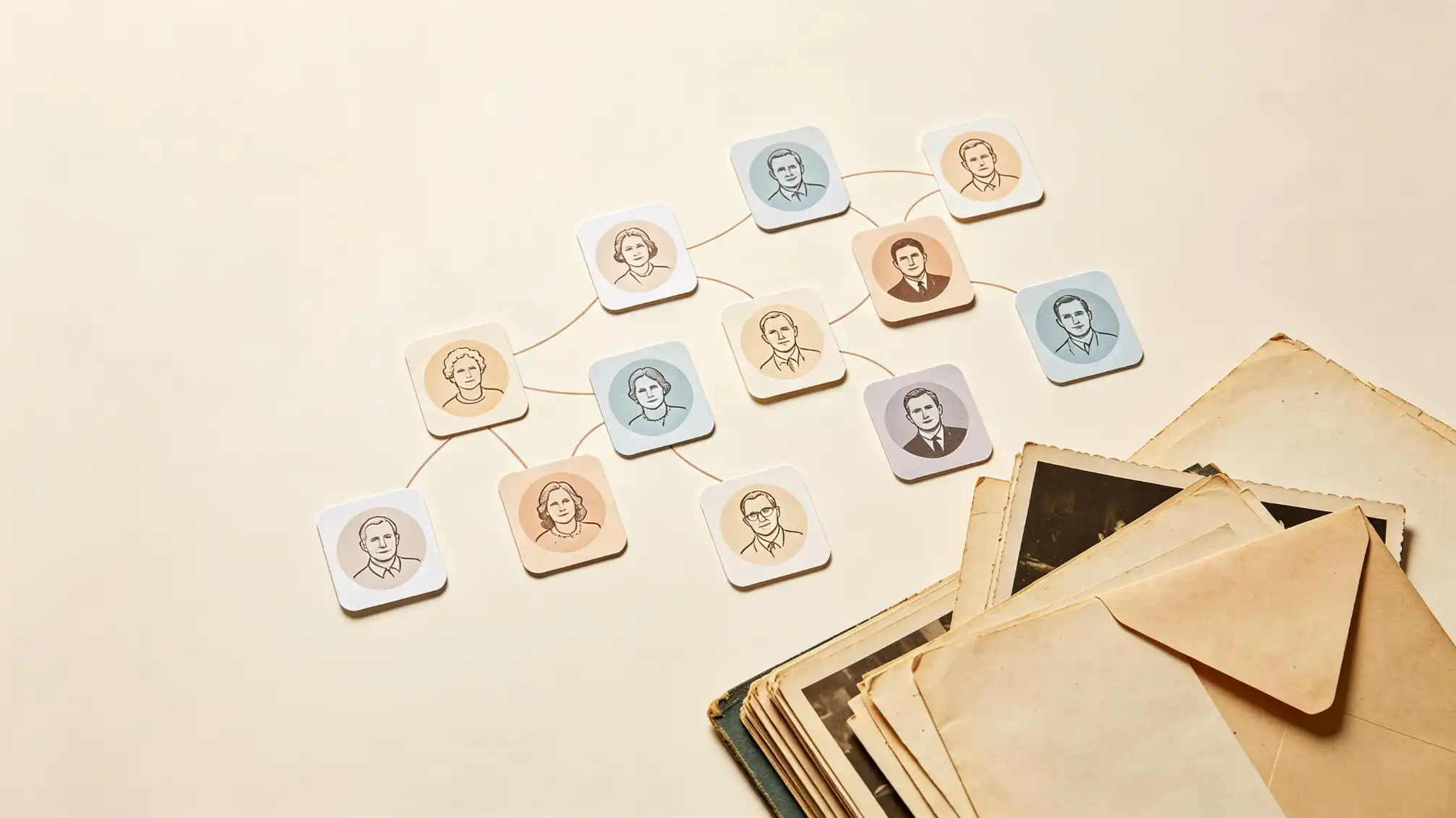
Draw a basic family tree beginning with your parents, grandparents, and great-grandparents. Fill in only the spaces you know with confidence. Leave the unknown branches blank for now. This exercise clarifies where your knowledge is strong and where your curiosity should focus next. It also gives you a visual reminder that family history is not a mountain to climb all at once; it is a garden you tend a little at a time.
Turn a Kitchen Table Interview into a Ritual
Conversations are the most natural way to collect family history, yet they can feel overwhelming if you do not have a plan. Instead of trying to record a complete autobiography, ask about one specific moment or theme. For example, ask your uncle about the year he spent in the navy, or your mother about her first school day. Specific prompts encourage richer storytelling and give your family member the joy of reliving a cherished memory.
Questions That Open Doors
- Where did your grandparents meet, and what was their first date like?
- What do you remember about the house you grew up in?
- Who was your favorite relative when you were a child, and why?
- What was the most surprising day of your life?
- What songs, smells, or sounds bring you straight back to your early years?
Record these conversations with the person’s permission. A smartphone with a voice memo app is enough. If they prefer not to be recorded, take careful notes and then rewrite the story in their voice as soon as you leave. Let them rest if they grow tired; one story at a time is a gift.
Make Room for the Quiet Records
Family history is not only made of grand narratives. It also lives in quieter places: a faded grocery list in a coat pocket, a marginal note in a sewing pattern, a school report card, a church program from a wedding in 1938. These small documents reveal how your ancestors spent their ordinary days, and ordinary days, strung together, become a life.
Consider scanning these items as you find them. Create folders on your computer or in cloud storage named by branch of the family tree, then within each folder, by individual ancestor. Tag the files with names and approximate dates. Later, you will be grateful for a system that lets you search for your great-grandmother’s handwriting without digging through a shoebox again.
Weave Your Ancestors’ Context into the Story
A family tree tells you who your ancestors were, but family history asks why their lives unfolded as they did. When you know that your grandmother grew up during the Great Depression, suddenly her habit of saving every rubber band becomes meaningful. When you learn that your great-grandfather emigrated through Ellis Island, his brave and uncertain journey becomes a story worth telling.
Use historical maps, newspaper archives, and local histories to understand the neighborhoods, weather events, and economic pressures that shaped your family’s decisions. You do not need to dominate the narrative with facts from history books. Instead, let those facts sit gently beside your family stories, adding context and color to the portrait you are painting.
Keep the Well of Memory Flowing
The most important part of recording family history is to keep going. A single conversation can spark a new question. A dusty photograph can lead you to an aunt who knew the people in it. Give your family a way to contribute anytime a memory surfaces. You might create a shared digital album, a family group chat, or a dedicated notebook that travels from house to house.
As you collect these stories, consider curating them on a central page where everyone in the family can feel their presence. The FamilyLove Stories page offers a warm home for the anecdotes, photographs, and voice notes you are preserving. This kind of living collection keeps your family history from becoming a silent archive; it becomes a place where younger generations can meet the people who came before them.
Let the Stories Shape You
Recording family history will change the way you see yourself. With every story you save, you gain a little more insight into your own habits, resilience, and humor. You begin to notice that your stubbornness comes from a grandmother who rebuilt her life after loss, or that your love of loud family dinners echoes a kitchen in the old country. These connections are the true treasure of genealogy work.
Do not wait until you feel ready. Ready arrives only after you begin. Open the shoebox, call your grandfather, write down what you remember today. Your family history was never a task to complete; it is a relationship to continue.