If you have ever looked at a box of old photographs and wished you could see the whole family story at a glance, a family tree template is the perfect starting point. It gives you a ready-made structure to record names, dates, relationships, and stories without forcing you to design anything from scratch.
Many people hesitate because they think genealogy requires special software or a professional designer. The truth is that a simple, well-organized template is often better than a complicated tool. It lets you focus on the actual family history instead of wrestling with formatting.
Choose the Right Free Family Tree Template
Before you begin, decide how you want to work. A free family tree template is ideal for beginners because it lets you test different layouts without spending money. Look for one that includes clearly labeled fields for parent names, spouse names, birth dates, and death dates. Some templates are designed for three generations, while others allow space for five or more. If you plan to add photos later, choose a template that has a photo box next to each person.
Also consider whether you prefer a vertical, horizontal, or fan-shaped layout. A vertical tree is easy to read on a printed page, while a fan shape can show many generations in a compact circle. If you want to work on a tablet or computer, choose an editable PDF or a spreadsheet version. The main goal is to pick a template you will actually use, not the one with the most decorative borders.
Gather Names, Dates, and Places Before You Fill In
Your family history template will be easier to complete if you collect information first. Start with yourself and move backward to your parents, grandparents, and great-grandparents. Write down the facts you already know, then interview relatives to fill in gaps. Ask for the full name, the date and place of birth, marriage dates, and residence changes.
You can also look at old letters, yearbooks, birth certificates, and cemetery records. Many public libraries offer free access to census records and immigration lists. Have a notepad beside you so you can add sources next to each fact. Make a simple key to show which details are confirmed and which are still unverified. Add a question mark next to uncertain entries. This small habit turns a simple chart into a reliable research tool.
Fill Out Your Family History Template in Three Layers
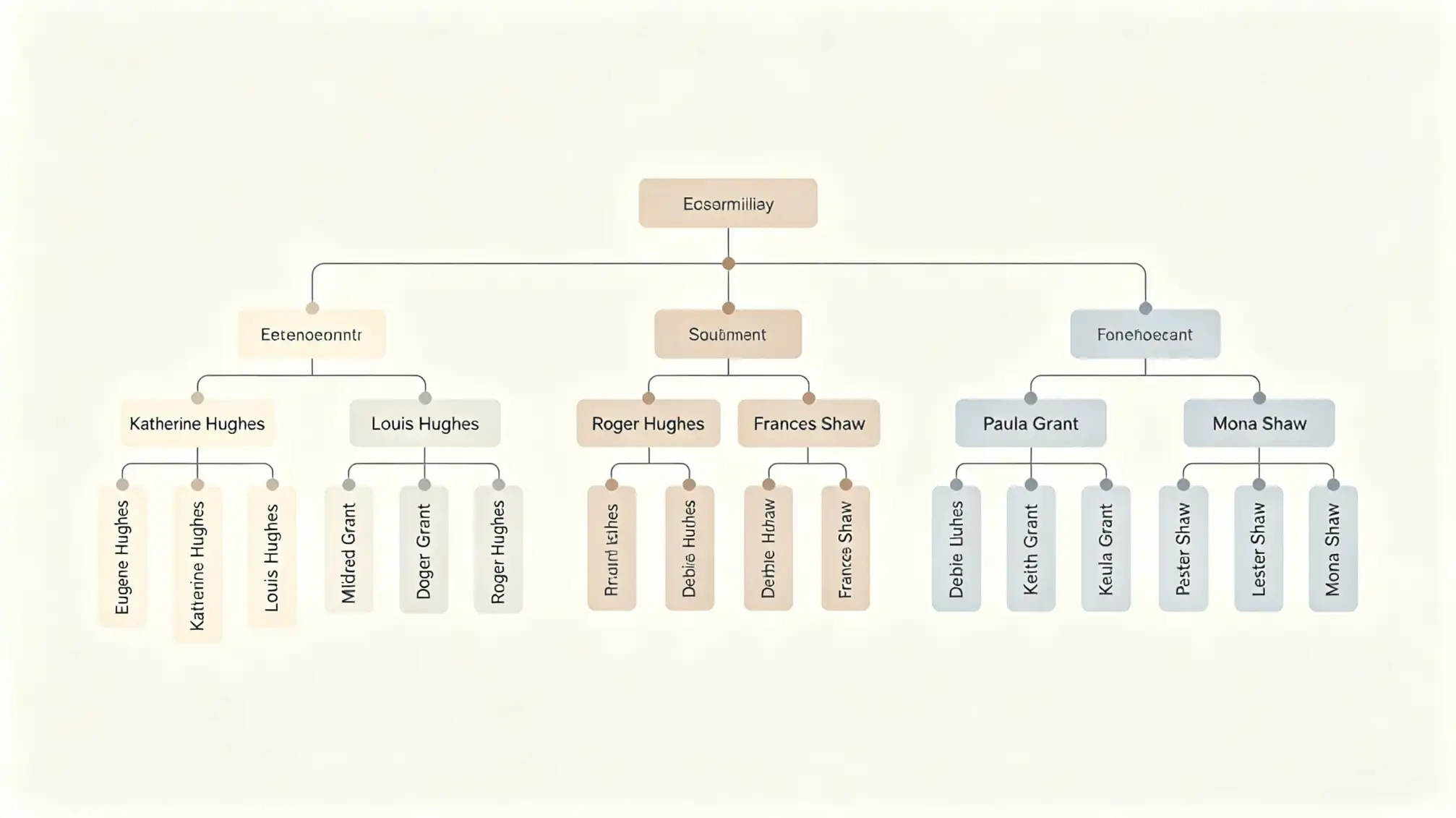
Most family tree templates are built with three layers in mind. The center is you, the next layer is your parents and siblings, and the outer layer is your grandparents and their children. Start with your own generation because you will have the most accurate facts for those names.
Next, add your parents and their siblings. Write the sibling order in the margin so you can see birth order at a glance. Then move to your grandparents and, if the template allows it, great-grandparents. At this stage, focus on names and dates. You can refine the story later. If you run out of space, do not worry. A template is a living document; you can create a separate branch page for a large family line.
Add Context and Stories to Make the Template Personal
A family tree template is not just a collection of names. It becomes a meaningful family document when you add small details. Next to each person, note their occupation, where they lived, and any significant life events. Did your grandmother travel across the country to start a new job? Did your grandfather serve in the military? These one-line notes make the chart relatable for younger relatives.
If your template has a notes section, use it to record where you found each fact. For example, you might write 'from Aunt Rosa’s baptism record, 1932' or 'from the 1950 census.' This simple citation makes it easier to verify information later and builds trust in your research. It also helps future family members who want to continue the project.
Keep Your Family Tree Template Flexible
Your family will change, and so will your research. Save a fresh copy of your family tree template each time you make a major update. If you are using a printable version, keep a master copy in a protective sheet and work from a printout. If you are editing online, use version history so you can compare changes and restore older edits.
Do not be afraid to adjust the template itself. Some people prefer to add extra rows for step-parents or adopted children. Others want more space for notes on military service. A template should serve your research, not limit it. If a branch becomes too crowded, split it into a separate family history template for that surname. Keeping your main tree simple will help you see patterns and missing connections quickly.
Collaborate With Relatives and Share Progress
One of the greatest benefits of a digital family tree template is the ability to share it with relatives. You can email a PDF, print copies at a family gathering, or work on a shared online version. When relatives see a missing date or a name they recognize, they are often eager to help fill the gap.
For ongoing coordination and updates, visit the family page at FamilyLove.Love to keep everyone in the loop and discuss new findings. It is an easy way to turn a personal project into a shared family effort. You can also pair your template with a simple group chat or email thread so that questions and discoveries are not lost.