Building a family tree is a deeply personal project, but it doesn't have to feel overwhelming. You can start today with nothing more than the people you already know. In fact, the easiest path is to begin with your parents and grandparents, then let their memories lead you out to the rest of your relatives and ancestors.
Learning how to build a family tree this way gives you an honest foundation. You are not copying random names from the internet. You are starting with facts, stories, and faces you have seen at family gatherings. That makes the tree easier to verify and much more meaningful.
Start With the Strongest Roots: Parents and Grandparents
Every solid family tree begins with the generations you can still talk to. Put down your own name, add your siblings, then place your parents above you. After that, add grandparents. This gives you a three-generation core before you worry about distant ancestors.
Rather than trying to fill in every branch at once, spend time on this first level. Ask your parents what they remember about their parents. Ask your grandparents about their own childhoods. Those conversations produce the details that make a family tree feel alive.
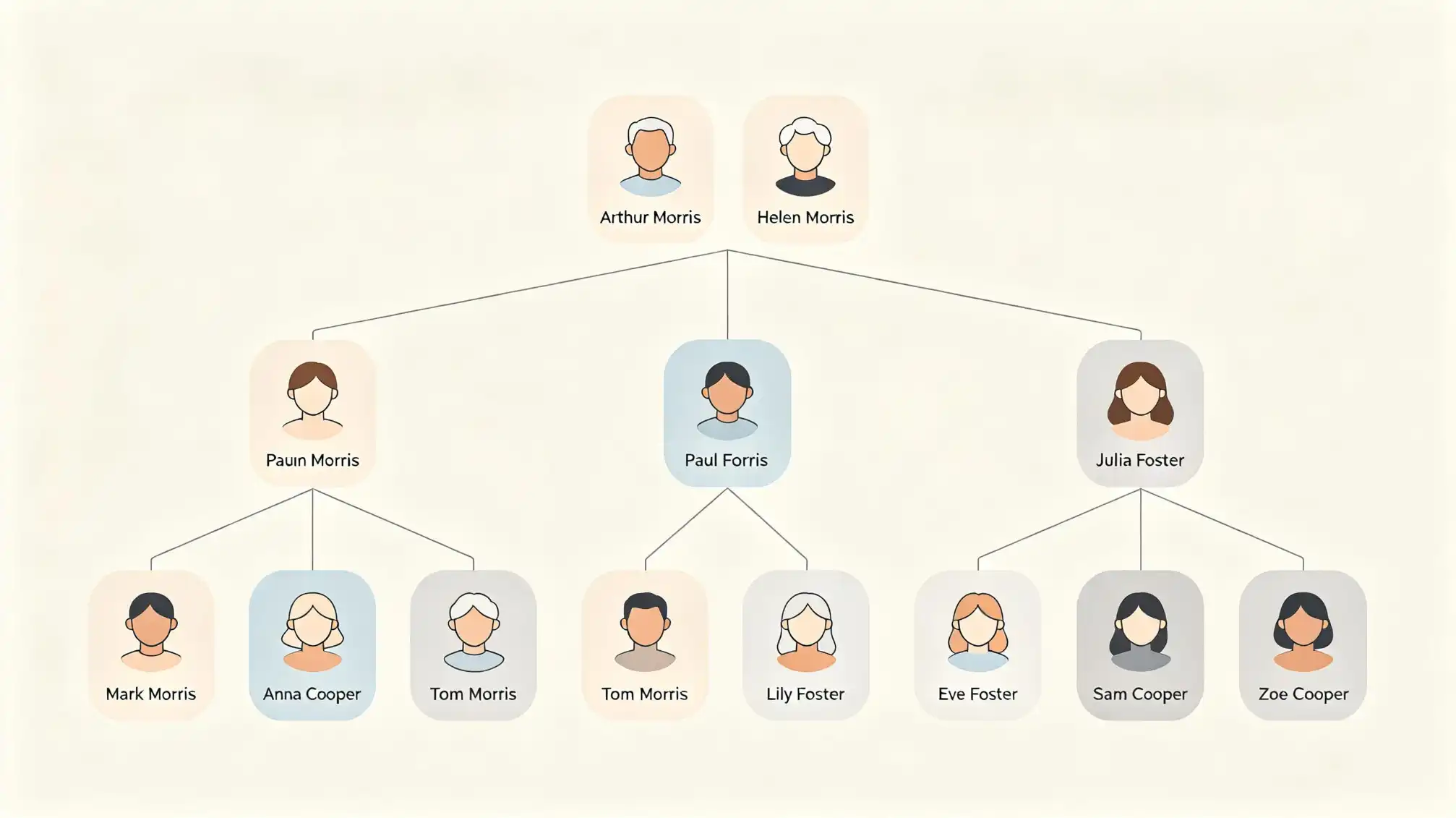
For this first phase, all you really need is a sheet of paper. Draw a horizontal line for each generation and keep the spacing simple. This quick sketch will later become the backbone of a more polished chart.
Choose a Format That Can Grow With Your Family
Once your first drawing feels comfortable, you need to decide how you want to keep the family tree over time. There is no single right answer. Some people prefer a large paper chart on the wall. Others like a spreadsheet that can be filtered and searched. There are also free family tree websites that let you add photos and connect with other relatives.
A useful hybrid approach is to keep the original paper sketch for the first three generations and then transfer the information to a digital record. That way you get the freedom of a blank page and the safety of a data file.
What to record in your first draft
- Full legal names, including maiden names for women.
- Dates of birth, marriage, and death if you already know them.
- Places where each person lived, even if you only know the city or region.
- A short note about how you know each fact, such as a family interview or a birthday card.
Turn Conversations Into Clues for the Next Branches
Parents and grandparents are not just sources of names and dates. They are also your best map to the relatives you may not have met. When you talk to them, ask open-ended questions about their favorite family member, the house they loved as a child, or the relative who had a hand in the family business years ago.
You can say, 'I am building a family tree and do not want to miss important people. Who should I ask next?' This simple question often brings up aunts, uncles, great-aunts, and cousins you never considered. Capture these names because they are the bridges to your wider family.
Verify Family Stories Without Making It a Chore
Family stories carry color, but they can also carry small mistakes. Different people remember the same event in different ways. That is normal. The goal of your family tree is not to argue about memory; it is to create a record you can rely on.
When a parent says a grandparent was born in 1938, pause and look for a source. Birth certificates, marriage records, passports, and old newspaper announcements are the best tools. If you cannot find a source, write the date with a question mark. This small habit keeps your tree honest.
Expand to Relatives and Ancestors Without Losing Yourself
After your parents and grandparents are firmly placed, you can work outward. Move to aunts, uncles, cousins, and then to great-grandparents. Work on one branch at a time instead of trying to build ten generations in a weekend.
For each new relative, use the same pattern: collect the name, the dates you know, and the source of that information. If you hit a brick wall, take a break. Often the next clue appears when you ask a cousin or pull out a box of old photographs. Patient, steady additions will make your family tree stronger than any rushed attempt.
Use the Family Section as Your Action Reference
You do not have to invent the process alone. When you want templates, relationship guides, or a place to see how other families organize their charts, visit the family section at FamilyLove. It is a practical action reference that can help you turn messy notes into a clear family tree.
Keep Your Tree Alive
A family tree is not a one-time project. New babies arrive, couples marry, and older relatives pass away. Keep a date in your calendar to update the tree every few months. A simple shared folder or a digital chart makes this easier.
When you add new information, include who gave it to you. Years from now, your family will want to know how you gathered all these facts. More importantly, they will appreciate that you started with the people closest to you.