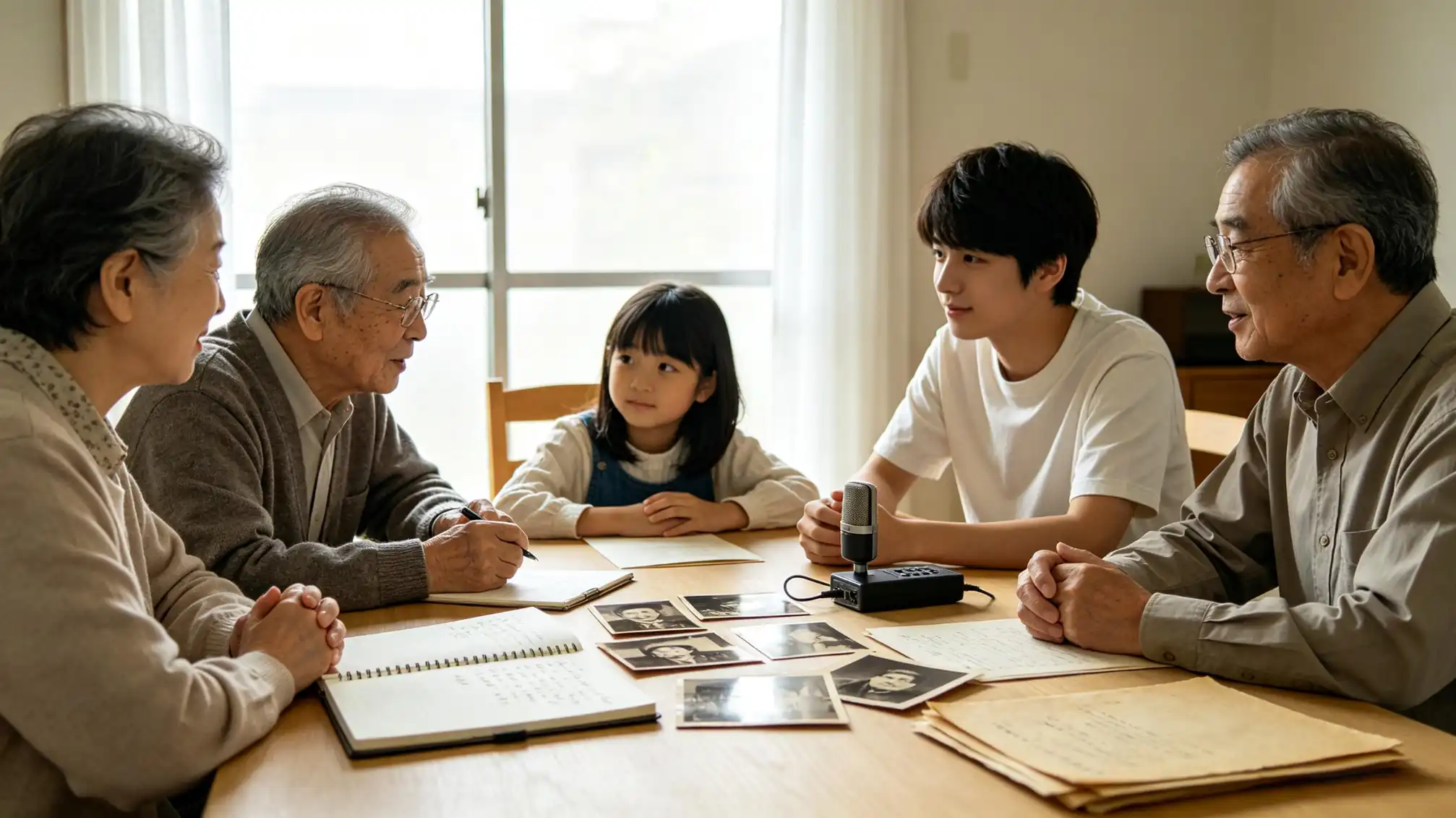
There is a moment in every family when someone realizes the stories have been waiting too long. You sit down with your grandparents, maybe with a cup of tea and a notebook, and you think: Where do we begin? The task of preserving grandparents family history can feel enormous, but it doesn't have to be formal. In fact, the most memorable conversations often start with a simple, unexpected question. Think of this not as research, but as an invitation to sit closer and listen.
Start With the Ordinary Details
Too often, family history questions jump straight to births, deaths, and weddings. Those dates matter, but they don't help you hear the color of your grandmother's childhood kitchen. She remembers the sound of the kettle, the smell of Sunday roast, and the way her mother hummed while folding laundry. That is the texture you want to capture.
Begin with a single detail: What did your neighborhood smell like? or What did you wear to school? You'll be surprised where the answer leads. These small windows often reveal what your grandparents valued, what made them feel safe, and how love was shown in everyday life.
- What is the earliest complete memory you can recall?
- What were the best and worst parts of your childhood home?
- Who decided how money was spent in your family?
- What did you eat for breakfast on cold mornings?
- How did your parents show affection?
Ask About the People Who Shaped Them
Relatives often appear in family stories as characters rather than people. Gently ask your grandparents to describe their own parents as real human beings. What made them laugh? What did they worry about? What did they hope for? These questions open a door to empathy and understanding across generations. You may discover that your great-grandmother's stubbornness was actually courage, or that your grandfather's quiet father had a tender sense of humor.
- How did your mother spend her Sunday afternoons?
- What do you wish you had understood about your father earlier?
- Which cousin were you closest to, and why?
- Did you ever meet your great-grandparents? What do you remember of them?
Capture the Hard Stories, Too
Not every family story is sweet, and not every memory is happy. Some of the most meaningful grandparents family history comes from moments of loss, change, and resilience. You don't need to push, but you can leave the door open.
What was the hardest thing you lived through when you were young? is a powerful question. Ask it softly, then wait. Silence is not a bad sign. Some of the most important stories are told only after a long pause. When a painful memory appears, resist the urge to fix it or rush past it. Your quiet presence tells them their experience matters.
- What did your family do during hard times?
- Was there a moment when your life changed in a single day?
- Who helped you feel safe when you were scared?
- What did you learn about yourself from a loss?
Use Their Five Senses to Unlock Memories
These family history questions sometimes work better when they avoid the word remember altogether. Instead, ask about sounds, smells, tastes, textures, and movement. The senses bypass the memory's front door and walk in through the kitchen. A question about the scent of morning coffee can bring back an entire year of childhood in one breath.
- What did your grandmother's kitchen smell like?
- What sound could you always hear at night when you were going to sleep?
- What was the first food you learned to cook or bake?
- What did your favorite piece of clothing feel like?
Let Grandparents Family History Follow Its Own Path
The best conversations wander. Your grandfather may begin by answering your question about his first bicycle and end up telling you about the day he met your grandmother. Do not redirect him. That detour is the story. Write down his exact words. If you are collecting stories with other relatives, a shared space helps. Many families choose to post short memories and photos online before or after the interview. You can start a simple shared collection on our family stories page and invite everyone to add their own version of the same memory. It becomes a beautiful web of voices, all telling the same truth in different ways.
Make It Easy for Your Grandparents to Answer
Some grandparents freeze when they hear tell me about your childhood. It's too broad. Instead, give them a small, concrete scenario. When you were ten, what did you do after school? offers a prompt they can hold. Add a time and a place: a kitchen table, a schoolyard, a summer afternoon. The more specific you make the frame, the easier it is for them to step inside.
Let them draw, show you an old object, or walk you through the house. A photograph is a fantastic tool. As they describe the people in the photo, you'll hear not just their words, but their feelings. You might even capture the way their voice softens when they say a loved one's name.
A Few More Questions to Keep in Your Back Pocket
- What did you want to be when you grew up?
- What did your grandparents tell you about their parents?
- What was considered rude in your house?
- What did a typical Saturday look like?
- What is something you learned from your first job?
Record With Kindness
Before you press record, ask permission. Not everyone loves seeing a phone on the table. Still, audio or video wonderful because it preserves the sound of your grandparent's voice—their laugh, the way they pause, the way they say your name. If they'd rather not be recorded, take notes. Later, read your notes back to them and ask, Did I get that right? That simple act shows respect and creates a second chance for them to expand the story. Keep a glass of water nearby, smile, and let the conversation breathe.
Turn Their Words Into Something Tangible
After the conversation, don't let the recording sit forgotten on your phone. Transcribe the most meaningful parts, print a few family photos, and create a small keepsake you can share. This could be a simple album, a letter, or a page on your family's shared space. The act of turning sound into words reinforces how much you value their life story.
Remember, grandparents family history is not only for the past. It is a gift to the future. The stories you collect today become the answers your own grandchildren will search for tomorrow. The questions you ask now are the seeds of the family stories your relatives will tell long after this season.