Most families have a box of old family photos waiting somewhere — a drawer, an album shelf, or the corner of a closet. These prints are more than paper and ink; they are the closest thing we have to standing beside the people who came before us. Preserving family photos for family history does not require a museum budget or professional training. It takes curiosity, patience, and a simple system.
Don't wait for a perfect weekend to start. The best preservation projects grow slowly, one photo, one name, one story at a time. Every small step you take now makes the whole collection safer for the next generation.
Start With the Stories, Not the Scans
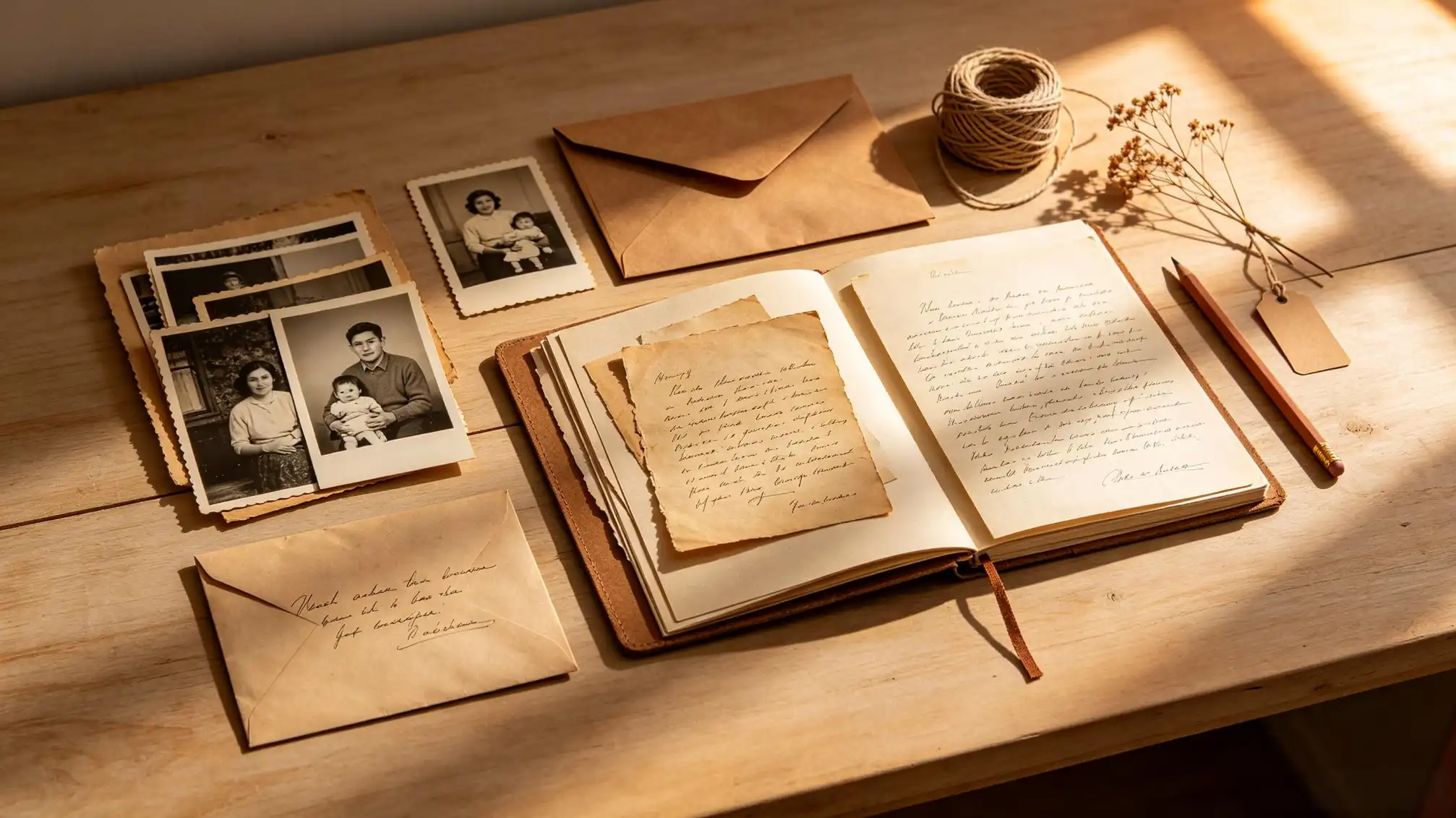
Before you scan, let the photos live in your hands for a little while. Spread them on a table and group them by person, place, or occasion. If you recognize a face, write the name on a sticky note and place it beside the photo. If you are not sure, create a mystery pile and bring it to the next family gathering. The goal is to let the family history emerge before you file anything away.
As you sort, keep duplicates together. You may only need one copy for the archive, but duplicates are perfect for sharing with relatives later. Look for small clues like handwriting on the back, the style of clothing, or the make of a car in the background. These details help place the photo in time, even when no one remembers the exact date.
Label Family Photos Before the Details Fade
The fastest way to lose family memories is to leave names unrecorded. Take time to ask older relatives about each image. They may remember not only the names, but the occasion, the weather, the joke, or the meal that was served that day. That kind of texture cannot be recovered from a photo alone.
When you do write on a print, use a soft graphite pencil on the back, near the edge, and press gently. Avoid ballpoint pens, which can leave indentations on the image below. If you are working with a digital scan, add the same details in the file name or in a sidecar note. Every ancestor in your collection deserves at least a name and a year.
Do not be afraid to record uncertainty. If you think a face might be your great-aunt but no one is certain, write 'probably Margaret's sister' or 'unknown woman, maybe 1940s.' That clue may be all a future family historian needs.
Scan at a Resolution That Respects the Past
For standard prints, scanning at 300 dots per inch is enough for screen sharing, but 600 dots per inch gives you room to zoom in on faces and read small details. Tiny, damaged, or very old family photos deserve an even higher scan. Save the master file in a lossless format such as TIFF, then create a smaller JPEG for everyday use.
Keep your scanner glass clean and use a soft cloth. If a photo is curled, do not force it flat; press it between heavy books for a few days before scanning. Work in small batches and check each scan before you return the original to the box.
Use a consistent file naming pattern, such as surname_firstname_year_place. This is a small habit that makes a large difference when you begin searching for ancestors later. If a photo has a story behind it, write that story in a simple text file with the same name, so the narrative never gets orphaned from the image.
Store the Originals With the Same Care You Give the Copies
Scanning is not the end of your job; the printed photo still matters. Store original prints in archival boxes with acid-free tissue paper between them. Keep them flat, dry, and away from direct sunlight. Basements and attics are risky places because of moisture and heat. A cool closet or a shelf inside your living space is often better.
Avoid magnetic album pages and any sleeve made from PVC. If older albums have sticky or brittle pages, you do not need to throw them away; keep them somewhere safe and place a copy of the album in the archival box as a reference.
Digital files also need safety. Keep at least two copies, ideally one on your computer and one on an external drive or trusted cloud service. Organize them in folders by decade or surname, and add a simple README file that explains your naming system. You might also invite a brother, sister, or cousin to hold a copy of the shared folder. When the archive lives in more than one household, it is far less likely to disappear.
Let Family Photos Become Family History Again
The real reward of preserving family photos is not a tidy box or a full hard drive; it is the conversation that starts when someone recognizes a face from the past. Print a small set of photos for older relatives, bring your mystery pile to holiday meals, and ask everyone to add a memory. Family memories grow when they are shared, not stored in secret.
Consider making a small photo book for each decade. Group the images by year and add a one-sentence each one. You do not need professional design skills; the stories matter more than the layout. This is the kind of album that will be passed down with love.
If you would like a little inspiration, visit our family stories page and read how other families turned old photo boxes into meaningful conversations about their ancestors.