Genealogy Basics for Beginners: A Story-First Approach
If you are new to family research, you might picture genealogy as a long library table stacked with dusty documents and old census forms. But the real starting point is much warmer. It is the voice of a grandparent telling you about the year they left their hometown. It is the handwritten note in the back of a Bible. Those fragments are not just clues; they are the heart of your family history.
Begin With What You Already Know
Open a notebook or a simple digital document. Write down your own full name, date of birth, and place of birth. Then add the same details for your parents, grandparents, and great-grandparents if you know them. You will quickly notice gaps. Those gaps become your first research questions.
Next, talk to your relatives. Ask open-ended questions like “What did you enjoy most during your childhood?” or “How did your parents meet?” These conversations often reveal nicknames, old addresses, or family traditions that are not recorded anywhere else. Record the conversation with permission, and always note who shared the story, when, and where. That habit will save you from confusion later.
Create Your Family Tree One Branch at a Time
A family tree is simply a visual map of your ancestors. For beginners, the easiest way is to start with a blank tree on paper or a free online template. Place yourself at the bottom, your parents above you, and your grandparents above them. Use a horizontal or vertical layout, but keep it simple.
For each person, record four key facts: full name at birth, date of birth, place of birth, and date of death if applicable. Add marriage dates only when you are fairly confident. You can always fill in details later. The goal is not perfection; it is building a clear structure that can grow.
Gather Evidence for Every Ancestor
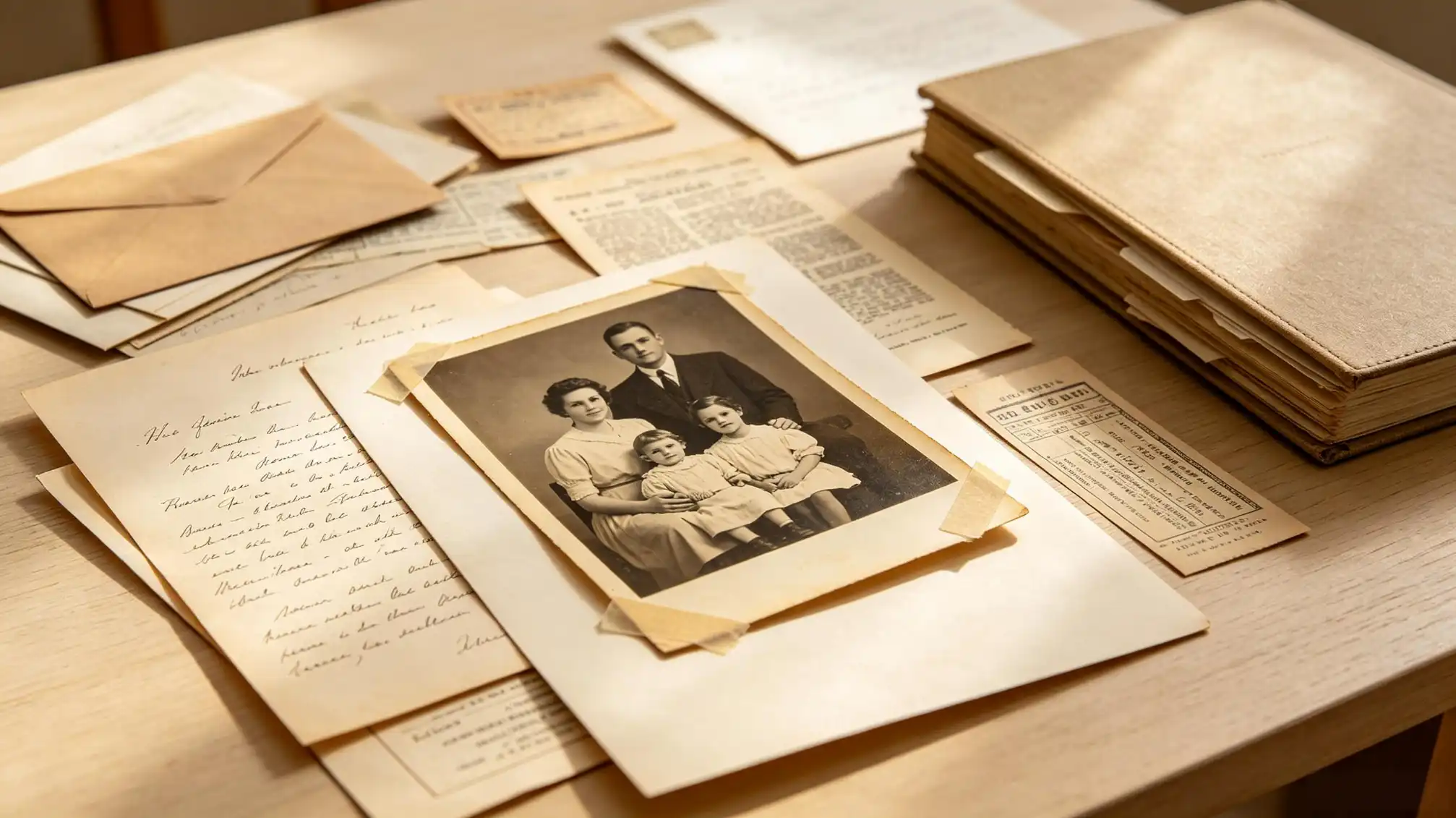
Genealogy becomes truly rewarding when you move from memory to evidence. Birth certificates, marriage records, obituaries, and census forms are the building blocks of a reliable family history. But you do not need to pay for expensive subscriptions right away. Many public libraries offer free access to genealogy databases, and state or national archives provide many records online at no cost.
When you find a record, do not immediately add it to your tree. Save a copy to your device or print it, then compare the details with what your relatives told you. Small differences in spellings or dates are normal. If a record conflicts with a family memory, note both versions and look for a third source. This gentle approach helps you avoid spreading errors.
Use Your Family Story as a Guide
As you collect documents, you will start to see patterns. Did many of your ancestors live in the same town? Did one branch of the family migrate during a certain decade? These patterns raise new questions and point you toward more records. Keep a list of question marks next to each ancestor. That list is more valuable than a perfectly organized tree.
You may also want to share what you’ve learned in a way that preserves your family’s voice. Creating a personal memory page can be a lovely way to tie photos, stories, and records together for future generations. When you are ready to do that, the Family Love stories section offers a dedicated space for preserving your growing family history.
Learn to Read Old Documents With Patience
Old records can be hard to read. Handwriting may be elegant or messy, spelling may be inconsistent, and some records are damaged. Slow down and study each document in sections. Look up old place names and common abbreviations. If a town name is unclear, search for similar-sounding names in the same region.
Keep a personal dictionary of common names from your family’s era. For example, a name like “Sallie” might appear as “Sally,” and “Wm.” is often short for William. These small tricks make genealogy far less intimidating.
Research Your Ancestors Without Getting Distracted
One of the biggest traps in genealogy is the endless scroll through record collections. Before you search, write down one question. For instance, “When did my maternal grandmother marry?” Then look for a marriage record only. When you find it, stop and record the source. This focused method keeps you from wandering from one intriguing family line to another.
It helps to work on one generation at a time. Complete your parents’ and grandparents’ basic facts before trying to reach back three centuries. Deep roots are exciting, but solid branches are more important. With each verified generation, your family tree becomes more meaningful.
Keep Your Genealogy Organized From Day One
Nothing feels worse than spending months on family research and then realizing you have lost a precious scanned document. Begin a simple folder system on your computer. Create one folder per surname, and inside each folder store images with clear names like “Grandmother_Marriage_1925.jpg.”
In your notes, always include the source’s title, date, and page or certificate number. If you are not sure where you found a fact, mark it as unverified. This honesty makes your genealogy more trustworthy for everyone who picks up your research later.
Enjoy the Unexpected Turns in Family History
Genealogy is rarely a straight line. You may find an ancestor who changed their name, a family story that turns out to be partially fiction, or a new cousin who shares your great-great-grandparents. Treat these surprises with curiosity rather than judgment. A misremembered story can still contain a grain of truth, and DNA matches can open new doors even when records run out.
If the search feels overwhelming, take a break and return to the simple act of listening to your relatives. Their memories are the soul of your genealogy. The documents only confirm what love and time have already carried forward.