Every family carries stories that are worth more than any old photograph album. Yet those stories stay hidden until someone starts asking. That’s why you need a thoughtful set of family history questions — not just to gather names and dates, but to understand how your relatives lived, loved, and built the life you’re part of today.
The best family history questions to ask relatives are simple to say and hard to forget. They don’t sound like a census form. Instead, they sound like curiosity: “What did your mother’s laugh sound like?” or “What did the kitchen smell like on Sunday morning?” These kinds of questions invite grandparents, parents, and other relatives to open up in a way that a list of facts never will.
Why Smart Questions Beat Simple Facts
If you ask “where did you grow up?” you’ll receive a city name. If you ask “what do you remember about the house where you grew up?” you’ll get a memory that makes everyone laugh or tear up. The best family history questions are open-ended, sensory, and curiosity-driven. They help the person you’re talking with step back into their younger self and feel that moment again.
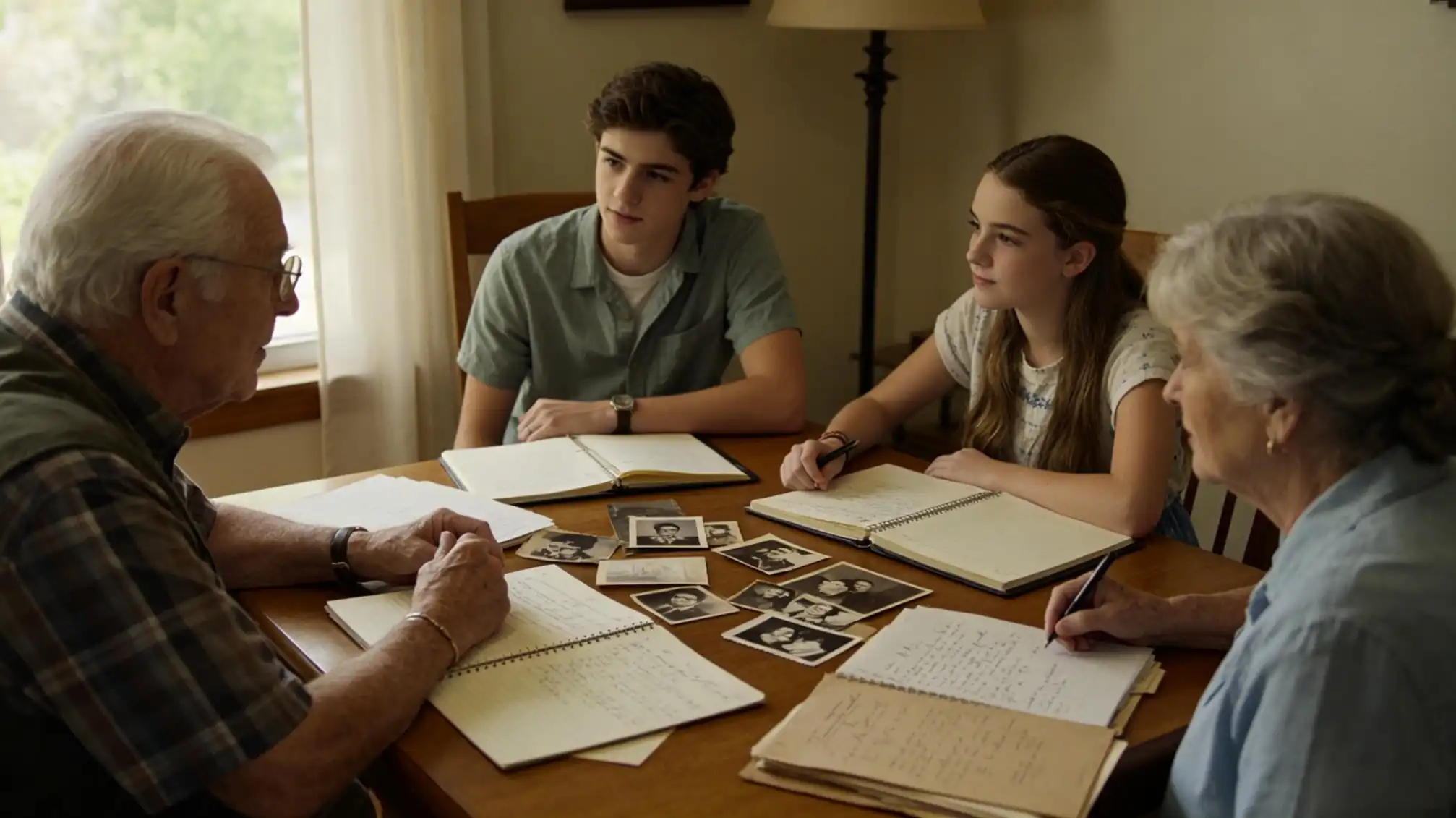
Before you start, choose a quiet space, put your phone on silent, and let your relative lead. If they pause, don’t fill every silence. Reflection is where the best stories live. The goal is not to finish a questionnaire; it’s to start a conversation that may continue for years.
Family History Questions for Grandparents
Grandparents are the bridge between your present and your family’s past. They’ve seen decades of change and can offer an irreplaceable perspective. These family history questions work especially well with grandparents:
- What is the earliest memory you can recall?
- What did your parents do for fun when you were growing up?
- What was school like for you — and who was your favorite teacher?
- What chores did you have at home that kids today would find strange?
- What did your own grandparents tell you about their childhood?
- What was the most popular song or dance when you were a teenager?
Don’t rush through these. Let one answer lead to the next question naturally. You might ask, “Wait — what happened next?” That simple phrase is often more powerful than any prepared question.
Questions to Ask Parents About Their Younger Years
Your parents are sometimes the hardest relatives to interview because you assume you already know their stories. But the truth is, they had a full life before you arrived. Use these family history questions to unlock parts of their past you’ve never heard:
- How did you feel on your first day of school?
- What was your best friend like when you were young?
- What did you and your siblings argue about the most?
- What family rules did everyone have to follow?
- How did you meet the people who are still your friends today?
- What moment from your childhood do you wish you could live again?
Parents may feel more comfortable if you frame your questions as genuine curiosity rather than expectation. Say something like, “I’m trying to picture your life as a teenager — what was the coolest thing you owned?” That kind of prompt makes them feel seen, not interrogated.
Family History Questions About Traditions
Family history isn’t just about individual memories; it’s about the shared traditions that connect one generation to the next. Ask relatives about rituals, holidays, and everyday routines that defined your family’s rhythm:
- Which family tradition do you remember most clearly?
- How did your family celebrate birthdays when you were young?
- What meal did your family always make for special occasions?
- Were there any phrases or sayings your grandparents repeated often?
- How did your family handle hard times together?
- What do youwish you had asked your own grandparents?
That last question is especially powerful. It reminds your relatives that they are part of a longer story — and that the answers they give you today will be the memories tomorrow’s generations treasure.
Questions for Aunts, Uncles, and Cousins
Grandparents and parents aren’t the only people with stories worth hearing. Aunts, uncles, and older cousins remember the same family from a different angle. Their family history questions can focus on the relationships between siblings, cousins, and the broader family network:
- What did you think of your sibling when you were kids — and what do you think now?
- Which cousin were you closest to growing up?
- What was a typical summer day like in our family?
- Who was the relative that made everyone laugh at gatherings?
- What did you learn from watching your parents interact with their siblings?
- What’s one family story that always gets retold — and what’s the version you remember?
Asking the same family history questions of multiple relatives can also be a fun experiment. You’ll discover that two siblings remember the same event in completely different ways. Those differences aren’t mistakes; they’re a reminder that memory is personal, emotional, and deeply human.
How to Keep the Conversation Natural
No one wants to feel like they’re being interviewed for a formal report. Before you begin, explain why you’re asking family history questions. You might say, “I’ve realized I don’t really know what your life was like, and I want to understand better.” Then let the conversation breathe. Use follow-up prompts like “What happened next?” or “How old were you then?”
If you’re recording, set the device somewhere unobtrusive so it doesn’t become a distraction. Some relatives open up more when you’re doing a simple activity together, like looking through photo albums or preparing a meal. If you want to see how other families have turned these conversations into written and visual keepsakes, visit family love stories for inspiration.
Tools to Turn Answers into Family Archives
Your phone can be an excellent recording tool, but you’ll also want a system for storing what you hear. Use a notebook or a voice memo, then transcribe the key stories as soon as possible. Group answers by theme or by person, and add dates and names while they’re fresh in your mind.
Consider creating a simple question box with topics like childhood, school, work, love, and parenting. Whenever you meet a relative, pick one topic and ask a single family history question. Over time, you’ll be amazed by how many stories you collect — and how much closer you feel to the people who carry your family’s memory.