If you have ever wanted to map out your family’s story but didn’t know where to begin, a family tree template is the simplest bridge between memory and a lasting record. Instead of staring at blank paper, you can use a structured layout that shows parents, grandparents, siblings, and extended relatives clearly. This article walks you through practical ways to use a family tree template, whether you are creating a keepsake, teaching kids about ancestors, or building a detailed family history template for future generations.
Why a Family Tree Template Is the Best Place to Start
Starting a family history project can feel like a massive task. You might be thinking about dozens of names, faded photographs, and old stories that nobody wrote down. A family tree template works like a pre-built map for your research. It gives you a clear place for every name, date, and relationship, so you can focus on collecting details rather than designing layouts. You can find a free family tree template online, print it, or use a digital version, and it still makes the process easier because the structure is already there.
The true power of a template is that it shows you what you already know and exposes what is missing. Once the blanks appear, you know exactly which questions to ask at the next family gathering. You also get a sense of progress each time you fill in a new name, which motivates you to keep going. Whether you want a simple family tree template for a school project or a detailed family history template for a genealogy study, starting with a structured format is the smartest move.
Choose the Right Free Family Tree Template
Not every family tree template is the same. Some are designed for young children and include just a few branches, while others are compact and offer plenty of space for dates, places, and notes. Before you download anything, think about how you plan to use it. A free family tree template for a classroom usually needs large boxes and simple lines. A family history template for a multi-generational project needs more writing space and room for sources.
- For quick family activities: choose a simple free family tree template with vertical boxes that you can fill out in one sitting.
- For genealogy research: pick a family history template that includes sections for birth, marriage, death, and notes.
- For family reunions: look for a large-print family tree template that everyone can write on or sign.
- For digital editing: use a printable template that can be opened in your favorite notes app or image editor.
If you are still deciding, print a few versions and test them. The right template should feel intuitive, not like a spreadsheet you have to decode. You can also search for “free family tree template” to find a variety of designs, from minimalist black-and-white charts to colorful illustrated trees for children.
What to Look for in a Family History Template
A family tree template captures more than names. A useful family history template includes fields for dates and places, because an ancestor’s story becomes much richer when you know where they lived and when they moved. It also leaves room for notes about occupations, military service, or migration patterns. If you are serious about documenting your family’s past, the last thing you want is a piece of paper with only names and no context.
Before you commit to a free family tree template, check for these details:
- Spaces for both the birth name and married name of female relatives.
- A line for the date of birth, date of marriage, and date of death.
- Room to add source notes, so you can remember where each fact came from.
- Enough branches to cover at least five generations.
- A clear place for a family story or historical note.
If the template you chose doesn’t have all these features, don’t worry. You can create a separate file that holds the extra details and then link it to the tree. The most important thing is that the template gives you a solid foundation to work from.
Before You Write: Gather and Verify Family Details
Now that you have selected a family tree template, resist the urge to fill it out from memory alone. Memories are valuable, but documents and other family members can help you confirm details. Start with your own immediate family, then move outward. A good approach is to gather every piece of information you already know and write it down before you open your family history template.
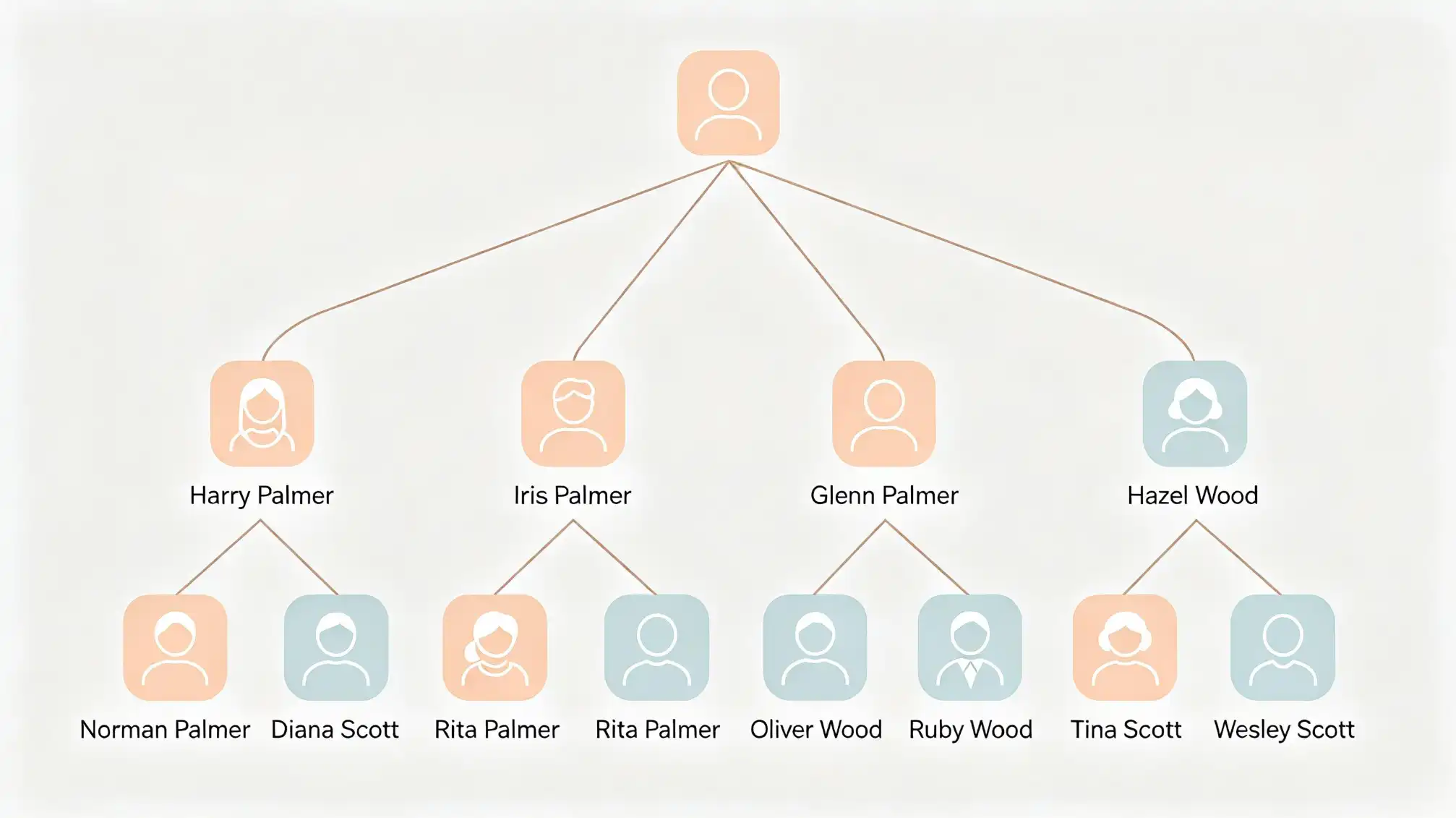
Reach out to grandparents and older relatives before they are gone and ask about their parents, siblings, and childhood homes. Even a short telephone call can produce a handful of names that will fill several gaps in your free family tree template. You can also look through old Bibles, letters, birth certificates, and census records. When you talk to relatives, record the conversation if they agree, and take notes about any family stories that connect to the dates and places on your tree.
One helpful rule is to add a small mark next to any fact that is not yet verified. For example, you might put a question mark beside a birth year that is only approximate. Later, you can search for official documents or ask another relative to confirm it. This way, your family tree template remains reliable and you don’t pass on guesses as facts.
Fill In Your Family Tree Template in Easy Steps
When you begin, follow a simple order so you do not feel overwhelmed. The order below works for most family tree templates, no matter which format you chose.
Step 1: Start With Yourself
Place your name at the base of the tree or in the center, depending on the design. Add your date and place of birth. Then add your siblings on the same line and your parents on the branch above. Use pencil or a digital tool at first, because you will likely make changes as you discover new information.
Step 2: Add Parents and Grandparents
Write your parents’ full names, including your mother’s maiden name. Next, add your grandparents on the branches above your parents. Use your family history template to note their birthplaces and any dates you know. If you don’t know a grandparent’s maiden name, leave the space blank and make a note to ask a relative.
Step 3: Add Siblings and Extended Family
Aunts, uncles, and cousins can be included if the template has horizontal branches. If you run out of space, keep a separate page for each family line and mark the connection clearly. This is where a digital family tree template makes updates much easier. For a large family, you can create one main tree and several branch trees for each surname.
Step 4: Add Notes and Sources
Beside each name, write where the information came from. A simple abbreviation like “birth cert.” can help later. If you use a family history template with a notes column, use it for anything that adds color to the person’s life, such as a job, a nickname, or a family saying. These small details are what turn a chart into a true family history.
Use Your Template as a Family Conversation Starter
A family tree template is also a fantastic conversation starter. When you bring it to a family gathering, relatives will naturally start sharing stories to fill in the blanks. Kids can interview older family members and write their answers directly on a free family tree template. For families separated by distance, you can share an online version and ask everyone to add their own branch.
Another idea is to print multiple copies and use one as a working draft and another as a final keepsake. This way, you can be messy on the first copy and preserve the finished version in a frame or album. Some people like to add photographs or small drawings to make the family tree template feel more personal.
Make Your Family Tree Template a Living Document
A family tree is never truly finished. New births, marriages, and discoveries will keep adding to your family history. Keep your family tree template in a location that you can return to, and consider sharing it with relatives so they can help you update it. You can also keep the spirit of your research alive by connecting with living relatives on the family page at familylove.love, where you can share updates, photos, and stories as a whole family.
If you enjoy the process, you can use the same free family tree template as a starting point for a larger project, such as a family history book or a photo archive. The structure you create today will become a roadmap for future generations. And if you get stuck, there are many online guides and support resources to help you turn scattered information into a beautiful family history template.