For decades, family history lived in shoeboxes, binders, and the memories of older relatives. Then came family tree software on a single computer, which solved one problem but created another: only one person could update it, and everyone else saw an outdated copy. An online family tree changes that equation. It is not just a digital version of a paper chart. It is a living workspace where records, photos, and stories converge, and where multiple relatives can contribute without stepping on each other's research.
Your Family History, No Longer Stuck in a Shoebox
When you work with a desktop-only program, your research is locked to one device. An online family tree puts everything on a central platform you can access from a laptop, tablet, or phone. Need to add a birthday at a family gathering? Pull out your phone and update it in seconds. Waiting for an appointment? Open the shared tree and review a record hint. Because changes sync automatically, you never have to email around a revised GEDCOM file or wonder which version is current.
That consistency matters when you are coordinating with cousins, aunts, or grandparents. Instead of collecting notes from a dozen people and transcribing them later, you can give trusted relatives direct access. The tree becomes a single source of truth, and every new detail appears in the right place almost immediately.
Work with Relatives Without Duplicating Effort
One of the quietest but most powerful benefits of an online family tree is collaboration. Many platforms let you invite family members as editors or viewers, so everyone can contribute. A cousin in another state can add military records. An aunt can tag photographs with names and dates. You can focus on your branch while someone else handles theirs, then merge the work into one cohesive chart.
If you are not ready to commit to a full genealogy platform, it helps to start by mapping out who will be involved. Our family section on familylove.love offers a simple, accessible way to gather names and stories from your immediate circle before you move into more advanced research. That early conversation makes later collaboration in a dedicated tool much easier.
Automatic Searches Turn Clues into Evidence
Digital family tree services research for you in the background. When you add a person and some basic dates, the platform scans historical records, census lists, birth and death indices, and even other public trees to suggest possible matches. These record hints can break through walls that once required years of microfilm research. Instead of guessing where your great-grandfather was born, the system can surface a census record from the right county and year.
You still need to think critically. The hints are not guaranteed matches, and family names are often misspelled or shared by unrelated people. But as a starting point, they give you a route through millions of records that would be impractical to browse manually. The best practice is to treat hints as clues, then verify each one against original sources.
See Patterns, Gaps, and Connections at a Glance
An online family tree also changes how you visualize your research. Most tools offer a variety of chart layouts, from classic pedigree charts to descendant diagrams and fan shapes. Some platforms add timelines and map views, so you can watch how your ancestors moved over generations. These views make it easier to spot missing children, unexplained gaps, or migration patterns you might otherwise miss.
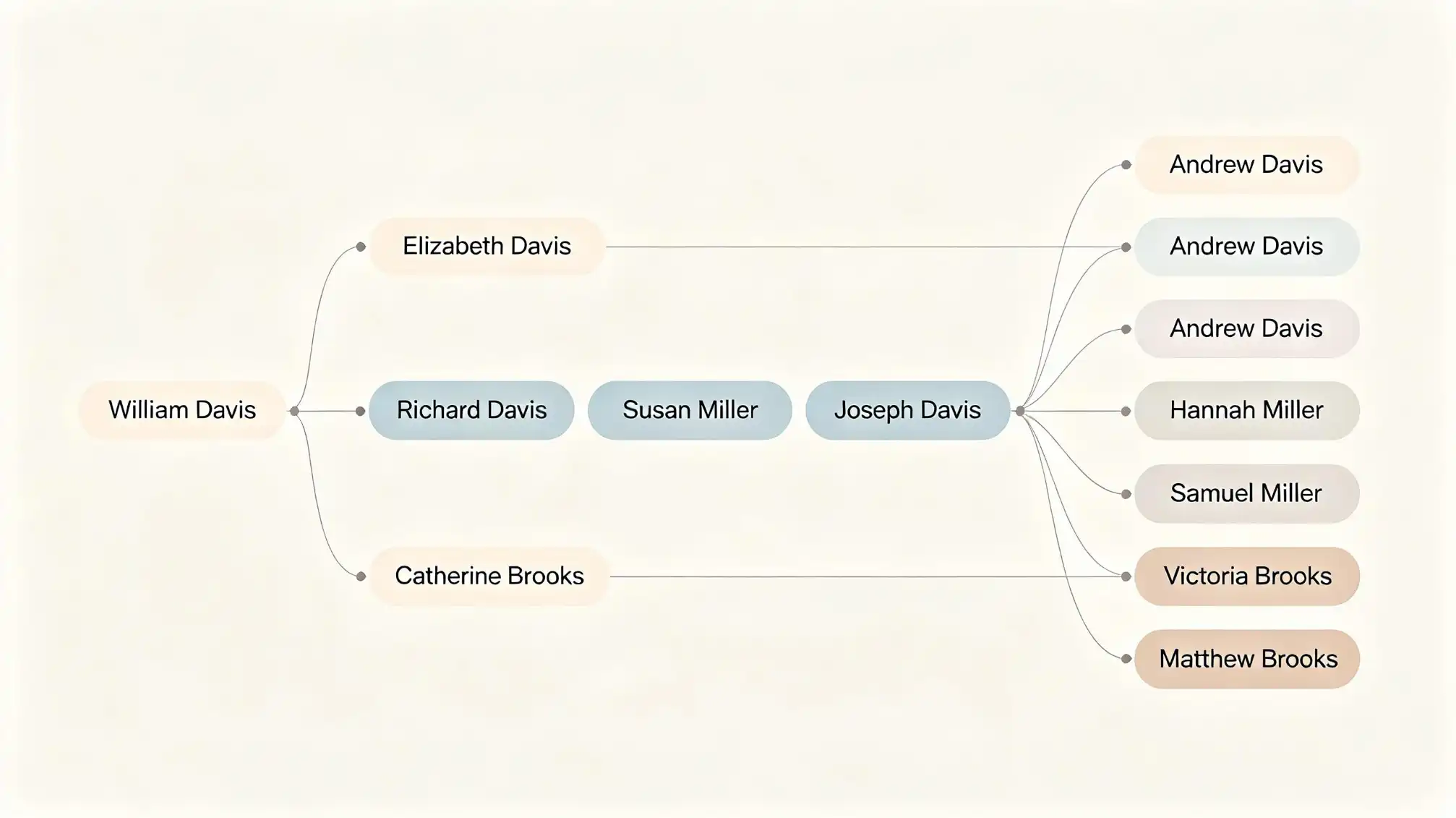
That visual clarity is valuable during family interviews too. When you show a relative a clear chart, they can point to an empty branch and remember a name. The interface becomes a conversation piece, not just a storage space.
Privacy Controls That Match Your Family's Comfort Level
Putting family information online understandably raises privacy concerns. A good online family tree lets you control who what. Living people are usually hidden by default, and you can set individual profiles to private, choose which relatives can edit, and decide whether to make certain branches public for cousin-matching. You can share a read-only link with older relatives who are not comfortable creating accounts, while giving active researchers more access.
These controls are not limitations; they are the reason collaboration is possible. Instead of choosing between total secrecy and full visibility, you can create a tree that respects each family member's comfort level.
What to Look for in an Online Family Tree Platform
Because you are comparing tools, it helps to have clear criteria. First, look for GEDCOM support. That standard format lets you export your family tree and move to another service if the platform no longer fits. Without it, you risk being locked into one site. Second, evaluate the source citation system. A tree without sources is just a collection of names. The best platforms make it easy to attach records and explain where each fact came from.
Third, think about long-term costs. Some services are free with limited storage, while others require a subscription for advanced record hints or collaboration features. Decide what matters more to you: affordability or access to a huge historical database. Fourth, check how well the mobile app works. You might not plan to research from your phone, but a good app means you can capture information while visiting relatives.
Finally, read the terms about data ownership. Choose a platform that allows you to export your tree easily and does not claim permanent rights to your uploaded photos or documents. Your family history belongs to your family, not to a software company.