A family tree is more than a branching diagram that sits inside an old album. It is a map of the people who shaped you, a compact portrait of family history that shows how different lives connect across time. For beginners exploring their roots, understanding a family tree is the first confident step into genealogy.
A Family Tree Turns Names into Relationships
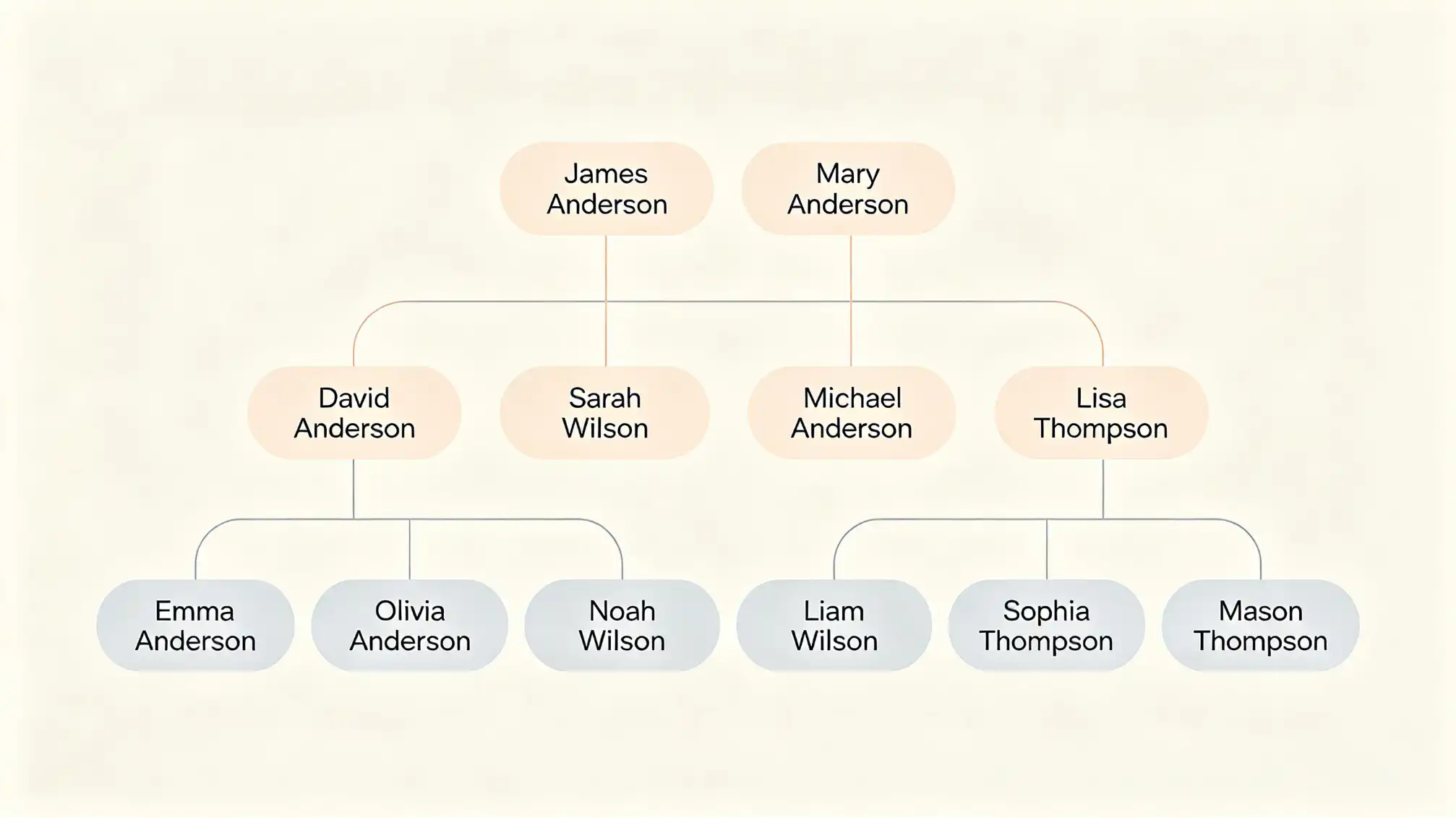
At its simplest, a family tree records direct ancestors and descendants in an organized visual pattern. Most trees start with one person, often you, and then move upward to parents, grandparents, great-grandparents, and beyond. Some trees also move outward to include siblings, cousins, aunts, and uncles. Each branch represents a line of inheritance, not just DNA but also names, traditions, and stories.
This simple structure is what makes a family tree so helpful for family history. Without it, names can feel like fragments. With it, you can finally see how a grandmother in one city and a great-grandfather in another belong to the same larger story. A well-made family tree gives you an instant visual summary of who came before you and how you are connected to them.
Why Does a Family Tree Matter for Family History?
Family history is much more than a list of dates and places. A family tree gives that history a shape. When you place a great-grandparent beside their siblings and parents, you begin to see migration patterns, career choices, and the rhythms of everyday life. You might notice that several ancestors shared the same trade, that one family moved westward over two generations, or that a family name reappeared again and again.
For beginners, a family tree also prevents confusion. In genealogy, there are many people with similar names, and relationships can become complicated quickly. A family tree helps you stay grounded by showing you exactly where each person fits. It becomes the organizing center for everything you learn about your ancestors.
A Simple Place to Start with Your Ancestors
One common question is: who should be included? A family tree can focus on direct ancestors, such as parents, grandparents, and great-grandparents, or on an extended network. Direct-line trees are easier for beginners because each generation is clear. Start with yourself, add your parents, and then add their parents. This vertical chain becomes the backbone of your family history project. Later, you can add siblings and cousins to make the tree fuller.
As you build the tree, try to collect more than names. A family tree comes alive when it is paired with photographs, letters, and oral recollections. FamilyLove’s family page is an ideal place to invite relatives to share memories and to keep the human side of your family history close by. That kind of collaboration makes genealogy feel less like a solo hunt and more like a shared family activity.
Different Ways to Draw a Family Tree
Once you understand the idea behind a family tree, you can choose a format that matches your needs. Different formats make genealogy easier to scan, explain, and expand over time.
- Traditional generation chart: The most common format, with the oldest generation at the top and younger generations below.
- Pedigree chart: A compact form that shows direct ancestors in a clean, sideways flow. It is ideal for tracing a surname back through several generations.
- Fan chart: A circular design that places the present generation at the center and fan out to ancestors around the edge. It is beautiful and useful for spotting missing branches.
Each format gives a different view, but the information behind the diagram remains the same. You can switch formats as your family history grows. What matters most is keeping accurate records and clear connections between generations.
How to Begin Growing Your Family Tree
Starting a family tree does not require expensive software or professional training. You can begin with what you already know. Write down your own name, birth date, and place of birth. Add your parents, then your grandparents. Ask relatives about family names, maiden names, and the places where your ancestors lived. These simple facts become the foundation of your genealogy research.
As you gather information, remember that a family tree is not just a record of the past. It is also a bridge to the present. Seeing the struggles and choices of prior generations can bring a deeper appreciation for your own life. It can also strengthen bonds with living relatives who share those roots. This is why a family tree matters for family history: it is a practical tool, a keepsake, and a way to pass inherited memory forward.