Every family has a story, and your grandparents are the living chapters. Recording your grandparents family history isn’t about interviewing a stranger — it’s about entering a world that existed before you, and making sure you keep it close. You don’t need a professional camera or a long list of formal questions. You only need curiosity, a little patience, and the willingness to truly listen.
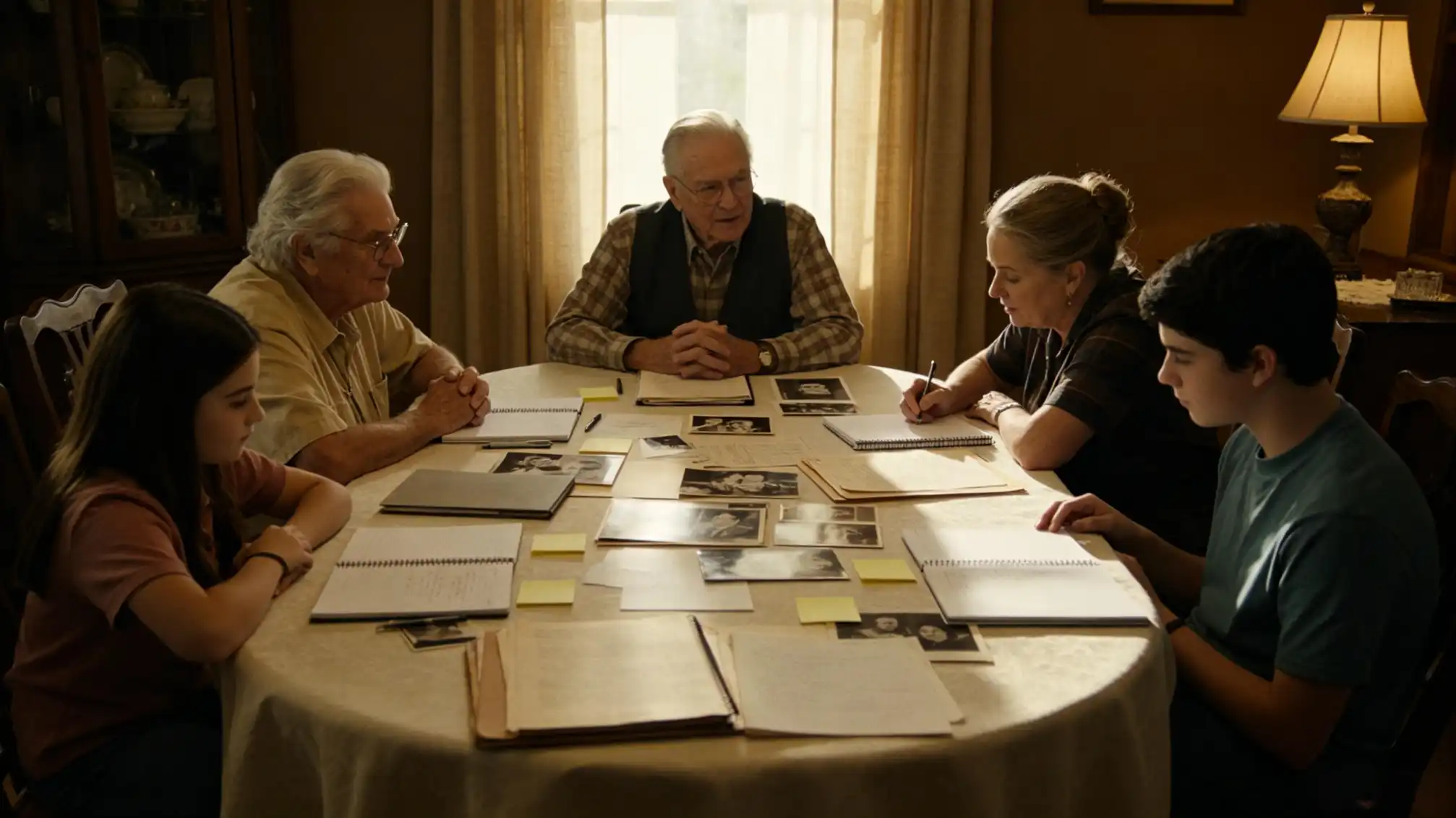
The trick is not to treat your grandparents like a questionnaire. Instead, think of these family history questions as open doors. Some will lead to laughter, some to quiet pauses, and all of them will lead to a deeper sense of belonging. The best questions are the ones that invite your grandparents to tell family stories the way they actually remember them — not as a timeline, but as a living tapestry of moments.
Start with the Senses
If you begin by asking “What year were you married?” your grandparent may answer in one sentence. But if you ask “What did your mother’s kitchen smell like on Sunday mornings?” you’ll suddenly find yourself inside their childhood. Sensory prompts are a gentle doorway into memory. They ask the mind to go back and stand in the middle of the moment.
Try prompts like these:
- What sound do you remember from the house where you grew up?
- What was your favorite meal when you were eight years old?
- What did the air feel like at the end of summer in the place you lived?
- Who had the loudest laugh in your family, and what did it sound like?
These kinds of grandparents family history prompts help your relative relive the past instead of just reporting it. As they describe the smell of rain on hot pavement or the creak of a porch swing, you’ll hear the family stories hidden inside ordinary days.
Let Objects Tell Their Stories
Old photographs are wonderful, but don’t stop there. Pick up an object from your grandparents’ home — a chipped teacup, a hand-woven quilt, a worn leather tool bag. Hold it in your hands and ask: “Who gave this to you?” or “Was this used every day, or only on special occasions?” Objects carry memory differently than words. When your grandparent touches an old item, they are touching a piece of someone they love.
One of the most powerful family history questions you can ask is simple: “If this object could speak, what would it say?” That question often brings out stories that have not been told in decades. You might learn about a family recipe, a wedding gift, or a journey across an ocean. Let the object become the bridge between you and the relatives who came before.
Ask About the In-Between Moments
We often focus on big events — weddings, births, moves, wars. But some of the most precious family stories are found in the in-between moments. Ask about the ordinary texture of daily life: “What did you do after school?” “Who was your best friend on your street?” “What joke did you always tell?”
These questions feel small, but they reveal a personality better than any date on a calendar. You’ll hear about ice cream trucks, bicycle falls, first jobs, and the mischievous things your grandparent did that no one ever knew. These are the grandparents family history treasures that make your family unique. Write them down, record them, and give them a permanent place in your family’s memory.
Honor the Hard Stories
Not every memory is sweet. Some grandparents have lived through loss, war, illness, or separation. You may notice that certain subjects stop the conversation or bring tears to their eyes. Don’t force a painful story open. Instead, leave space for it. You can gently say, “I know that was a hard time. If you ever want to tell me about it, I would be honored to listen.”
Sometimes your grandparent may not want to speak about certain events in detail — and that is okay. The goal of recording grandparents family history is not to collect every fact, but to let your grandparents choose how they want to be remembered. By being patient and kind, you’ll create a climate of trust that may encourage them to open up when they are ready.
Turn Answers into Living Family Stories
Once you have recorded an afternoon of conversation, don’t let those recordings disappear into a drawer. Transcribe the best moments, print the photos, and share them with your family. If you are looking for ideas about how to shape these recordings into lasting keepsakes, visit familylove.love/stories — a warm corner of our site where families are preserving their own family stories. Seeing other families’ journeys can inspire you to keep going, even when the recording gets a little messy or the light is not perfect.
Remember: your grandparents family history is not finished the moment the interview ends. It continues every time you retell a story at a holiday dinner, or read a grandparent’s old recipe out loud, or show your own children a photo of great-grandmother’s garden. Family stories are meant to be told again and again.