You can build a reliable family history without becoming a professional genealogist. Tracing your ancestors is a process of asking better questions, finding the right records, and checking every detail against evidence. This guide walks you from the first conversations around the dinner table to a verified family tree you down.
Why start with your own home
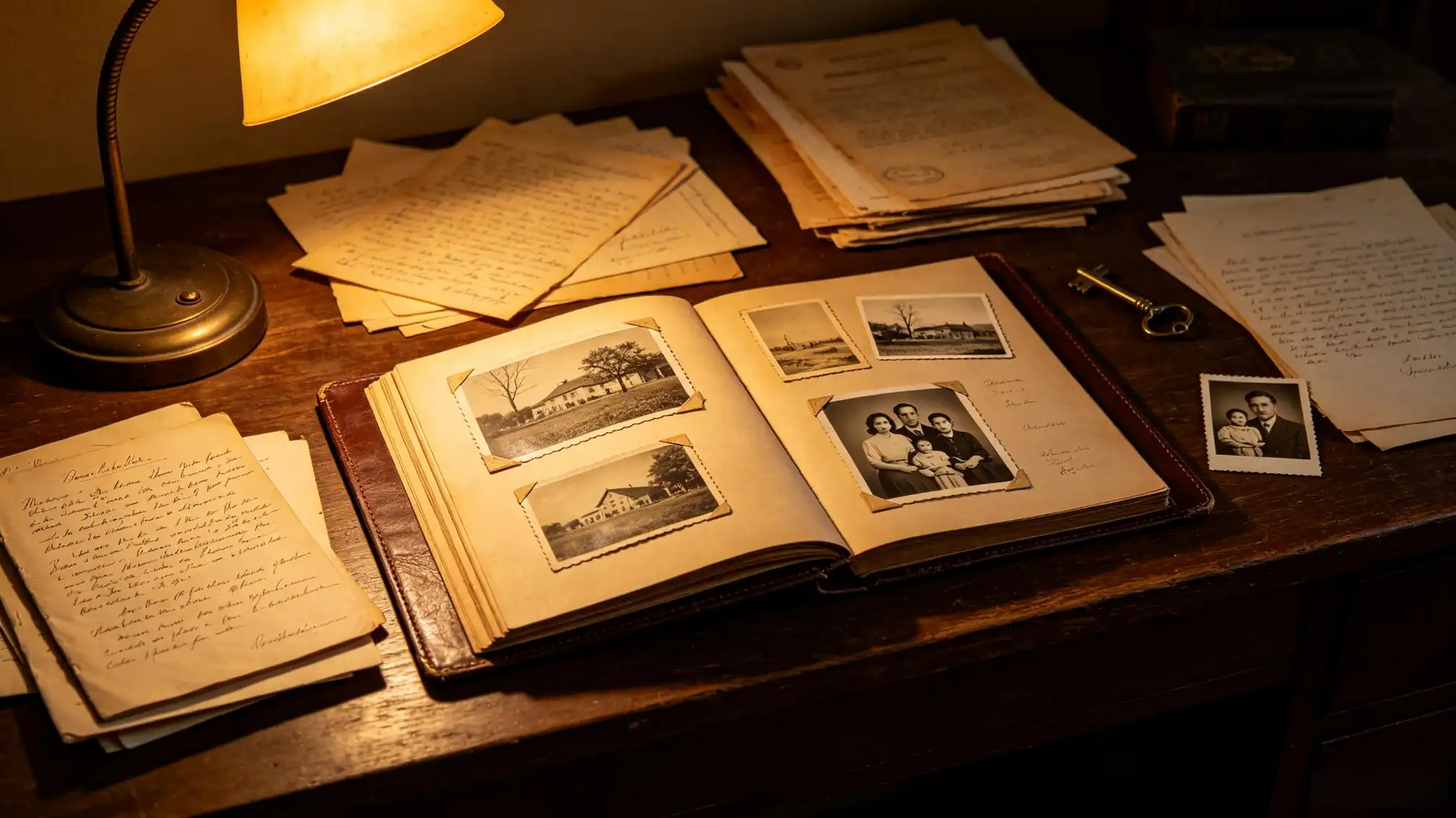
Most people think genealogy begins in an archive. In reality, it begins in your own home. The documents, photographs, and stories scattered across your family are the first and most reliable set of clues. A birth certificate in a drawer, a handwritten wedding invitation, or a family Bible with dates inside can give you more concrete facts than any online database.
Before you open a genealogy website, take inventory. Gather every piece of paper that mentions a family member. Look for old letters, diplomas, soldier records, naturalization papers, and even the back of an old photograph where someone wrote a name and a date. These items are primary sources. They were created at or near the time the event happened, and they will anchor everything you find later.
Build a foundation with the people you know
Start with yourself and work backward. Write down your full name, date of birth, and place of birth. Then do the same for your parents, grandparents, and great-grandparents if you can manage it. For each person, record birth, marriage, and death dates, plus places, occupations, and nicknames. Do not filter at this stage. That odd spelling on an old envelope or the town your grandmother never talked about might be the clue that breaks open your search.
Interview living relatives before memories fade
Older relatives hold details that no website can give you. Schedule a conversation before memories fade. Ask about siblings, neighbors, family moves, and the kind of work people did. Record the conversation with permission, or take careful notes.
- Where were your parents married?
- What did your grandfather do for a living?
- Did anyone in the family emigrate from another country?
- What names were used in the family that never appeared on official records?
These answers become the road map for every record request you make later. You will also hear stories that no document will ever tell you. Those stories are the reason the family tree exists.
Organize a family tree as you go
Use genealogy software or a simple spreadsheet to record what you find. Start with yourself and work backward one generation at a time. Give each person a unique identifier, because relatives often share the same names. Add a source to every fact. A date without a source is a theory, not a fact. This discipline feels heavy at the start, but it saves you from retracing the same broken branch twice.
Your family tree should always show the relationship between two people, not just the name of a person. If you do not yet know how someone is connected, keep them in a separate folder of possibilities. Do not attach them to the tree until you have evidence. Genealogy is full of people who attached the wrong John Smith to their line because they ignored that simple rule.
Work backward through vital records
Once you have names, dates, and places, look for vital records for each generation. Birth certificates name parents, marriage records give witness names, death records often list parents and burial plots. the most recent generation and move backward one step at a time. Do not jump three generations at once. Names repeat, and you will be lost without a documented bridge.
For example, if your grandfather was born in 1920, find his birth record and his parents names. Then find his parents marriage record, which may give you their ages and the names of their parents. Continue that chain. Each vital record should connect two generations with an explicit relationship.
Use census records to place ancestors in time
Census records are one of the fastest tools for building a family tree. They give a household snapshot every ten years and list ages, relationships, occupations, and birthplaces. Search each family member in every possible census year. The ages you find will help you estimate a birth year even when a birth certificate cannot be found.
Pay attention to neighbors as well. In many places, families settled near relatives, so the families listed next door may be married into your line. Census records also reveal surprises: a child who was not in earlier records, a mother living with an adult child, or a shift in occupation that explains why the family moved.
Follow migration and location clues
Ancestors often moved for work, land, or safety. Each record you find has a location attached to it. Track those locations on a map. A sudden change between censuses may point you to a marriage, a job opportunity, or a family event. Local histories, newspapers, and court records become more searchable once you know the right county or parish.
Ask yourself why the family chose that place. It might be a port city, a railroad town, or a farming community where land was offered to immigrants. The reason for moving often appears in naturalization or land records. Those documents can lead you to the previous town or country where your ancestors lived.
Look beyond obvious spellings
Names are not fixed. Records can be written by clerks who spelled what they heard, or by ancestors who changed their names to fit in. Search variants of surnames and given names. Use wildcards in genealogy search engines. If you are looking for Petersen, also search Peters, Peterson, and Pedersen. The same applies to places: the name of a town can be spelled differently in different eras.
Do not rely on the first match that seems close. Look at the original record image when you can. Indexes and transcribed databases contain errors, and a handwritten name can be misread. Comparing the handwriting in several records helps you confirm that you are following the same person.
Build evidence from more than one source
Your goal is not to collect as many records as possible. Your goal is to prove the relationships between generations. A birth certificate alone can be misleading if the child was adopted or the father was not named. Pair certificates with census data, family Bibles, obituaries, and DNA matches when available. When several independent sources agree, you can safely move the line backward.
DNA testing is a useful extra tool, but it does not replace documents. A DNA match can point you to a distant cousin or an unexpected branch. Use it to confirm a hypothesis you built from written records. Never change your family tree based on DNA alone, because identical ancestors are often shared through multiple lines.
When you hit a brick wall, change your angle
Brick walls are rarely complete dead ends. They usually mean you have not found the right record, or you are looking in the wrong place. Revisit your notes and ask which fact you actually know. Often, a surname you ignored or an unmarried aunt keeps a clue. Search for the family in the next county over, or look at land records that mention neighbors.
Try the records of institutions your ancestors may have interacted with: churches, schools, hospitals, courts, and military units. A pension file, for example, can contain a life history that no census or vital record will give you. Look for directories and newspaper archives as well. Their details are easier to reach than ever.
Keep the stories attached to the names
A family tree with names and dates is a map, but the stories make it meaningful. Preserve the anecdotes you collect from interviews, the photo captions, and the newspaper clippings. If you need inspiration, browse the family stories section on FamilyLove.love; other families have shared how they preserved memories in ways you may want to borrow. Then write your own versions for the next generation.