Genealogy is often imagined as dusty archives and complicated charts, but for most families it begins at the kitchen table. The most useful genealogy work happens when you combine a clear process with a sense of curiosity. If you have ever wondered who your great-grandmother really was, or where your surname came from, you already have what it takes to begin.
What Is Genealogy and Why Does It Matter?
Genealogy is the study of family lines and relationships. It is more than a list of names and dates. It is the practice of reconstructing the lives of your ancestors so their experiences are not lost. Family history gives context to your own identity. That sense of belonging can be surprisingly powerful. When you learn that your great-great-grandfather was a farmer, a sailor, or an immigrant, you begin to see patterns in your own choices. The topics of genealogy and family tree building often overlap, but genealogy is the deeper work behind the chart.
Start with What You Know: The First Branch of Your Family Tree
You do not need a paid subscription or a library card to begin. The best data source is your own memory and the people closest to you. Sit down with paper and list the members of your immediate family: parents, siblings, grandparents. For each person, write the maiden names, approximate birth years, and any places you associate with them. This simple exercise is the foundation of family tree research. Your goal is to create a solid root system before adding new branches.
After you have captured your own memories, call a parent, aunt, or older cousin. Let them talk freely while you take notes. Ask about weddings, migrations, and unusual names. The small details matter. A middle name can reveal a mother's family. A holiday tradition can point to an immigrant origin. Record the source of each piece of information, because a family tree without sources is only a collection of guesses.
A Gentle Framework for Collecting Family History
Professional genealogists use a simple rule: work from the known to the unknown. This is the same principle used in any good family history project. If you try to find your ancestor from the seventeenth century before you have documented your grandmother's birth, the task will feel overwhelming. Start with the person whose details you can verify, and then move backward one generation at a time.
Make a simple chart with columns: name, date, place, and source. When you add a new person, ask yourself whether you can support that entry with a record or a photograph. If you cannot, mark it clearly as a clue. This method keeps your research honest and makes it much easier to decide what to pursue next. Genealogy grows quickly, but it grows best when every new branch has a clear connection to something you already know.
Finding Names, Dates, and Places: Moving Beyond Memory
Once you exhaust your family's memory, move on to public records. Census records, birth certificates, marriage licenses, death records, and cemetery registers are the bread and butter of genealogical research. Many of these documents are available online. You can begin with free collections provided by government archives or cultural institutions. A simple search for your grandmother's surname and birthplace could reveal a census page from the early twentieth century.
When you locate a record, save a copy and note where you found it. Photograph the headstone if you visit a cemetery. Look at the names of neighbors; in the past, extended relatives often lived nearby. Those small connections often unlock the next generation. As you gather your ancestors' stories, you may also want to keep a digital folder or a notebook where you collect every document.
Managing Your Gathering: Documents and Digital Tools
Genealogy generates papers quickly. After a few weeks of research, you will have record images, family photographs, and handwritten notes. Finding a system early saves you from frustration later. You do not need complex software. A set of well-labeled folders can work. If you prefer digital tools, many genealogy websites allow you to build a family tree and attach images directly to people.
Choose one place to store your family tree. Keep duplicates in a safe location. Whenever you receive a new document, save it immediately with a file name that includes the person's name, the event, and the year. For example, "Clark_Emma_Birth_1898.jpg" tells you more than "scan1.jpg." This tiny habit will make your future research much easier.
PreservingAncestors' Stories with Care
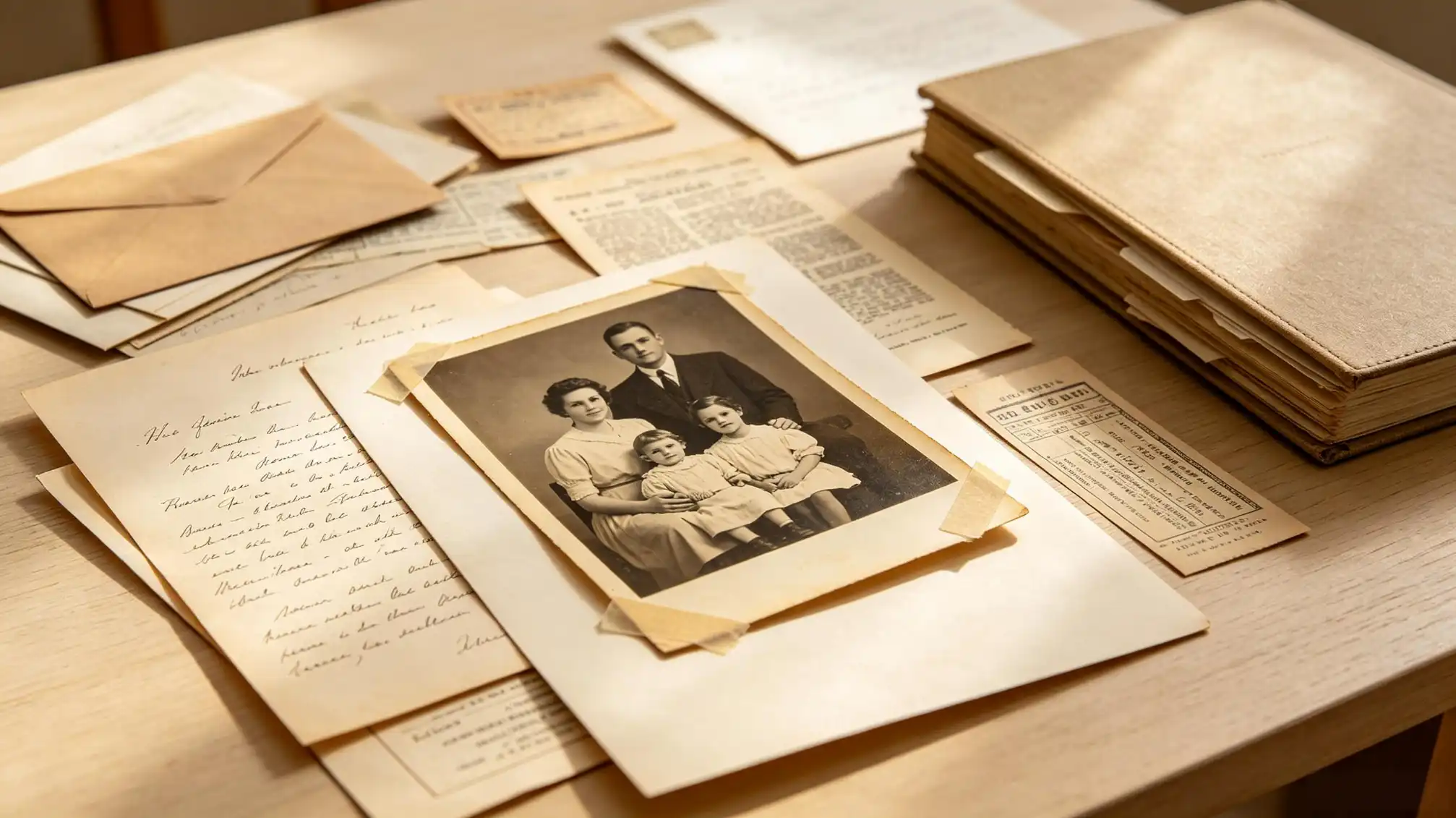
As you build your family tree, you will collect more than data. You will hear stories about a grandparent's first job or a great-uncle's sense of humor. These stories are the soul of your family history. Photographs and documents provide proof, but stories give those facts meaning. Write down everything you hear, even if it feels small at the moment. Future generations will treasure the memory that your ancestor always wore a red hat or planted tomatoes behind the barn.
Digital preservation is also part of genealogy. Scan old photographs at high resolution and store them in more than one place. Add a caption to every image with the names of the people in it and the approximate year. If you are able, share these preserves with relatives. You can also collect family legends and respond to them with kindness while gently checking them against records. Not every family story is factually correct, but every story tells you something about how your ancestors saw themselves.
Connecting with Relatives and Community
Genealogy works best when it is a shared effort. A cousin might have a box of letters your father never knew about. An elderly neighbor might remember the family who lived down the road. Reaching out to relatives is not only practical; it also strengthens family bonds. Ask open-ended questions and record the conversations when possible. You can share your findings with the wider family and invite them to contribute their own memories.
If you are looking for inspiration, explore the family stories shared by others at the Family Love stories page: https://www.familylove.love/stories. Seeing how other people describe their ancestors can remind you that your family history is not just a list of names. When you read about the challenges others have faced and celebrated, you may recognize your own family in those lines.
Your ancestors have waited this long to be remembered. You do not need every answer today. Start with one name, one story, and one open conversation. That is all genealogy requires.