If you have ever tried to trace your family history with a paper chart, you know how quickly a small project can become complicated. One correction in a corner of the page, a new cousin discovered through a DNA test, or the same ancestor recorded under two spellings can turn a neat diagram into a mess. An online family tree fixes that by giving you a structured, collaborative, and always-updated place to manage your research.
The paper chart trap
Paper charts and local spreadsheets are fine for a first draft, but they create several practical problems. First, they are hard to update. Every time someone marries, adds a child, or corrects a date, you must redraw or retype the entire chart. Second, they cannot be easily shared with relatives who live in different cities. You end up emailing versions, and then you cannot tell which version is current. Third, they rarely encourage you to record sources. Without sources, a family tree is just a list of names that someone else can question.
An online family tree removes all three limits. It lets you edit one fact without changing the rest of the tree, it keeps everyone on the same version through a shared link, and it gives a natural place to attach records and footnotes. That is why most family history work today begins with a digital tool.
One shared version for the whole family
When several relatives are interested in family history, the biggest problem is usually communication. One aunt has the birth certificates, a cousin has scanned photographs, and your uncle remembers the story behind a family nickname. A paper tree cannot bring those pieces together. An online family tree can.
By putting your family history in one digital place, you create a single source of truth. People can log in, check the facts, add their own memories, and attach documents without changing what you have already entered. The data stays organized because the structure of the tree controls where each person belongs. It is easier to spot missing branches, duplicate entries, and unanswered questions.
Collaboration turns research into a family project
The best reason to move your research online is not storage. It is participation. Grandparents often have information that their grandchildren do not even know to ask about. An online family tree gives both generations a reason to work together. Younger members can digitize old letters, while older members can provide the names and places needed to understand them.
This shared approach works well when every person has clear tasks. Start with a small group of close relatives and let them become comfortable with the tool. You can create a simple family group on the family page and invite members to fill in their own details, add photos, and leave notes for others. Once the group sees how easy it is, they will be more willing to help with deeper research.
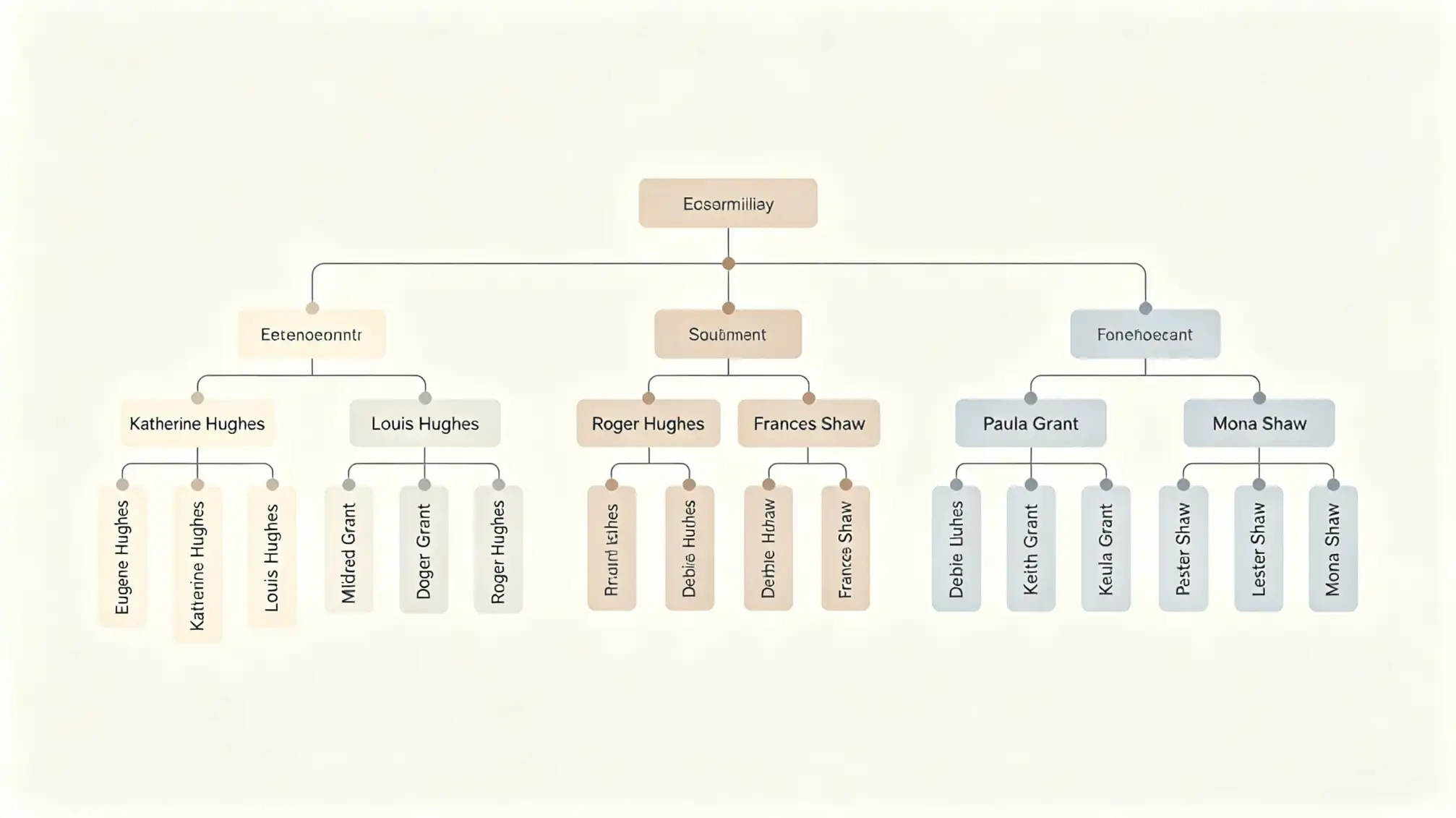
What to look for when comparing online family tree tools
Not every genealogy platform works the same way. Since you are comparing digital family tree tools, look for these features.
- Ease of editing. Adding a person or correcting a date should take seconds.
- Source support. The best family tree software lets you attach a census record, a certificate, or a scanned letter to each fact.
- Media storage. Choose a tool that keeps photos, audio files, and documents with the correct person, not in a separate folder.
- Privacy controls. You should be able to keep living people private and publish only what you intend to share.
- Sharing permissions. Some relatives may want to edit; others should only view.
- Export options. You should always be able to download your family tree in a standard format such as GEDCOM.
Try the free tier of a few tools before committing. Enter the same three generations in each one. That exercise will show you which platform feels natural and whether it fits the way your family wants to share information.
Preserve stories, not just names and dates
A family tree is more than a list of lineage. The stories, traditions, and recorded voices of the people in it are what make your family history meaningful. An online family tree gives you room to preserve those details. You can upload a video of a grandparent explaining how they met, attach a scan of a handwritten recipe, or add a note about the town where the family settled.
Because the digital record is easy to duplicate, you never have to worry about a single photo album being lost. Cloud-based genealogy platforms protect your files and make them available to family members who live far away. Over time, the tree becomes a digital archive that helps future generations understand the decisions and experiences that shaped the family.
Keeping your research honest
Genealogy research is full of incomplete records and conflicting details. An online tree encourages good habits because it separates facts from memories. You can mark a date as estimated, add a note explaining why you believe a census record matches, and list the source for every significant event. This transparency matters when a cousin asks how you reached a conclusion.
Recording your reasoning also helps you avoid repeating mistakes. If you later find new evidence, you can update the tree without losing the context of the old idea. In that way, an online family tree works like a research notebook: it tracks what you know, what you suspect, and what still needs to be confirmed.
A practical choice for the future
Digital files may fade or change format, but the best genealogy platforms export data into open standards. That means the time you spend building your family history does not have to be locked inside one service. You can move your tree to a new provider, share it with a genealogy archive, or give a copy to a family member. This freedom matters if you are thinking about the long-term survival of your research.
What makes an online family tree useful is not technology itself. It is the consistent way it helps you record, verify, and share what matters. If you are ready to move beyond paper charts, start small, choose the right tool, and let the family help you grow the tree one branch at a time.