Building a family tree often feels like a journey into the distant past, but the most reliable route actually begins in the present. A strong family tree is built on the generations you know best: your parents and grandparents. In this practical guide, you will learn how to build a family tree with parents and grandparents as the core, then gradually add relatives and ancestors from there.
Why Parents and Grandparents Are the Perfect Foundation
When you start close to home, you avoid the guesswork that often comes with older records. Your parents and grandparents can confirm names, dates, and connections before you move into archives or online databases. This close-in approach also makes the tree personally meaningful because you understand each person's story before adding unknown branches.
Think of it this way: the tree is not a list of names. It is a map of relationships. Parents and grandparents anchor that map. Once those anchors are firm, every new relative you add has a clear place to attach.
Step 1: Collect What You Already Know
Before interviewing anyone, write down what is already in your memory. This simple step shows you what is complete and what is missing. Create a page for each parent and grandparent, and fill in these key fields:
- Full legal name and nicknames
- Date and place of birth
- Date and place of marriage, if applicable
- Significant life events such as moves or career changes
- Date and place of death for those no longer living
Do not worry about perfection. The goal is to create a skeleton. Later conversations will add the details.
Step 2: Interview Parents and Grandparents
Your parents and grandparents hold the memories that no record can fully capture. Ask open-ended questions and let them lead. Record the conversation with permission, or take careful notes. You might ask about their own parents' personalities, family traditions, or the reasons behind certain family moves. These answers turn a dry chart into a living family story.
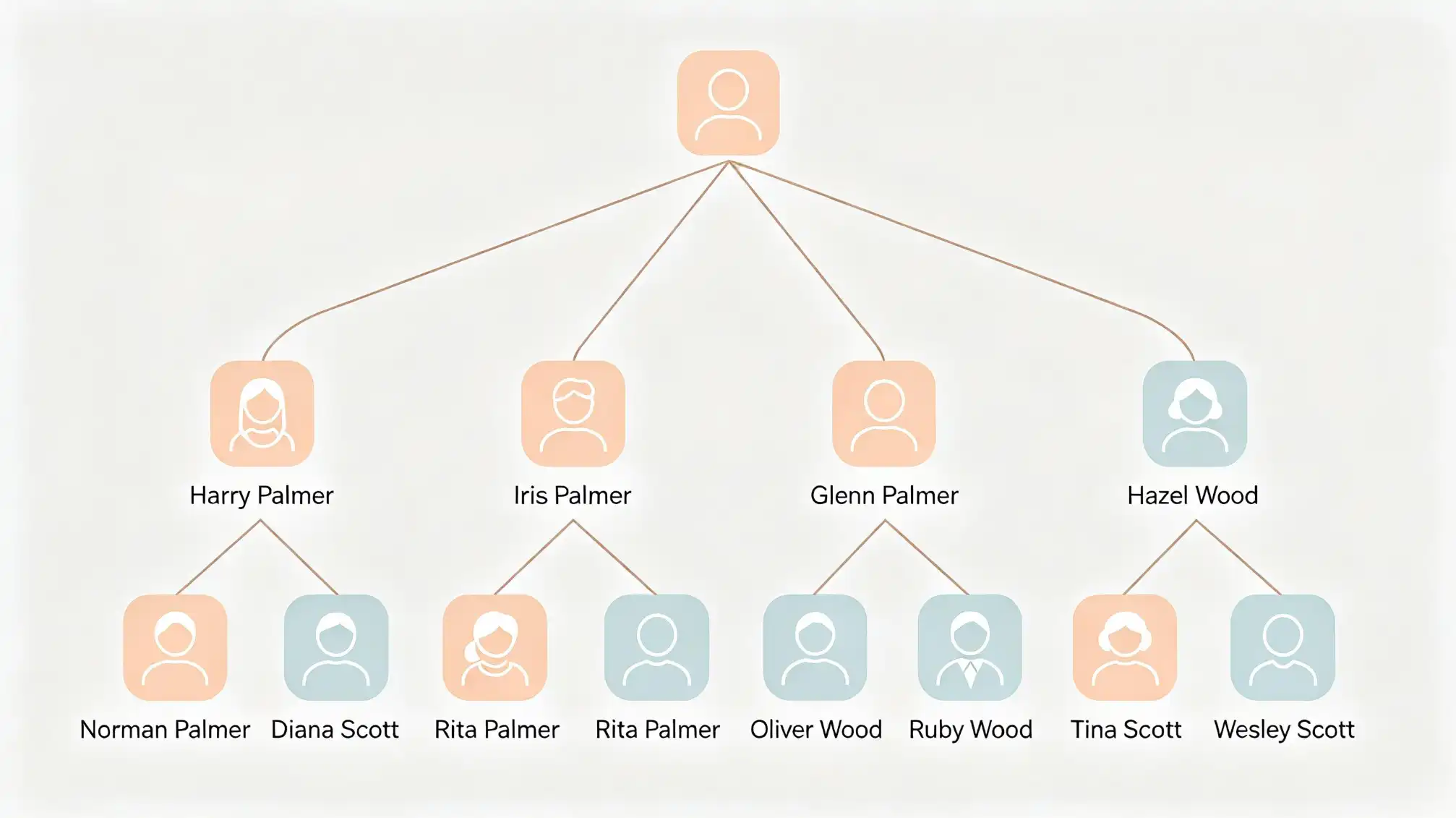
As you gather stories, you may also want a place to organize photos, contact details, and relationship notes. The family hub at FamilyLove is designed for exactly this kind of organization, so you can keep your research connected to the people behind it.
Questions That Open Conversations
If you are not sure how to begin, use these prompts to get relatives talking about the past:
- What do you remember about your grandparents' home?
- How did your parents meet, and what was their wedding like?
- Were there any family nicknames or sayings that got passed down?
- Which places did the family live in over the years?
- Who was the relative everyone went to for advice?
These questions create natural openings for names and dates to come out without feeling like an interrogation.
Step 3: Look for Paper Trails
After interviews, turn to documents to confirm what you heard. Parents and grandparents often have birth certificates, marriage licenses, naturalization papers, and old letters. These documents give exact dates and places that might be blurry in memory. You do not need to become a professional genealogist. A few verified records are enough to make your tree trustworthy.
If you need help reading an old certificate or finding local records, public libraries and online archives are excellent next stops. Your relatives may also have family Bibles or photo albums with names written on the back. Treat every source as a clue, not a conclusion.
Step 4: Choose a Simple Tree Format
Now that you have a clear picture of your parents and grandparents, decide how to display the tree. A simple three-generation chart is perfect for beginners. You can draw it by hand, use a spreadsheet, or choose a dedicated family tree tool. The format matters less than the information it holds.
If you are using a digital format, enter the core facts first, then add notes and stories. If you are drawing, use circles for one side of the family and create separate branches for the maternal and paternal sides. Keeping these separate prevents confusion when you expand later.
Step 5: Check and Connect the Generations
A family tree is only useful if the connections are accurate. Go through your tree line by line. Check that each parent is connected to the correct grandparents, and that dates do not contradict each other. For example, a parent cannot be born before their parents' marriage unless the marriage date is different from what you recorded. Small timing checks can reveal missing details or mistaken assumptions.
This step is also where you decide how far to expand. Once your parents and grandparents are solid, you can work backward to great-grandparents or outward to aunts, uncles, and cousins. The same pattern repeats: ask relatives, gather documents, and verify connections.
Handling Missing Information
Not every branch will be complete on the first attempt. If a grandparent is no longer alive and no one in the family remembers their exact birth date, leave that space open. Add a note about where the information might be found, such as a county birth index or a military draft card. Missing details are not failures; they are signposts for future research.
As you fill gaps, keep track of which relatives helped you. That way, you can return to them with follow-up questions and keep the family story alive through shared effort.
Expanding to Relatives and Ancestors
Once the parent and grandparent lines are stable, the natural next step is to expand outward. Brothers, sisters, aunts, uncles, and cousins all belong on the same tree. These relatives can also act as bridges to older generations because they may remember shared events or hold photos you have never seen.
For ancestors beyond your grandparents, apply the same method on a smaller scale. Look for census records, immigration documents, and obituaries. Each source should connect back to a person already on your tree. This is how you build a reliable family tree that grows in both directions: broad with relatives and deep with ancestors.