More Than Names on a Chart
When most people imagine a family tree, they picture an ancient oak with branches spreading outward and ancestors perched on each limb. But the real value of a family tree goes far beyond that tidy illustration. It is a visual and emotional map of the people who shaped your life before you even arrived. It connects you to your family history, reveals patterns in your ancestry, and gives you a deeper sense of where you belong in the world.
For beginners exploring family history, the idea of a family tree can feel both exciting and overwhelming. You may wonder where to start, which relatives to include, or how to handle missing information. The truth is that every family tree begins with a single, simple act: writing down what you already know. From there, each name becomes a doorway into a richer story of migration, resilience, love, and tradition.
A Living Map of Relationships
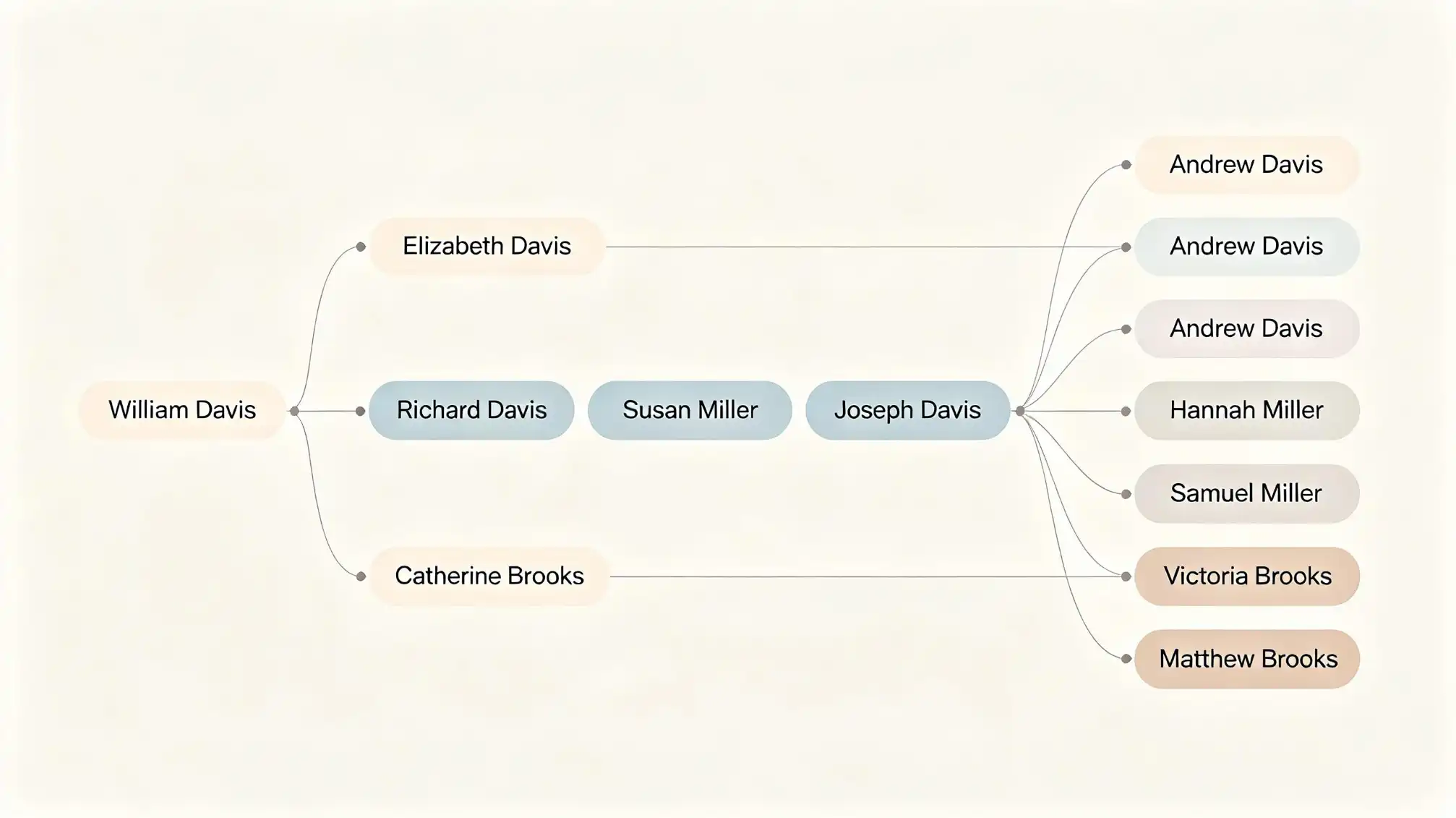
At its core, a family tree is a structured record of kinship. It organizes generations of people into a clear visual format so you can see how you are related to your ancestors, cousins, aunts, uncles, and grandparents. Most diagrams use the traditional vertical format, with yourself at the base and your parents above, then grandparents, and so on. This is the classic genealogy tree, but there are many variations depending on what you want to highlight.
Some family trees focus on direct lineage, tracing only your parents, grandparents, and great-grandparents. Others expand horizontally to include siblings, cousins, and extended relatives. Some are drawn as fan charts, pedigree charts, or even circular designs. Regardless of the format, the purpose remains the same: to make your family history visible and shareable.
When you begin to fill in the branches, you may notice familiar names and also discover relatives you never knew existed. A family tree can embrace blood relatives, stepfamily members, adopted family, and chosen family. The most meaningful trees are not always the most complete; they are the ones that reflect the real relationships that matter to you.
Why Family History Matters
Knowing your family history is more than a nostalgic hobby. It gives you context for your own identity and choices. When you learn that your great-grandmother started a small bakery during difficult times, you may better understand your own passion for cooking. When you discover that several generations of your family moved across the country for new opportunities, you begin to see your own sense of adventure as part of a longer story.
Family history also strengthens bonds between living relatives. Asking older family members about their childhood, their parents, and the stories they heard from their grandparents can turn a quiet Sunday afternoon into a meaningful conversation. A family tree becomes a shared project that brings generations together.
Genealogy research also teaches patience and critical thinking. As you move backward in time, you learn to compare records, evaluate evidence, and accept that some information will remain uncertain. These skills are valuable in any part of life, and they make the final family tree all the more rewarding.
Where to Start Your Own Family Tree
If you are new to family history, the best place to begin is with your immediate family. Write down your own name, your birth date, and your birthplace. Then add your parents, their marriage date if applicable, and your siblings. Move outward to your grandparents and try to capture maiden names, locations, and important dates.
Do not worry about filling every branch perfectly. Start with pencil and paper or a simple digital document. Many beginner genealogists find it helpful to use a dedicated chart, but you do not need special software at first. Just make a clear list and watch how quickly the story expands.
Next, talk to the elders in your family. They carry stories that no public database can ever match. Record their voices if you can, take notes, and ask gentle questions about their parents and grandparents. You will often hear not just names, but also vivid memories that bring the tree to life. As you begin this discovery, you may want to explore our family page for a simple, warm space to record the people who matter to you and start building your visual tree.
Filling in the Gaps
Once you have gathered what you know from memory, you can turn to external sources. Birth records, marriage licenses, census lists, immigration papers, obituaries, and family Bibles are all rich resources. Online genealogy databases can also speed up your search, but always double-check the information you find against multiple sources. A family tree is only as reliable as the documentation behind it.
As you search, you may encounter missing branches or distant ancestors with common names. Take time to verify each connection. One misplaced name can lead you down the wrong path for hours. Keep a research log of where you found each fact, and note the questions that remain unanswered. This careful approach will save you frustration and make your finished tree more trustworthy.
How Far Back Can You Go?
Many beginners wonder how many generations they can realistically trace. The answer depends on your family's records, your country of origin, and the resources available to you. Some families have documents stretching back four or five generations, while others rely on oral tradition for several hundred years. In some cultures, genealogy is deeply embedded in daily life, with grandparents teaching children to recite their ancestors from memory.
Do not measure your success by the number of generations you reach. A family tree with three fully documented generations can be just as meaningful as one that goes back to the 1600s. The goal is to understand and honor your ancestors, not to compete for the oldest line.
Keeping Your Family Tree Alive
A family tree is never truly finished. New babies are born, marriages take place, and new stories emerge as younger relatives grow older. Make your tree a living document by updating it regularly and adding notes about important life events. Consider sharing a copy with your family so that others can contribute their memories and correct mistakes.
You can also add photos, letters, and short biographies to enrich the names on your tree. A date and a place are useful, but a short story about that ancestor's laughter, courage, or kindness is what makes the tree feel real. This is the difference between a simple genealogy chart and a treasured family legacy.