Family Memories: How to Build a Living Family History Together
Somewhere between a thousand phone pictures and that shoebox of old prints, our family memories are waiting to be rediscovered. We take photos, we caption them, we save them to one more app—and then we rarely look at them again. But what if your family home itself could become the keeper of your family history? Not a dusty archive, but a warm, shared space where memories are seen, told, and added to again and again.
This is not about being perfect at scrapbooking or buying expensive storage. It is about choosing one spot in your home—a wall, a tabletop, a digital frame—and inviting the whole family to turn it into a living memory hub. Here’s how to do it in a way that feels natural, fun, and deeply personal.
Start With Your Own Family History, Not a Perfect System
The biggest trap in preserving family photos is waiting for the “right” organization system. Systems fail. Instead, start with a simple question: Where does our family naturally gather? It might be the kitchen table, a stairway wall, or the living room bookshelf. That place is your future memory hub.
Next, gather a few favorite shots of my family history—the ones that mean the most right now. Don’t worry about sorting every photo dating back to 1995. Choose ten or twenty that spark conversation. Print them, or load them into a shared digital frame. The goal is not to finish a project; it is to start a habit.
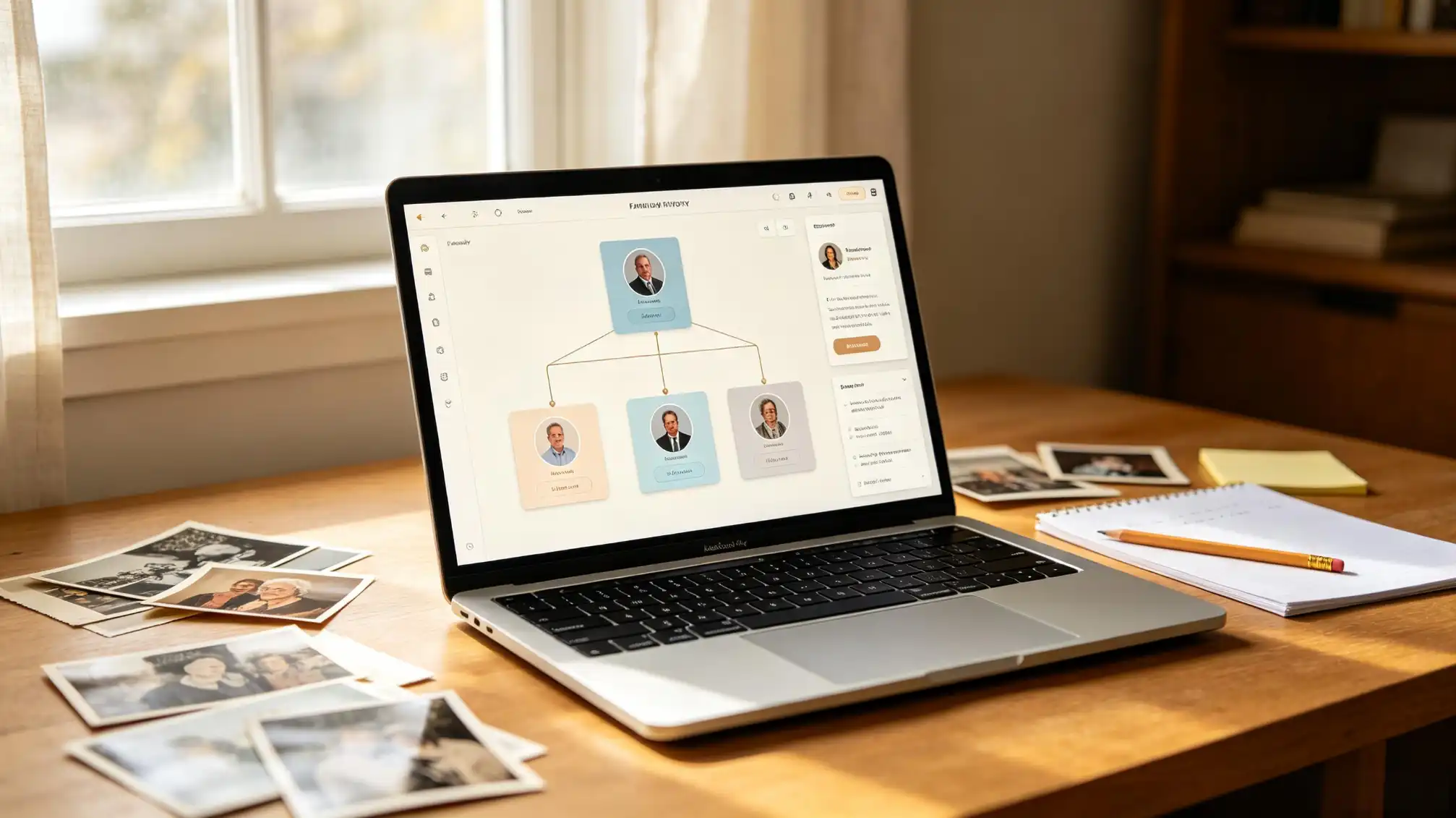
Make the Shared Space Do the Remembering
Once you have a designated spot, you can begin to layer memories in low-effort ways. Here are a few tried-and-true ideas for a shared family memory space:
- The weekly “remember when” wall: Each Saturday, invite every family member to add one printed photo or a note about a favorite moment from the week. Tape it to the wall or pin it to a corkboard. Over time, this becomes a colorful mosaic of ordinary joys.
- A family memory jar: Keep a small jar on a shelf. Whenever something memorable happens—a funny dinner, a kind word, a little victory—write it on a scrap and drop it in. Read the notes together on birthdays or New Year’s Eve.
- A digital frame in a busy spot: If your family is scattered across devices, a shared digital frame on the kitchen counter can cycle through family photos without anyone having to open an app.
- A small “memory box” with big heart: Let each child decorate a box for their own treasures. Inside can be tickets, drawings, and notes that, years later, become gold dust for your family history.
Tell the Stories Behind the Screens
Preserving family memories is about more than storing images. It is about keeping the stories alive. During a family dinner or a lazy Sunday, pull up a photo from the wall or the digital frame and ask one simple question: Who remembers this day? Then let everyone take a turn telling what they remember.
You might be surprised at how differently each family member sees the same moment. One person remembers the dog stepping in the cake; another remembers the aunt’s loud laugh. All of those versions are your my family history in full color. Write them down in a shared notebook or a family group chat—even record them as voice memos. The telling is what turns a picture into a memory that lasts.
If you need a nudge, you can find story prompts and spaces to collect these bits of family love on our family stories page. Use it as a cozy afternoon activity.
Let the Space Grow With Your Family
A shared memory space should never feel like a museum. It is allowed—encouraged, even—to change. When a new school year starts, swap out old photos for new ones. When someone graduates, add a cap picture. When you bring home a new baby, you will naturally want to make room for that tiny face.
Let each family member curate a “turn.” One month, a teenager can grab a few concert shots; the next, a grandparent can contribute prints from their own childhood. This keeps the space alive and teaches the whole family that we are always making family memories, even while we honor the old ones.
Connect the Physical and the Digital
You do not have to choose between a decorated wall and a hard drive. Use the shared space as a launchpad for deeper preservation. Once a year, gather the year’s favorite photos from the wall and ask everyone to pick one to keep. Scan that selection into a shared cloud folder labeled by year. Add a sentence or two to each photo—who is in it, what was happening, what makes it special.
This small ritual is a gentle way to build a lasting archive without turning into a family historian overnight. The wall holds the present; the folder holds the past; and your family holds the connection between them.