Grandparents Family History: Gentle Questions to Unlock Their Hidden Stories
When you decide to record your grandparents family history, it feels like opening a treasure chest you have never fully opened. You know there are stories in there—but where do you start? The best approach is not an interrogation. It is a slow walk through their memories, with the right family history questions as your guide.
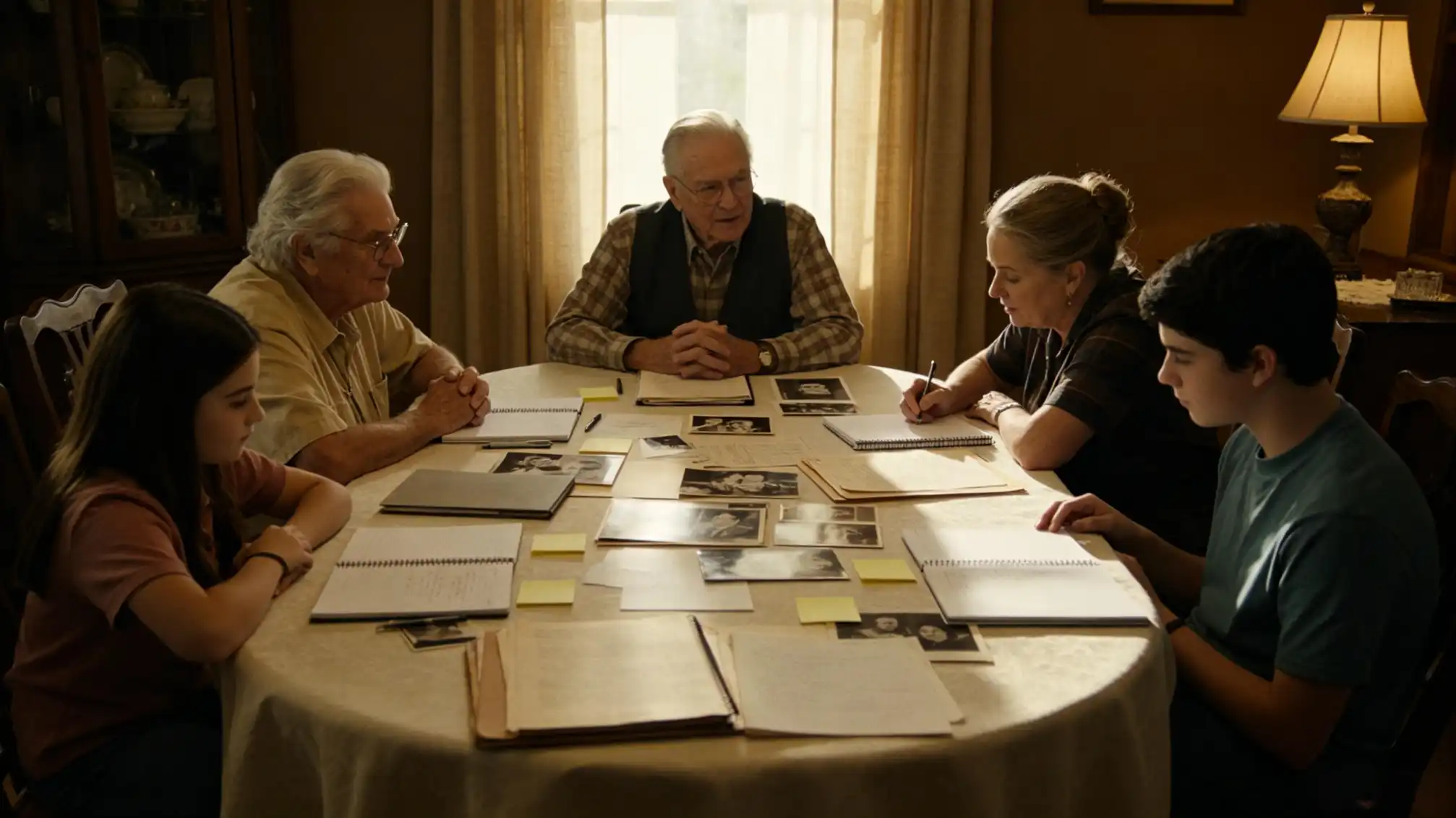
Set the Scene Before You Begin
Before you ask anything, take a breath. Choose a time when your grandparent is relaxed—maybe after a meal, on a quiet afternoon, or during a long car ride. If you plan to record, set your phone or small recorder on the table openly, but don't make it the centerpiece. The most important thing is your posture: lean in, make eye contact, and let your curiosity show. You are not there to collect facts; you are there to be with them.
You might start by saying something like, 'I have been thinking about how little I know about our family's early days, and I would love to hear about yours.' That simple invitation is often all it takes.
Start With the World They Remember
Many people ask, 'What was life like when you were young?' That is too big. Instead, pick one corner of their memory and ask them to describe it. 'What did your street look like when you walked to school?' or 'What did your mother's kitchen counter hold on a typical evening?' These questions give you a rich, textured answer that feels more like time travel than a history lesson.
Try these to open the door:
- 'What did the room you slept in as a child look like?'
- 'Who in your family got up first in the morning, and what did they do?'
- 'What was the nearest neighbor's house like?'
Ask About Ordinary Days, Not Just Big Events
Weddings, births, and moves are important, but the real flavor of grandparents family history lies in the ordinary. Ask about the smell of bread, the sound of rain on a tin roof, or the song that was playing when they first learned to dance. You will find that these relatives' stories carry more emotion than a list of dates ever could.
Use prompts like:
- 'What was the best weekday meal you remember from childhood?'
- 'What did you do on a rainy Saturday afternoon?'
- 'What sounds came through the window at night?'
Follow the Silence Gently
Some memories are heavy. Your grandparent might pause, look away, or say, 'That is not something we talk about.' Respect that, but let the silence exist. Often, after a few moments, they will continue. You are not a reporter; you are a grandchild. Your quiet presence is a safe container for whatever they choose to share.
If they seem open, you might ask:
- 'What was hard about that time?'
- 'What did you learn that you still carry today?'
- 'Who helped you most when life got difficult?'
Bring One Relative Into the Spotlight
Instead of asking, 'Tell me about your family,' choose one name. 'What was your aunt Rosa really like?' Or 'What do you remember about your grandfather's laugh?' Focusing on one relative at a time gives your grandparent the chance to tell a story with a shape—beginning, middle, and end.
You can also ask family history questions that connect generations:
- 'Which relative do you think I resemble in personality?'
- 'What is a saying or phrase that came from someone in our family?'
- 'Who in the family was known for a special skill or craft?'
Capture the Details You'd Forget
When your grandparent talks, write down the small things: the color of a dress, the name of a dog, the way someone buttered their bread. These details are the heartbeat of your grandparents family history. If you are recording a conversation, do not be shy about asking them to pause after a story so you can jot down a note.
Later, you can turn those notes into a written story or a simple post. A wonderful way to keep the whole family involved is to share what you collect on a private family space like familylove.love/stories. It becomes a living archive instead of a forgotten notebook.
Share Your Own Stories to Keep the Door Open
Memory is a conversation, not a broadcast. As your grandparent recalls something, offer a small memory of your own. 'That reminds me of you teaching me to ride a bike.' When you share, you show them that their life is connected to yours. This often unlocks even deeper stories because they see you not just as an interviewer, but as part of their continuing story.
You might say:
- 'When I was little, you used to...'
- 'We still make your recipe for...'
- 'Do you remember how I asked you to tell me the same story every night?'
Those shared moments become some of the most precious relatives' stories you will ever have.
The best time to capture grandparents family history is now. You do not need recording equipment or a list of every question in the world. You just need curiosity, a cup of tea, and a willingness to listen without rushing. Let the conversation wander. You will be amazed where it goes.