{
"title": "My Family History: Turning Personal Stories into a Family Tree",
"metaTitle": "My Family History: How to Turn Stories into a Family Tree",
"metaDescription": "Learn how to turn my family history into a family tree from personal stories. Practical steps, memory prompts, and gentle guidance for beginners.",
"metaDescription": "Learn how to turn my family history into a family tree from personal stories. Practical steps, memory prompts, and gentle guidance for beginners.",
"summary "A warm, practical guide to converting your family stories into a visual family tree, starting from memories and everyday conversations.",
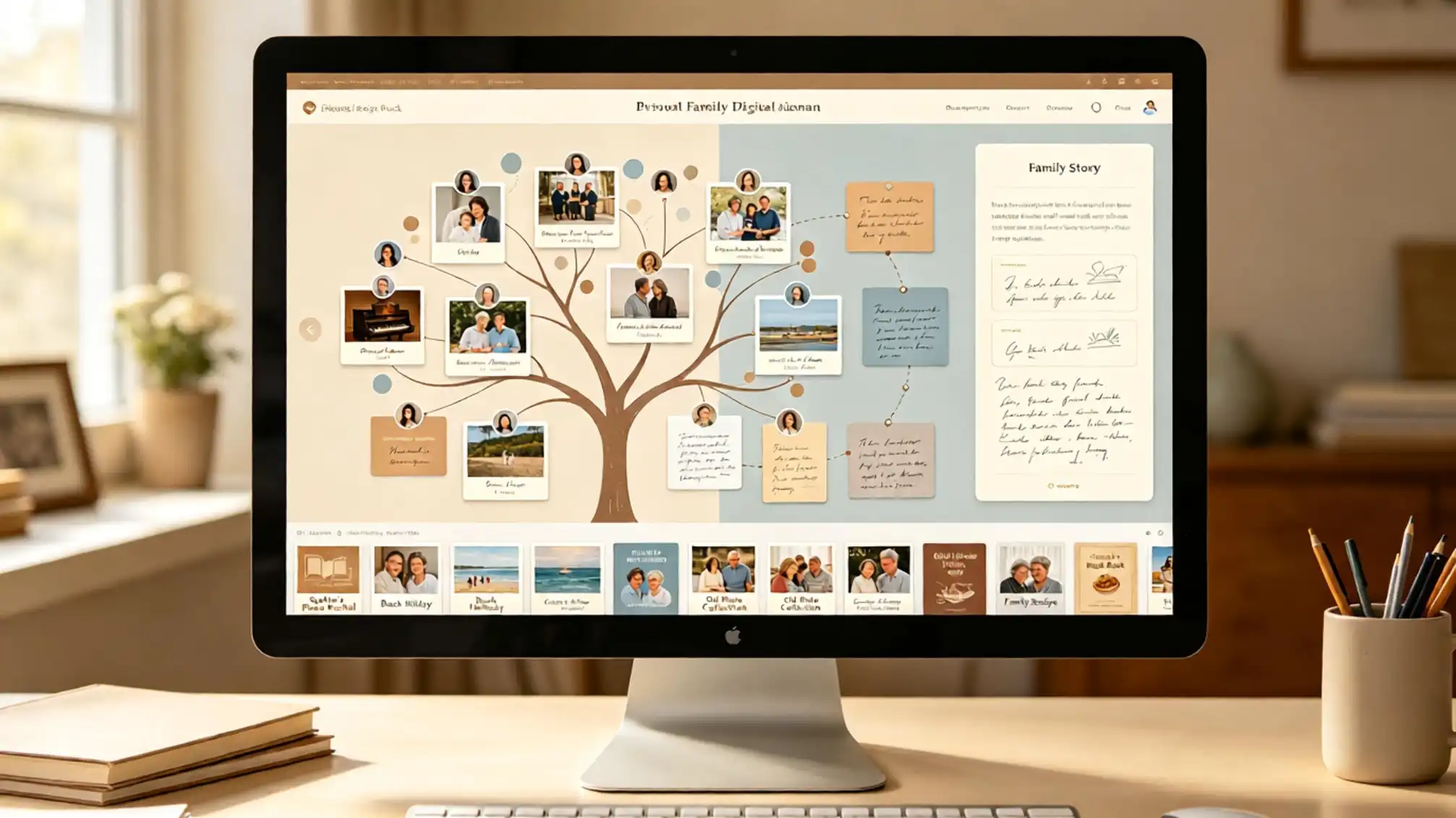
"contentHtml": "<h1>My Family History: Turning Personal Stories into a Family Tree</h1><p>Your family history isn't just a list of names and dates. It lives in the way your grandmother laughs when she tells the story of meeting your grandfather, in the old photograph of your great-uncle standing by a fishing boat, and in the recipe card written in your mother's handwriting. If you've ever wondered how to preserve these moments, the answer isn't complicated. You can start right where you are: with the stories you already carry in your heart.</p><h2>Begin with Your Own Memories</h2><p>Every family tree begins with a single branch: you. Take a quiet afternoon and write down everything you remember about the people who have shaped your life. Don't worry about being perfect or getting all the dates right. Just let the memories flow. Think about your parents, siblings, grandparents, aunts, uncles, and cousins. Jot down their names, where they lived, what they did for work, and the little quirks that made them unique.</p><figure><img src='https://r2.familylove.love/static/seo/familyspace4.webp' alt='A cozy family gathered around a table sharing stories and memories'/><figcaption>Family history often begins in the comfortable spaces where stories are shared</figcaption></figure><h3>Use Prompts to Unlock Deeper Stories</h3><p>Sometimes a simple question can open a treasure chest of memories. Ask yourself: What was my grandmother's kitchen like? How did my parents meet? What did my grandfather do on Sunday mornings? These small details turn a bare family tree into a vivid picture of the past. As you record each memory, note the source: Mom said, Aunt Ruth remembered, or I was there. That way, future generations will know who shared the story.</p><h3>Talk to the Living Storytellers</h3><p>The best way to fill in the gaps is to talk to your relatives. A phone call, a video chat, or a visit over coffee can uncover stories you've never heard. Ask open-ended questions like, “What was life like when you were younger?” or “Tell me about your parents.” Record the conversation with permission, or simply take notes. You're not just collecting facts; you're honoring your relatives by showing that their lives matter.</p><h2>Give Your Family History a Structure</h2><p>Once you've gathered a handful of stories, it's time to gently organize them into a family tree. Don't let this step feel intimidating. Your goal is not to create a perfect archive; it's to create a living record that reflects the people you love. Start with a simple chart that shows three or four generations. You can use paper and pencil, a spreadsheet, or a simple online template. The form doesn't matter. What matters is that the names and stories begin to connect.</p><h3>Choose a Format That Feels Right</h3><p>Some people love a classic vertical tree with branches reaching upward. Others prefer a fan chart or a simple list. If you're a beginner, start small. Draw a circle for yourself in the middle, then add your parents above, your grandparents above them, and your siblings beside you. As you become more comfortable, you can expand sideways to include aunts, uncles, and cousins. A family tree is a flexible tool; let it grow with you.</p><h3>Add Story Details to Every Branch</h3><p>Don't stop at just names and years. Add the story details you collected: the nickname your uncle earned in high school, the city your grandmother walked to school in, the song your parents danced to at their wedding. These details are what make your family history feel alive. You can include them as small notes beside each person or in a separate journal that accompanies the tree.</p><p>As you build your tree, you might also want to explore the broader family page at <a href='https://www.familylove.love/family'>familylove.love/family</a> for ideas on how to celebrate and share your growing collection of family stories.</p><h2>Keep the Stories Alive with Every Generation</h2><p>A family tree is not a once-and-done project. It's a living document. Add new babies when they arrive, note weddings and milestones, and update stories when older relatives share new memories. Consider creating a simple ritual, like reading one story out loud during a holiday gathering. That way, your family history becomes something everyone participates in, not just a dusty chart on a wall.</p><p>You might also make a small booklet or a digital album that pairs photos with the stories you've collected. For each person, include a photo if you have one, their dates, a few lines about who they were, and a favorite memory. This turns your family tree into a storybook that even young children will love to explore.</p><h1>Practical Steps</h1><ul><li>Start with your own memories and jot down every name and story that comes to mind; then reach out to relatives to fill in the gaps. If you're looking for a convenient way to organize your growing family history, the <a href='https://www.familylove.love/family'>family section</a> offers helpful guidance and inspiration.</li><li>Need more help? Visit <a href='https://www.familylove.love/docs'>https://www.familylove.love/docs</a> for clear, step-by-step instructions on how to build your family tree and preserve your family stories for years to come.</li></ul>",
"images": [
"https://r2.familylove.love/static/seo/familyspace4.webp"
]
}