Most family historians begin with a vague desire to fill a family tree. That is fine as an intention, but the reliable way to trace your ancestors step by step is to turn that desire into a system. The system begins not with a website subscription, but with the cheapest source in the world: your own family.
Start With Living Memory and Home Files
Before you open any database, spend time with the oldest relatives who are willing to talk. Your grandmother, great-uncle, or cousin may carry names, places, and stories that have never been written down. Treat these conversations as evidence collection, not casual chats. Record them if you can, or take notes and read them back to confirm details.
- Ask for full names, including maiden names and nicknames
- Ask for birth dates, marriage dates, and places of every event
- Ask for parents and grandparents, even if the person only remembers a name
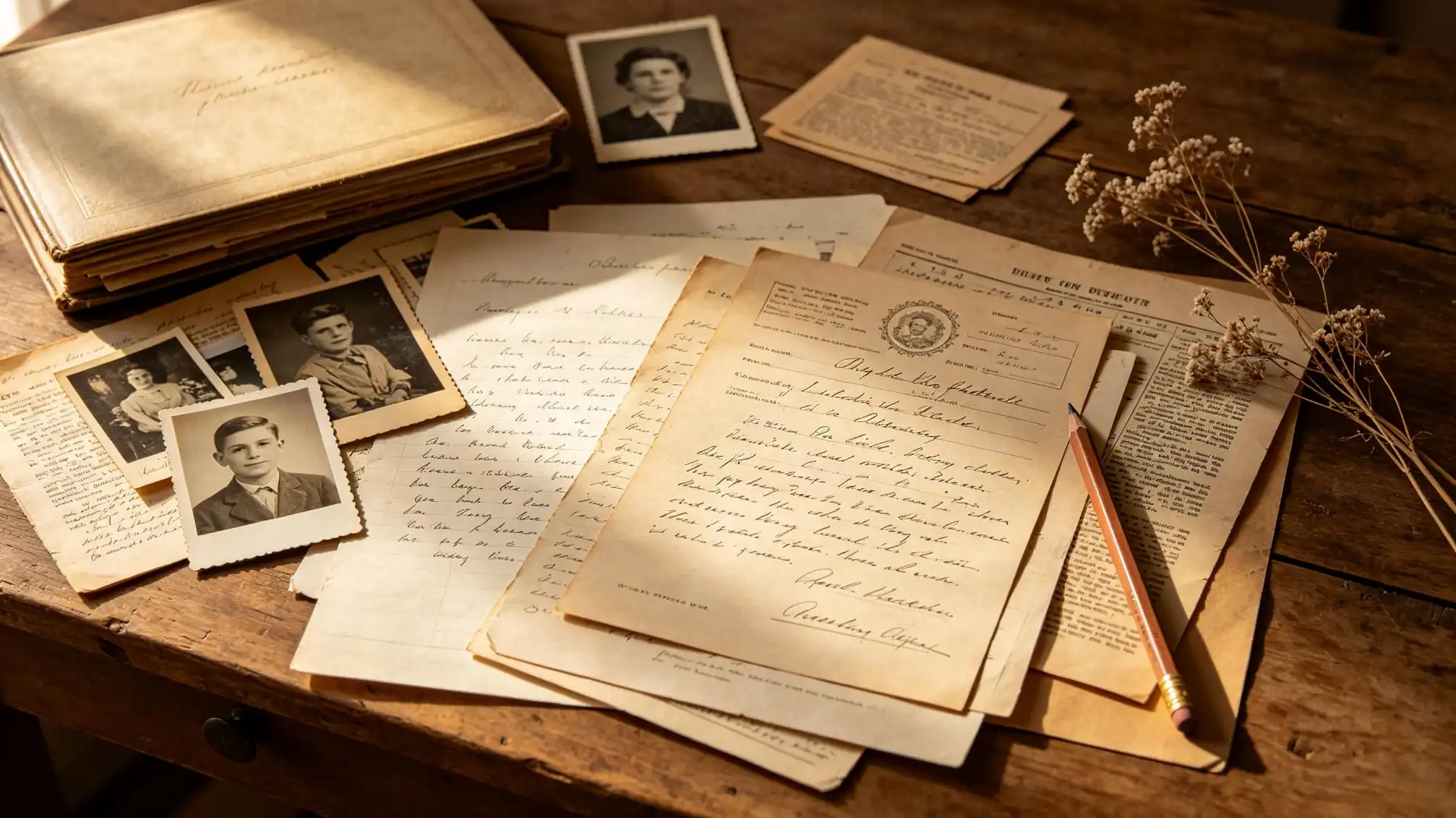
- Ask about family photographs, letters, diaries, and Bibles
Build a Simple Family Tree Framework
Create a basic family tree using paper or genealogy software. Put yourself at the bottom, your parents above, then grandparents, then great-grandparents. Leave blank spaces for unknowns. This framework helps you see exactly which generation you are working on and prevents you from bouncing between random ancestors. Use one color for confirmed facts and another for family memory that still needs proof.
Move From Stories to Official Documents
Now it is time to confirm what you heard. Begin with the records that are closest to the event: birth certificates, marriage licenses, death certificates, census returns, immigration records, and military files. For each ancestor, try to collect at least three independent sources that agree. A date written in a family Bible is useful, but a civil registration or church record is stronger evidence because it was created at or near the event.
Cite Every Piece of Evidence
Genealogy is a discipline of notes. When you find a record, write down where it came from: the archive, the collection, the page number, or the website URL. If you do not do this, you will resent yourself a month later when you find two people with the same name and no way to tell which one belongs in your family. Create a research log or a spreadsheet. Keep scanned copies of every document and name the files with the ancestor's name, date, and record type.
Work in Reverse: From Known to Unknown
Trace your ancestors step by step by moving backward in time. Start with a person you know well, like a grandparent. Verify their name and birth date. Then find their parents using records that list them, such as marriage certificates, obituaries, or census records. Do not jump sideways to a distant surname just because it sounds interesting. Stay on the direct line until each generation is supported by evidence.
When You Hit a Wall: Look for Stories, Not Just Records
Every researcher eventually confronts a missing record. A fire, a change of name, or an illiterate clerk can erase a generation from official sources. When that happens, shift your attention to family stories and community histories. A neighborhood history, a church anniversary booklet, or a relative's memoir may mention your ancestor even when the census does not. You can find examples of how others handled these moments on the family stories page at FamilyLove, which is a good action reference for seeing how real family researchers overcome dead ends.
Repeat, Verify, and Share Your Findings
Once you have a solid line, do not stop. Circle back to your earlier conclusions and test them against any new documents. Share your tree with relatives and ask them to challenge it. A healthy challenge often brings out a missing name or a corrected date. When you are satisfied that the evidence is solid, write a short narrative for each ancestor so the facts do not disappear again.