Family History Questions That Unlock the Stories Your Relatives Rarely Tell
You don't need a fancy recorder or a long questionnaire. The best family history questions sound less like an investigation and more like a good conversation. One meaningful answer can give you a whole new view of your parents, grandparents, and relatives—if you ask in the right way.
Why Family History Questions Matter More Now Than Ever
Memories are surprisingly fragile. Details fade, names blur, and the little moments that made our family who we are can disappear in a single generation. The good news? You still have time. A thoughtful set of family history questions can help you capture the texture of a life before it slips away.
Grandparents especially hold a living library of experiences. They lived through eras you only read about. Their choices shaped your present. Asking good questions is one of the most respectful ways to honor that legacy.
Start With the Person, Not the Timeline
Many people sit down with a list of dates and places. That's a start, but it won't get you to the heart of a life. Instead, begin with a moment, a feeling, or an object. Ask questions that invite stories, not one-word answers.
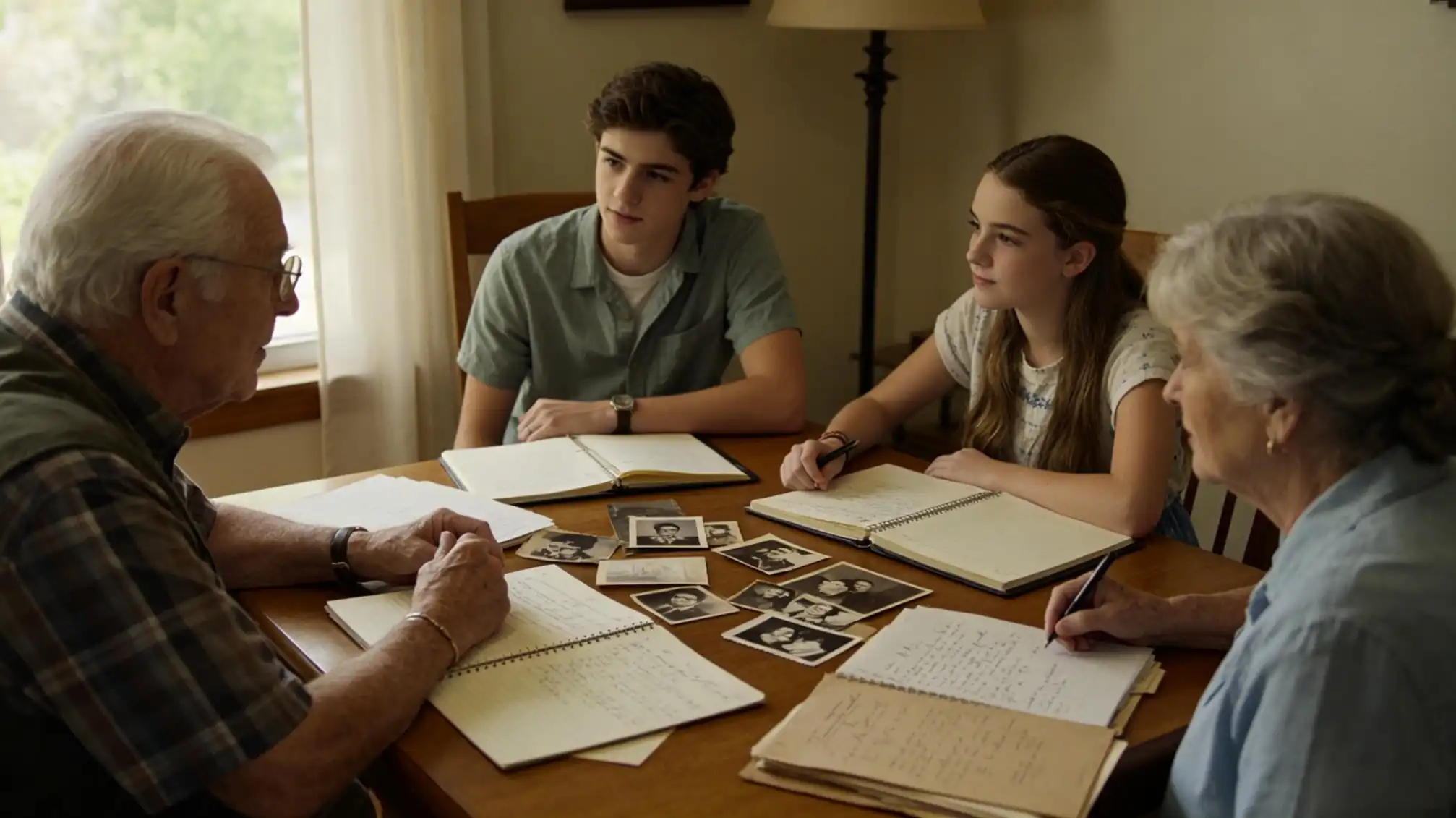
When you sit down with a relative, try to create the feeling of sitting at the kitchen table. Use a gentle opener like, "What is the first memory that comes to mind when you think about your childhood home?" That opens the door to a story.
The Best Categories of Family History Questions
Use these categories as a map. Pick one or two per visit so you don't overwhelm anyone. The best family history questions are the ones that keep people talking.
Childhood and Daily Life
- What did a typical school day look like for you when you were eight?
- What did your family do for fun on weekends?
- Were there any sounds or smells from your childhood that you still remember?
- What did you and your siblings argue about most often?
Parents and Grandparents
- What kind of person was your own grandmother or grandfather?
- What did your parents teach you that you only understood later?
- Did you ever learn about any family history that had been kept secret?
- How did your parents make important decisions?
Love, Work, and Life Turning Points
- How did you meet your partner, and what was your first impression?
- What was the hardest job you ever had?
- Was there a moment when your life turned in a completely unexpected direction?
- What did you give up to make life better for someone in your family?
Family Traditions and Lessons
- Which family tradition are you most proud of?
- What is something our family does that other families find odd?
- What is the most important lesson you want to pass down?
- How did your family handle difficult times together?
Let Follow-Up Questions Do the Heavy Lifting
You'll know you've hit a good family history question when the answer doesn't stop at one sentence. Follow up with simple prompts like, "And then what happened?" or "What did that feel like?" These tiny nudges are often more valuable than the original question.
Don't interrupt, even if you already know the story. Let your relative go at their own pace. A pause is not a dead end; it can be a place where a deeper memory surfaces.
Practical Tips for Interviewing Grandparents and Relatives
Choose a quiet time when everyone is relaxed. Avoid big holiday gatherings for your first attempt—it's too noisy and distracting. Instead, plan a short visit with one person at a time. Before you start, ask permission: "I'd love to record some family history with you, so I don't forget anything. Is that okay?" Most people feel honored.
Keep the recording simple. Your phone is enough. Place it on a soft surface to reduce background noise. Bring a small notebook and write down names or dates that might be hard to hear later.
When you collect these stories, don't let them sit in a drawer. Share them with the people who matter. You can save your favorite memories in your family story collection at familylove.love/stories to keep them alive for the next generation.
Turn Answers Into a Lasting Family History
After a great conversation, write down the stories as soon as possible. Use the same words your relative used, especially any colorful expressions or unique phrases. Then, organize your notes by theme or person. That will make the family history easier to revisit and share.
Ask yourself: What did I learn about this person that surprised me? What values run through their stories? What do I want my own children to remember? Those observations turn a list of family history questions into a true inheritance.
A Little Patience Goes a Long Way
Some relatives warm up quickly; others need a few visits before they open up. That's normal. The goal is not to finish a checklist. The goal is to build connection. Over time, the best family history questions become part of how you talk about life, not just a one-time interview.
Let your relatives know that their stories matter. Tell them what fascinated you after they share something vulnerable. Encourage them to show you old photos—those objects are amazing triggers for memory. Each visit adds another layer to the family history you are preserving together.