Your Family History Starts with One Conversation
Most family history projects never get off the ground because they feel too large. You imagine a perfect family tree, a wall of old photographs, a DNA report, and hours of uninterrupted time. The truth is far more manageable. A meaningful record begins with a single conversation—the kind you can have tonight over the phone, during a Sunday dinner, or through a video call with a grandparent, aunt, or older cousin.
Choose one person who tends to tell stories well. Ask if you can record the call with a voice memo app. Reassure them that this is not a test and that there are no wrong answers. Then ask one open-ended question and let the silence do its work. Some of the richest details come after a pause, when someone remembers a smell, a street name, or the way her father laughed.
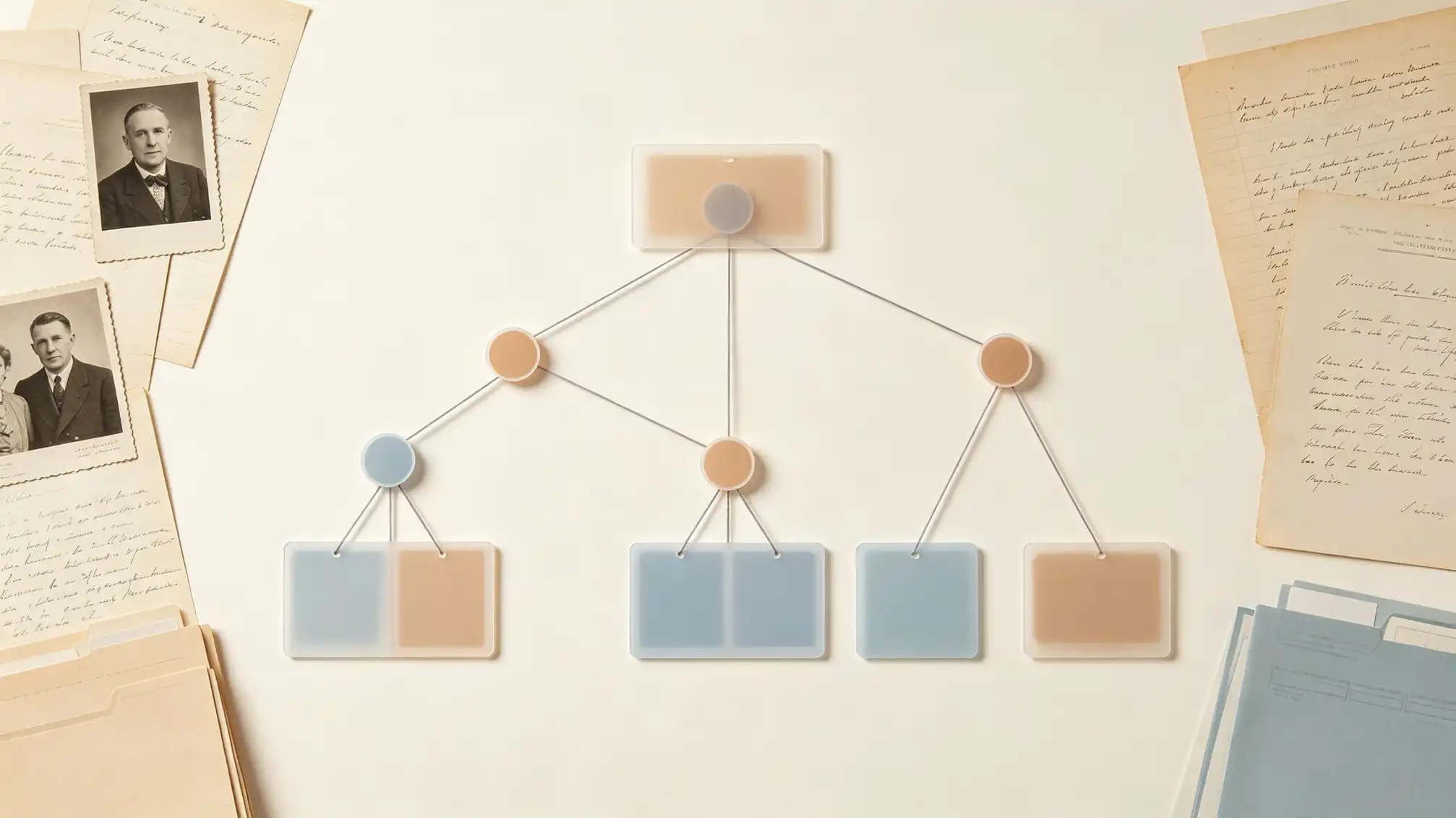
Think of People Before Paper
A familytree is a wonderful map, but a map alone won’t tell you why your great-grandmother left her village or what your grandfather carried in his coat pocket during the war. Names and dates become family history only when they are attached to emotions, quirks, and choices. So before you open a spreadsheet, think about the people themselves.
Write down a short list of relatives you wish you had asked more questions when you had the chance. Then write a second list of living relatives who still hold those details. That second list is your real starting point. The most durable family history is captured from memory while it is still inside a beating heart.
If you are new to this process, begin with a simple memory inventory. Jot down three family stories you already know by heart. Ask yourself what is missing from each one. Rarely, you will discover that the missing piece lies in a photograph, a letter, or a relative you haven’t called in years. That discovery becomes your first thread to pull.
Ask Questions That Make People Feel Something
The quality of your family history depends less on your recording equipment and more on the questions you ask. “Tell me about your childhood” is too broad and often leads to a summary. A better question opens a door to a specific moment. Try one of these:
- “What did your kitchen smell like on a winter morning?”
- “Who was your favorite person when you were eight years old, and why?”
- “What did your parents disagree about?”
- “What is something you never told anyone until now?”
- “If you could relive one ordinary day, which one would you choose?”
When a relative begins to answer, resist the urge to interrupt with your own memories. Nod, say “mhm,” and record everything. Afterward, you can share your own version of the story. That little exchange becomes a dual record: two generations holding a memory together.
Choose a Focus Before You Choose a Format
One of the most common mistakes is buying a fancy voice recorder before deciding what to preserve. Without a focus, recording sessions quickly become chaotic. Decide what your project is really about. Are you trying to capture your mother’s childhood? Are you documenting how your ancestors celebrated holidays? Are you gathering the unwritten rules that made your family unique?
When you choose a focus, every question becomes easier. Suppose your focus is “how our family overcame hardship.” Then you can ask about a specific flood, a long unemployment season, or the move to a new country. The answers will naturally include names, dates, and places—the raw material for your family tree. Better yet, you will understand your ancestors as real people rather than as entries on a chart.
Keep a Working Archive That Feels Like You
Your family history deserves better than a pile of loose mobile notes. But “better” does not have to mean complicated software. A simple folder in your cloud drive named “Family History” can work beautifully. Inside, create subfolders by person or by theme. Name every file with the person’s name and the date of recording or writing. This small habit will save you hours later.
For physical items, use a shoebox or a dedicated drawer. One solution is to take a photograph of each old letter, receipt, or recipe as you find it, then return the item to its place. The photo becomes part of your digital archive, and the original remains safe. Over time, the folder will grow into a trustworthy record that you can pass to the next generation.
Do not aim for perfection. A few long recordings, a handful of photographs, and one page of handwritten notes are enough to light up the family tree for your children and nieces and nephews. The goal is preservation with personality, not a museum-grade exhibit.
Let Family Stories Show You the Way
Once you have a few rough recordings, you may wonder what to do with them. This is where other people’s examples help. Explore a collection of real-life family stories on the FamilyLove stories page to see how ordinary families shape memories into something readable and shareable. You don’t have to imitate them; you just need permission to find your own voice.
Sharing early drafts with a trusted relative can also reveal mistakes and gaps. Perhaps you mispronounced a region in the old country. Perhaps a story was attributed to the wrong sibling. Let your family correct you gently, and revise your note. The process of recording family history is not a performance; it is a collaboration across generations.
And remember that family history includes the living. Record your own memories too. You are an ancestor in the making. Sit down with a close friend or a child and tell them the stories only you can tell, then record the conversation. Your future descendants will thank you for treating your own voice with the same dignity you give your grandparents.