Turn a Family Tree Template into Your Family’s Living Story
A family tree template is more than a chart with boxes and lines. It is a starting point for preserving the names, dates, and stories that make your family unique. Whether you are helping a child with a school project or tracing your ancestry many generations back, the right approach turns a simple template into a meaningful family history record.
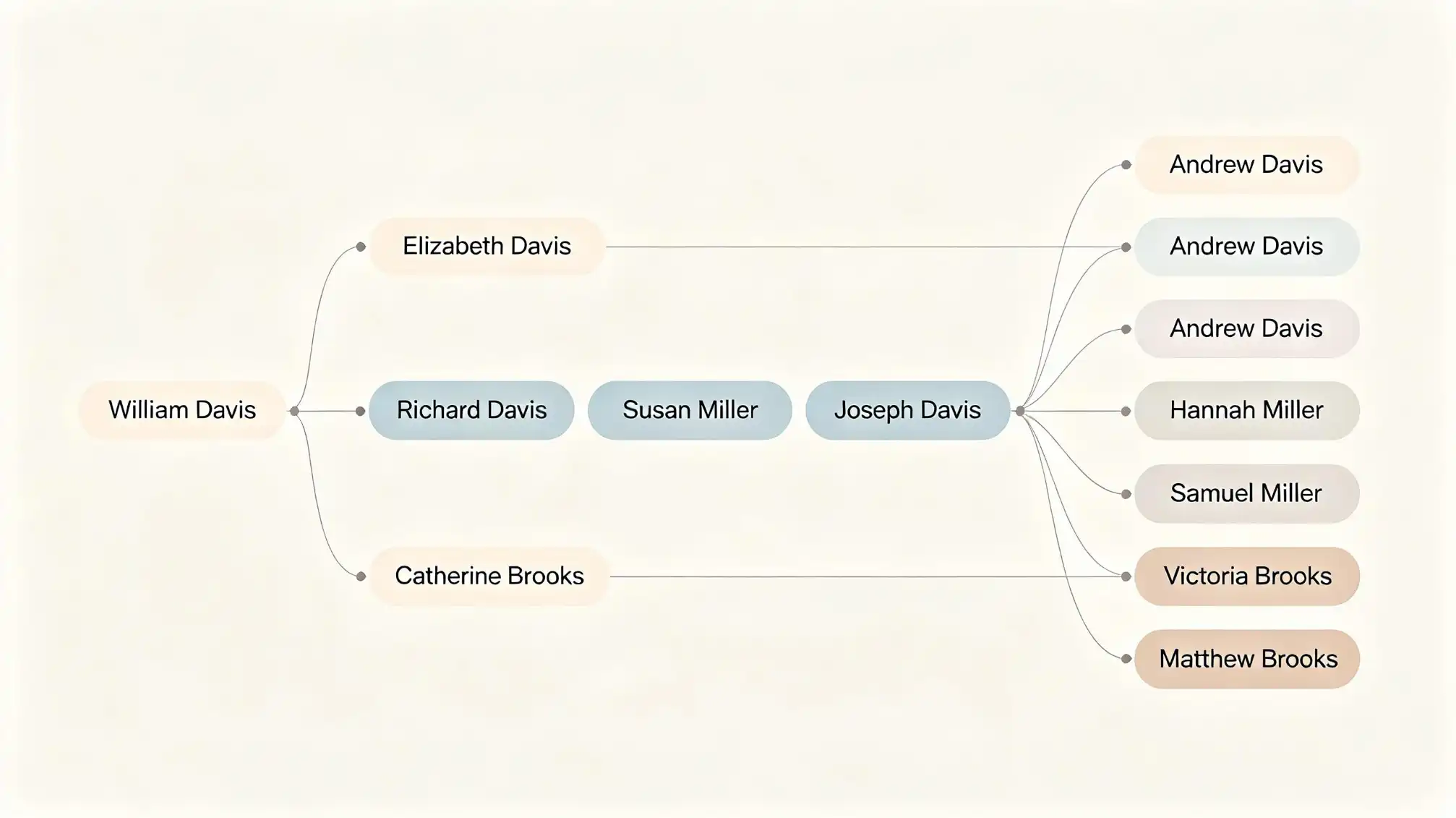
Why a Family Tree Template Beats Starting from Scratch
Blank paper can feel overwhelming. A family tree template gives you structure: where to place parents, grandparents, and siblings, and how to show the connections. Instead of worrying about layout, you can focus on content. This is especially useful when you are gathering information from relatives or organizing old photographs. A well-designed template also helps you notice gaps in your knowledge, prompting questions you might not have thought to ask.
Choosing the Right Free Family Tree Template
Not all templates are the same. Some are simple three-generation charts, while others include spaces for life events, notes, and photos. Before you download, think about your goal:
- For a quick family gathering display: a poster-style chart with large boxes works best.
- For a keepsake book: choose a template with room for biographical notes.
- For digital sharing: look for a template that exports to PDF or can be edited in a spreadsheet.
Many free family tree template options are available online, but the best one is the one you will actually use. If you are new to genealogy, start with a simple horizontal chart that reads left to right. That way, you can add generations without the confusion of rotating branches.
Gather Your Family Details Before You Write
The biggest mistake people make is trying to fill out a family tree template from memory alone. Before you put pen to paper, take a week to collect information. Look through old marriage certificates, birth records, and family bibles. Ask relatives about names and places. If you are working with a digital template, keep a separate list of facts so you can verify them before entering them.
A family history template should include more than just names. Note the following for each person:
- Full name (including maiden names)
- Birth date and place
- Marriage date and place (if applicable)
- Date and place of death (if applicable)
- A short personal story or characteristic
Sketching this information first makes the final template much more accurate and personal.
Fill in the Family Tree Template with a Clear System
When you begin entering data, decide on a color code or symbol system. For example, use blue for the paternal side and pink for the maternal side. Add dotted lines for adoptions or second marriages. This is especially helpful when a chart gets crowded. Consistency makes your family tree template easier to read now and years from now.
Start with yourself or the oldest known ancestor, depending on the template’s direction. If you are using a descendant-style chart, place the founding ancestor at the top and work downward. If you are using an ancestor-style chart, put yourself at the bottom and branch upward. Follow the lines, and don’t be afraid to leave blank boxes. Those blanks often become the starting point for the next research session.
Add Photos and Stories to Make the History Template Personal
A family tree template becomes a true family history template when it includes faces and memories. Scan old photographs, and use small circles on the template to indicate where each photo belongs. Write a one-line reminder under important names, such as “met on a ship to America” or “famous for her apple pies.” These small details transform a genealogical chart from a list of dates into a cherished document.
If you want to share your family history with the whole family, consider using an interactive page where everyone can add updates. For example, the family section of FamilyLove is a natural place to gather relatives, compare notes, and continue growing your tree together. You can use your template as the starting point and let cousins fill in the branches they know best.
Check Your Work and Update as You Go
Family history is never finished. Once your template is filled in, review it for spelling consistency, date formats, and duplicate entries. Show it to an older relative and let them correct anything that looks wrong. Keep a digital copy of your free family tree template so you can edit it after every family event or discovery. A template is a living document, not a final exam.