Family history rarely stays in one place. It sits in old photo boxes, in the margins of Bibles, and in stories that only come out during the holidays. If you have tried to build a traditional paper family tree, you know how quickly it becomes outdated. An online family tree changes that pattern by giving your family a shared, digital space where records, photos, and stories can live together.
When people first hear the phrase “online family tree,” they often imagine a simple chart with names and dates. In practice, it is closer to a living archive. You can attach documents, record memories, link relatives, and invite others to help fill the gaps. The purpose is not just to store facts; it is to keep your family history meaningful for the next generation.
Why paper family trees hit a wall
A paper chart looks beautiful on a wall, but it is static. When a new grandchild is born, or when you discover that a surname was misspelled on a marriage certificate, the chart needs to be redrawn or corrected by hand. Copies made for different branches of the family quickly fall out of sync. One relative has an updated date; another has a different photo. This is where a digital family tree becomes a useful tool rather than just a trend.
Paper also makes it difficult to show complexity. A great-grandmother who was married twice, adopted children from a previous marriage, and played a central role in her community does not fit neatly into one box. Online profiles allow you to record all of those layers without breaking the visual shape of the tree.
One online family tree, one source of truth
The biggest shift with an online family tree is centralization. Instead of scattered notes, you have a single record of your family history that is accessible from any device. You can attach scanned documents, record audio, link related photos, and leave a note explaining how you confirmed a date. Because the tree is linked, not duplicated, corrections made once apply to every branch that can see that ancestor.
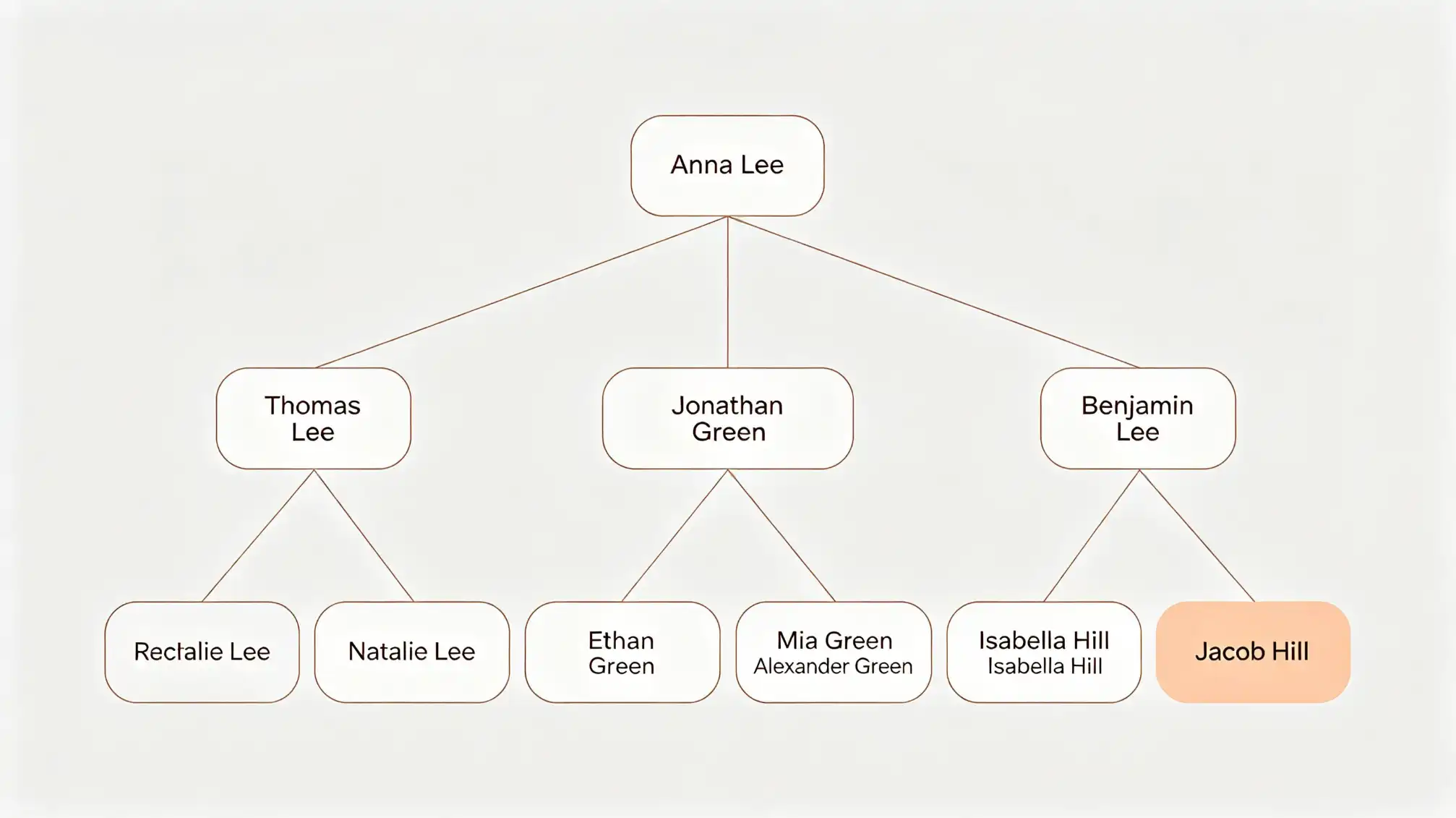
For people who are new to genealogy, this means you can start with what you know and gradually add sources. Each person becomes a small profile with connections, not just a name on a line. That structure also makes it easier to notice missing grandmothers or conflicting dates before they becomea research problem.
Having one source of truth matters more as the family grows. A birthdate that a cousin adds from a church record can be evaluated against a census entry you already uploaded. Instead of asking “Which version is right?” you can look at the evidence inside the same platform and settle the question together.
Collaboration that brings family together
One of the quiet advantages of a digital family tree is that it gives relatives a reason to contribute.A cousin who has old letters can take photos and add them directly to an ancestor’s profile. An aunt who remembers the names of her great-grandparents can fill in details without having to send an email to everyone. The tree becomes a shared project instead of one person’s burden.
Many online family tree tools also include activity feeds or notifications. When someone adds a record or leaves a comment, the rest of the family can see the update. That creates a natural conversation around family history. You are not just looking at data; you are hearing stories from the people who lived closest to them.
If your family wants to expand this into a full shared space, you can explore the family section at familylove.love/family to see how a family hub can work beside your digital tree. It can be a useful way to keep photos, contact information, and updates in sync.
Privacy controls give you control
When you compare online family tree tools, pay attention to how they handle living people. A good service will automatically mark living individuals as private and only show names and relationships to people you invite. You can often set different levels of access for close relatives, extended family, or public visitors. This allows you to share your work without exposing sensitive details.
Privacy is not just about hiding information. It also gives elderly relatives confidence. Many people are willing to share their memories but do not want their address or birth date visible to every distant cousin. A well-designed family tree tool respects that boundary while still allowing the family to build a rich collective history.
Research hints and genealogy shortcuts
Another reason to make the change is the connection to historical records. Many online family tree platforms work with genealogy databases to suggest records that may match your ancestor. A census record, a birth index, or a ship passenger list can appear as a hint, saving you hours of manual searching. The best part is that these hints usually include source information, so you can cite where the data came from.
This does not mean the software does your research for you. It means you can spend less time on hunches and more time building a verified family history. For anyone serious about genealogy, a digital tree with source support is a practical upgrade from a paper chart.
Some tools also allow you to connect records to specific relationships, which helps you see the context around an ancestor. For example, a marriage record might show the names of witnesses, giving you clues about siblings or close friends. Those small details can lead to new branches of your family history that you never expected.
How to choose among online family tree tools
If you are comparing platforms, start with your own habits. Ask whether the tool has a mobile app, whether it supports GEDCOM files for transfer, and whether you can download your data if you move to another service. Look at how invitations work for older relatives; a simple email or link is easier than managing login accounts for everyone. Also consider whether you want a shared family website or a strictly research-focused database.
- Ease of use: Can a relative upload a photo without a tutorial?
- Collaboration features: Can comments or corrections be tracked?
- Privacy settings: Are living individuals hidden by default?
- Record hints: Does the tool connect to the collections you already use?
- Export options: Can you keep your data portable?
If you are planning to work with a large extended family, look for group features like shared message boards or event reminders. If you are more focused on deep genealogy research, prioritise record access and citation support. There is no single best choice, but there is a best fit for how you want your family history to grow.
The practical benefit of starting today
An online family tree does not need to be perfect from day one. It just needs a place to begin. When you add one ancestor and one source, you have already created a foundation that other family members can build on. Over time, that small gift grows into a much larger record of your family’s identity.
The real benefit of working digitally is momentum. Every new photo, note, or document makes the tree more useful, and each relative who joins makes the next addition easier. You are not trying to finish a family tree; you are creating a space where family history keeps unfolding.