How to Start a Family Tree: A First-Timer’s Guide to Preserving Family History
Starting a family tree is a journey into your own story. You might be curious about where your relatives came from, eager to pass down stories to your children, or simply looking for a meaningful project. Whatever the reason, the process is more approachable than you think. You don’t need a genealogy degree or a subscription to a research site to begin. You need curiosity, a little organization, and a willingness to ask questions.
Why a Family Tree Matters
A family tree is more than a diagram of names and dates. It’s a visual map of the relationships that shaped you. When you build a family tree, you create a shared record that can be passed from one generation to the next. You also gain a clearer sense of your family history — the places they lived, the challenges they faced, and the traditions they carried.
For many people, the first family tree they create becomes the foundation for deeper research. It can reveal surprising connections, help you understand inherited health patterns, and even bring distant relatives closer. The act of recording family history also gives you a way to honor the people who came before you.
Start With What You Already Know
The best place to begin is at home. Pull out old family photos, letters, or baby books. Make a list of every relative you can name, starting with yourself, your parents, grandparents, and then working backwards. Record the full names, birth dates, marriage dates, and places of residence that you already know. You’ll be surprised how much knowledge lives inside your own memory.
As you brainstorm, include details like nicknames, ethnic origins, and the stories that come with each person. These clues will help you later when you search through records or talk to older relatives. If you don’t know a middle name or a birthplace, leave it blank for now. The gaps will guide your next questions.
- Ask for your parents’ and grandparents’ full names and birthplaces.
- Look for old documents around the house, such as birth certificates or family Bibles.
- Note the cities and countries your ancestors came from.
- Save digital copies of photographs and scan them into a folder.
Choose a Format That Works for You
Once you have your first list of names, decide how you want to organize your family tree. Some people love the simplicity of pencil and paper, while others prefer spreadsheet apps or specialized genealogy software. The right format is the one you will actually keep using.
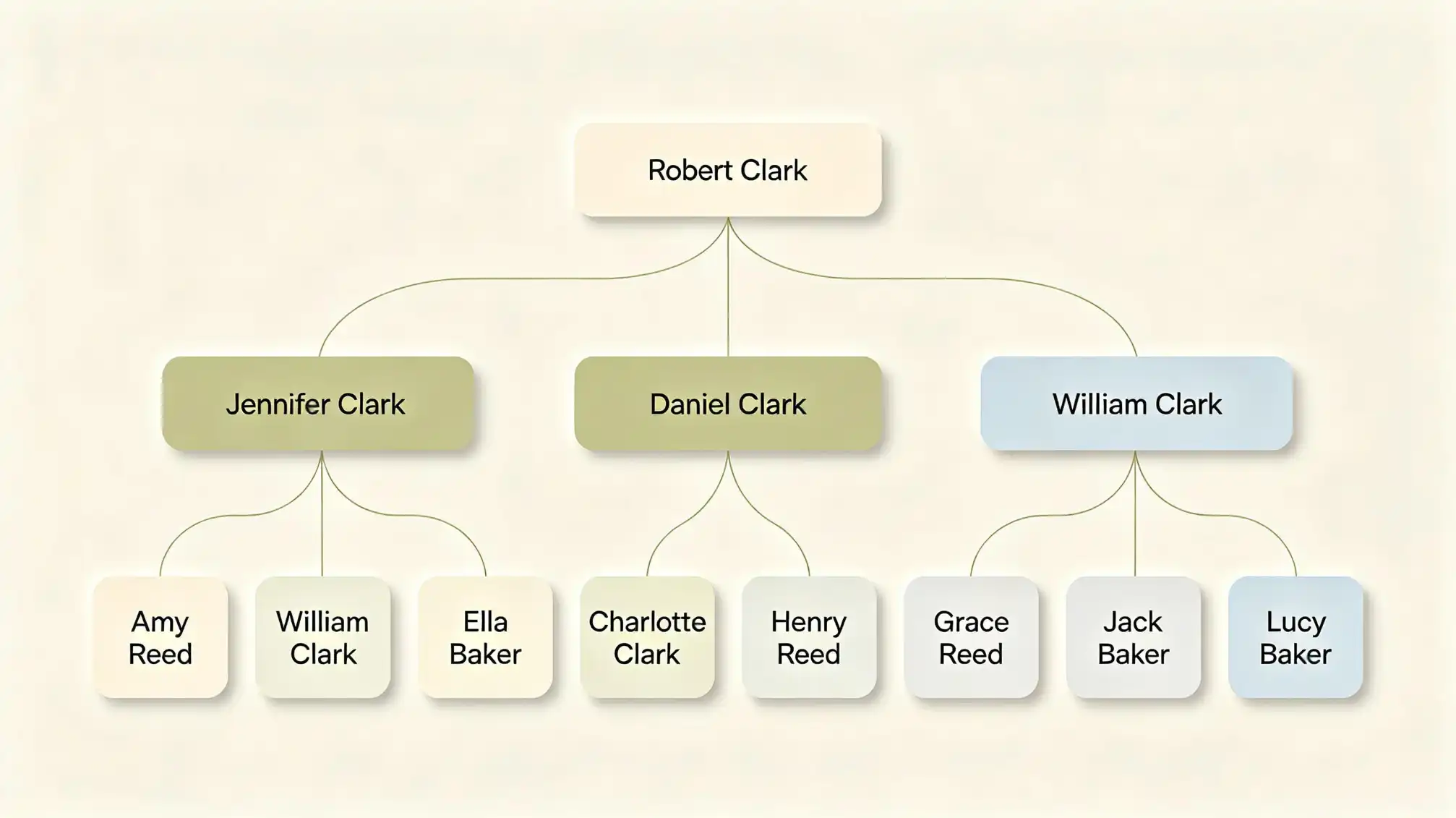
If you’re just starting out, try drawing a basic tree with yourself at the bottom or center. Add your parents above you, then your grandparents above them, and continue. Leave space for notes. As you gather more information, you can transfer your work into a digital system if you outgrow paper.
Learning how to build a family tree is really about learning to ask good questions and record what you find. Choosing a format early keeps your research organized and prevents you from redoing work later.
Interview Relatives With a Purpose
Your relatives are living archives. A conversation with an aunt or uncle can unlock names, dates, and family legends that aren’t written anywhere. Approach these interviews with a short list of questions, but also let the conversation wander — the best stories often surface when you least expect them.
Start with the older generation. Ask them about their childhood, their parents, and their grandparents. Show them the photos you’ve collected and let them identify the people. Record the conversation with their permission, and take notes on any recurring surnames or hometowns.
If you’re not sure how to approach certain topics, the practical guidance on how to talk about family relationships can give you a helpful starting point. You’ll learn how to ask questions with sensitivity and how to handle conflicting memories.
Questions to Ask During Your First Interview
- What do you know about your grandparents’ parents?
- Where did your family live while you were growing up?
- Are there any family traditions or stories that have been passed down?
- Do you have any relatives we haven’t kept in touch with?
Verify Facts and Fill Gaps
Once you have a tree full of names, you’ll want to confirm the details. Memories can be fuzzy, and records sometimes conflict. Look for official documents like birth certificates, marriage licenses, census records, and obituaries. These are the backbone of solid family history research.
When you find a record, note where it came from and the date you found it. That way, you can go back to check your sources later. If two sources disagree, keep both and make a note. Future research may resolve the discrepancy.
As you verify each generation, you’ll start to see gaps. Don’t try to fill them all at once. Pick one person or one branch and follow that line until you hit a wall. Then move to the next branch. This approach keeps you from feeling overwhelmed.
Build Your Tree One Branch at a Time
Building a family tree is not a race. It’s a habit of collecting, checking, and connecting small pieces of information. Every time you add a name, you’re giving that person a place in your family history.
Remember that a family tree can be as simple or as detailed as you want. You may decide to include only direct ancestors, or you may expand to include aunts, uncles, and cousins. You may add photographs, maps, or even historical context. The goal is to create something meaningful for your family tree.
If you get stuck, step back and look at what you have. You’ll likely notice patterns, missing pieces, or new questions to ask. That’s the joy of family history — it keeps growing.