Preserving Family Photos: A Fresh Plan to Protect Your Family History
Family photos are more than just images; they are the faces of ancestors, the landscapes of childhoods, and the silent storytellers of your family history. Yet most of us have a drawer, shoebox, or old album where photos sit forgotten and slowly fading. Preserving family photos doesn't have to be a massive, overwhelming project. With a simple plan, you can turn that pile of prints into a lasting family archive that honors your family memories for generations to come.
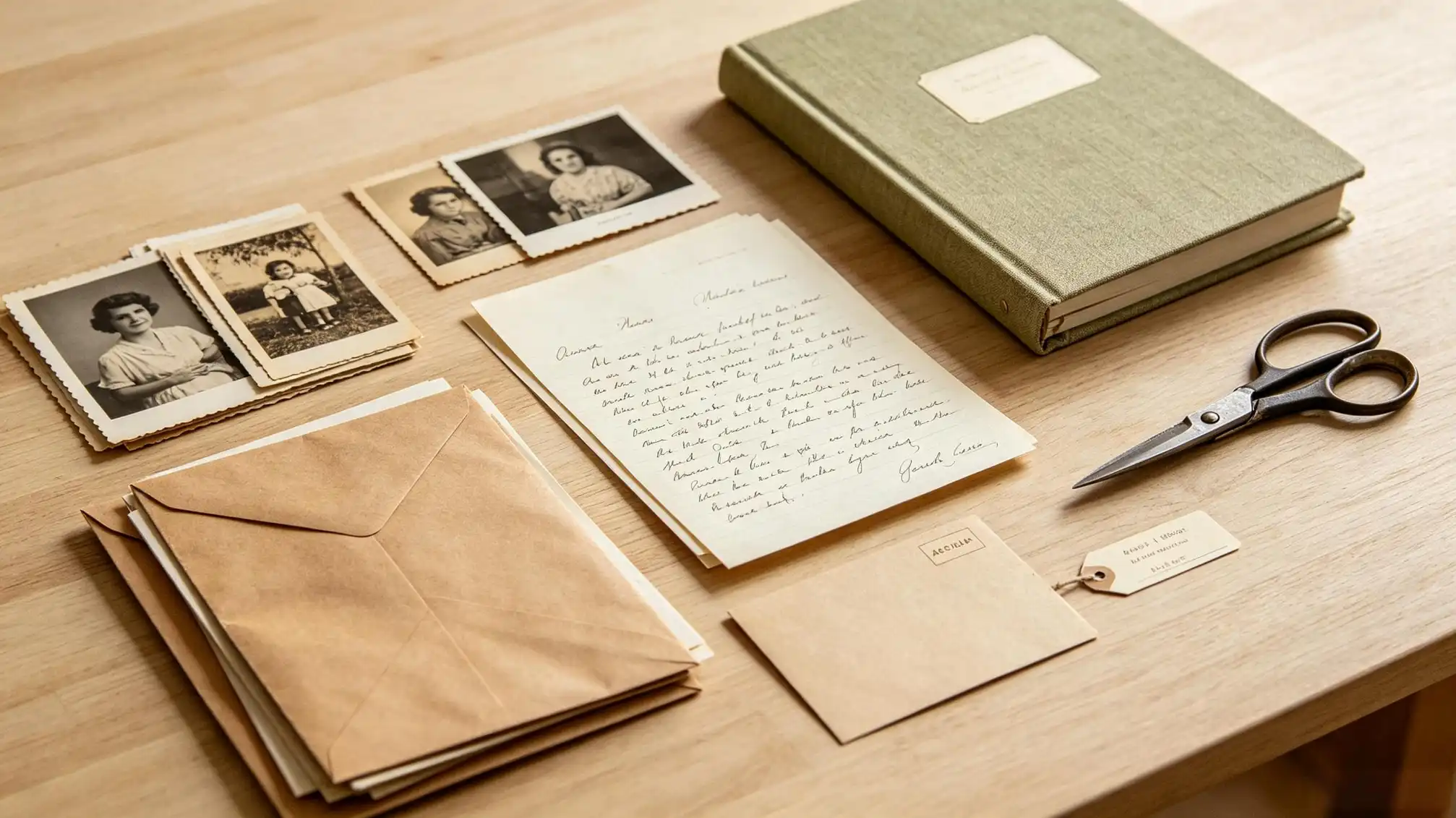
Why Family Photos Are More Than Snapshots
Every family photo carries a piece of your family history. The way your grandparents dressed, the house your great-grandmother grew up in, the celebration your uncle never talked about—all of that lives in these images. When you preserve family photos, you are not just saving paper; you are keeping the memory of your ancestors alive. These images can connect your children to relatives they never met and give them a sense of belonging that is hard to find anywhere else.
Start by Gathering and Sorting Without Overwhelm
The biggest obstacle to preserving family photos is usually the sheer number of them. Instead of trying to handle everything at once, begin by gathering all your family photos into one place. It could be a dining table or even the floor. Then sort them into piles by decade, family branch, or event—whatever feels intuitive to you.
Use sticky notes or small labels to write down what each group represents. This is not the time to make perfect decisions; it is simply a time to bring order to the chaos. By breaking the project into small groups, you will feel less overwhelmed and actually enjoy the journey of rediscovering your family memories.
Protect the Physical Prints Before You Scan
Physical photos are fragile. Sunlight, humidity, and heat are their worst enemies. If you want to preserve the original prints, move them out of the attic or basement and into a climate-controlled room. Use acid-free photo boxes, archival sleeves, or albums with acid-free pages. Handle photos by the edges so that the oils from your fingers don't damage the surface.
If you have old prints that are curled or stuck together, do not force them apart. Instead, consult a professional preservation guide. For most photos, careful handling and proper storage greatly extend their life while you work on digitizing them.
Digitize With a Purpose
Digitizing your family photos is one of the best ways to preserve them for the future. A flatbed scanner with at least 300 dpi (dots per inch) is good enough for standard prints, but if you want to zoom into details later, scan at 600 dpi. Save the original scans as TIFF files if possible, because they lose no quality. Also create JPEG versions for easy sharing.
Do not forget to scan the back of the photo. Often there are handwritten names or dates that are as valuable as the image itself. If you have negatives or slides, consider using a dedicated film scanner or a professional digitization service. The goal is to create a digital family history that will outlive the physical print.
Name Your Files Like an Archivist
Scanning is only half the battle. If your digital files are named IMG_2034.jpg, they will be impossible to find in twenty years. Instead, use a naming system that tells a story. For example: Garcia_Ana_1952_MexicoCity_Wedding.tif. Include the surname, first name, year, place, and event. This makes it easier for your family history research and helps your descendants understand who they are looking at.
You can also create a folder structure on your computer by family branch or decade. For instance, Garcia Family inside that 1950s inside that Ana + Luis Wedding. The few extra minutes you spend naming files now will save hours later and ensure your family photos remain clear to the next generation.
Back Up Your Digital Family Photo Archive
Once your family photos are digitized, you need a backup plan. Hard drives crash, clouds fail, but the risk drops dramatically when you follow the 3-2-1 rule: keep three copies of your files, on two different kinds of storage, with one copy offsite. For example, keep one copy on your computer, one on an external hard drive, and one in a cloud service like Google Photos or Dropbox.
Make a habit of updating your backups every few months. You can also set aside a dedicated external drive just for your family photos, labeled clearly. This modest investment protects your family memories from fire, flood, forgetfulness, and all the other surprises life throws at us.
Bring the Stories Back to Life
Preserving family photos is not just about pixels and acid-free boxes. It is about remembering the faces, names, and stories that make your family unique. Go through your favorite scans and add captions or short audio notes. Who is this person? Where were they? Why is this moment important? Future generations will thank you.
Share your preserved family photos at holidays or family gatherings. Let your aunt tell the story behind a candid shot from 1972. You might also find inspiration by reading how other families keep their memories alive in our Family Stories collection. These shared stories can remind you that you are not alone in this work—and that every photo has meaning.