Every family has a shadow world of names and dates waiting to be recovered. When you decide to trace your ancestors, the challenge is rarely a lack of information; it is a lack of direction. Genealogy is a disciplined craft. You need a plan, a filing system, and the patience to follow evidence wherever it leads. This guide gives you a practical, step-by-step route to tracing your ancestors without wasting time and money.
The process is more than collecting names for a family tree. It is an investigation into the lives of the people who came before you. Each document you find is a piece of a larger story. The goal is not to gather as many names as possible, but to build a family history that is accurate, sourced, and meaningful.
Start With the Documents in Your Own Home
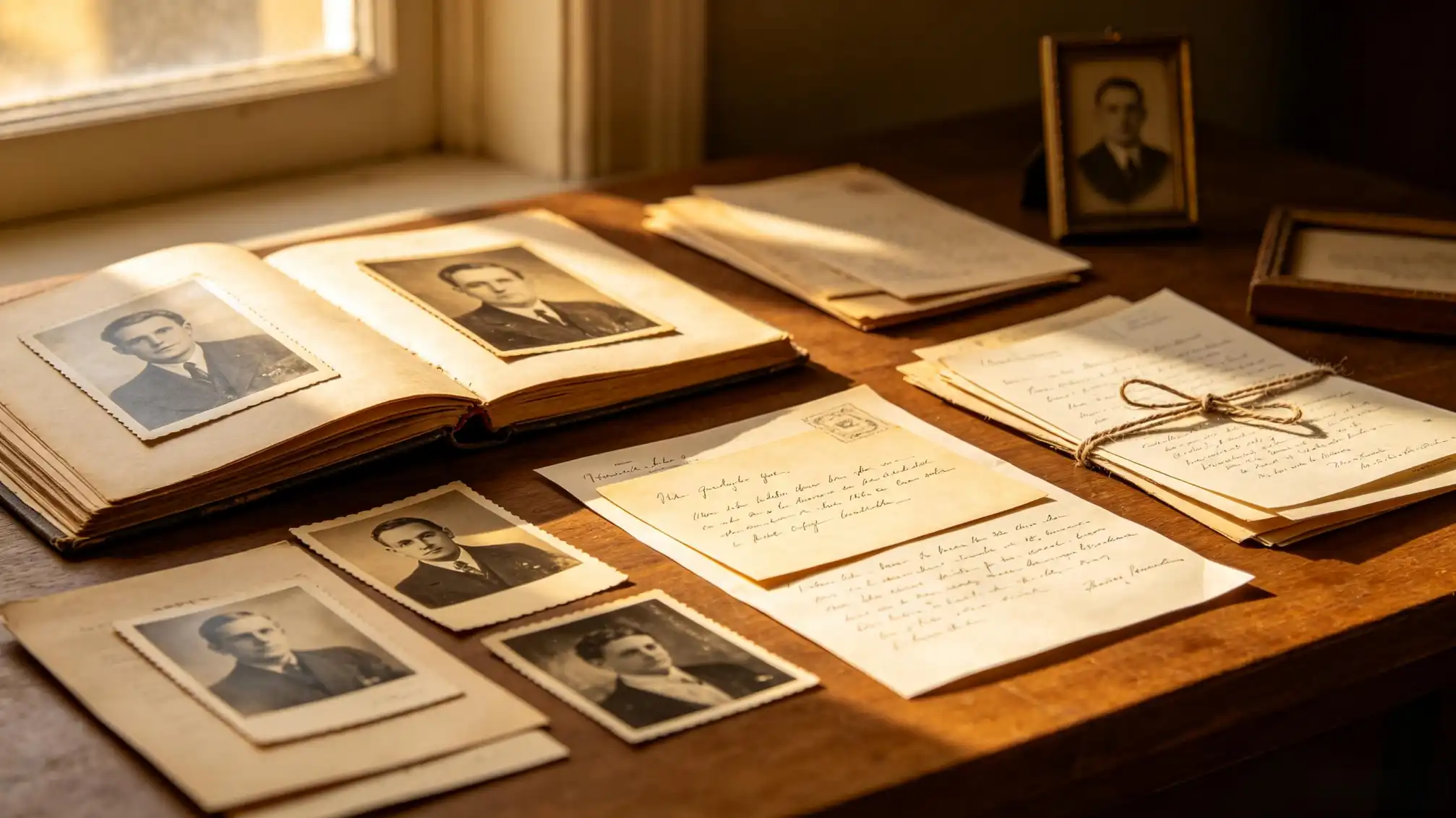
Before you open any genealogy website, look inward. Your house is already scattered with clues: birth certificates, marriage licenses, funeral programs, military discharge papers, passports, letters, diaries, and old address books. These everyday records are primary sources that name your ancestors and connect them to specific dates and places. Set aside a few hours to gather every piece of paper that includes a name, date, or location.
Do not overlook photographs. Old portraits can be dated by clothing, hairstyles, studio props, and the style of the backdrop. Flip each photo over and look for handwritten names, dates, or messages. If the back is blank, show the photo to older relatives before that memory fades. This initial survey becomes the foundation of your research, giving you a starting list of people to verify in official records.
Build a Simple System for Your Family Tree
Within a few weeks, you will have dozens of names and documents. If you do not organize early, your family tree will quickly become a tangle. Start with a clean folder system on your computer: one main folder for each surname, and inside that folder, subfolders for documents, photos, and correspondence. Save every file with a consistent naming pattern, such as Surname_FirstName_Year_RecordType.
Choose a genealogy software program or an online family tree tool that stores sources. Many platforms let you attach images and citations directly to each person. Even a well-structured spreadsheet can work in the beginning. The key is to maintain one master list of research questions. For each ancestor, write what you know, what you want to learn, and which record might answer the question. This keeps your work focused and prevents you from chasing random names.
Move Into Public Records and Online Databases
Once your home archive is exhausted, turn to public records. Census records are the backbone of most family histories. They place your ancestors in a particular house and community, listing household members, ages, occupations, and immigration status. Depending on your country of research, census data may be available every ten years, which lets you follow a family across decades.
Search online genealogy databases for vital records, land deeds, court documents, tax lists, and probate files. Many archives now offer digitized originals, not just indexes. Keep in mind that jurisdictions change: a county or parish boundary from 1850 may not match today’s map. Study local history and make note of neighboring towns, because your ancestors may be recorded just outside the modern jurisdiction.
Use DNA Testing as a Clue, Not a Conclusion
DNA testing is a powerful tool for tracing ancestors, but it should never replace documentary research. A DNA match can point you to a branch you have never considered, especially when paper records are absent. Focus on your shared matches with people you already know are relatives. These clusters help you eliminate false leads and narrow your search to specific family lines.
If you test with one major company, consider uploading your raw data to other platforms to expand your match pool. Build a simple chart of your closest matches, noting the number of centimorgans you share with each one. This information will be invaluable if you ever work with a professional genealogist. Remember that DNA answers biology, not identity; combine it with evidence from documents and oral history.
Talk to Relatives and Learn From Family Stories
Records give you the facts, but your relatives hold the stories. Interview the oldest people in your family first. Record the conversation with permission, and ask open-ended questions: What was your mother’s childhood like? Who attended family funerals? What did your grandfather do for work? These details often reveal names and relationships that never appeared in official documents.
You can also learn from how other families have preserved their histories. By exploring real family stories, you can see how a single photograph, a ship manifest, or a mysterious nickname opened a long-stuck research path. Those examples remind you that genealogy is not just data; it is about the people behind the names.
Verify Your Findings and Avoid Genealogy Mistakes
Every time you add a fact to your family tree, verify it against a second source. A name alone is not enough. Check the spouse’s name, the neighbors, the children’s ages, and the address. Strong genealogical proof requires multiple independent records that agree with one another. Keep a research log that records the source of each piece of information and the date you found it. This habit makes your work reliable and easy to revisit later.
Beware of common pitfalls: assuming an ancestor’s name was spelled the way it is today, ignoring middle initials, or discounting a record because the age is off by a few years. Records from the past are full of handwriting mistakes and deliberate errors. Approach every document with a healthy dose of skepticism, and let the evidence lead.
When You Hit a Research Brick Wall
At some point, everyone faces a brick wall. You cannot find a birth record, a marriage certificate, or a passenger list. When this happens, go back to the last event you can prove and ask what happened next. Look at the neighbors, extended family, or the witnesses at a wedding. Search for the ancestor in a completely different record type, such as a church register, a newspaper announcement, or a local history book.
Sometimes the answer is closer than you think. A relative may have a box of letters that you never saw. A genealogy society in the area where your family lived may have transcripts. Take a break, organize your notes, and return with a fresh eye. New digitized records are added all the time, so a search that failed last year may succeed today.