You want to record your family history, but sitting down with Granddad and firing off questions like a census official rarely works. The best family history questions are the ones that feel like conversation, not interrogation. They invite memories, laughs, and even a few tears. Whether you are visiting your grandmother or video-calling an aunt you rarely see, the way you ask matters as much as what you ask.
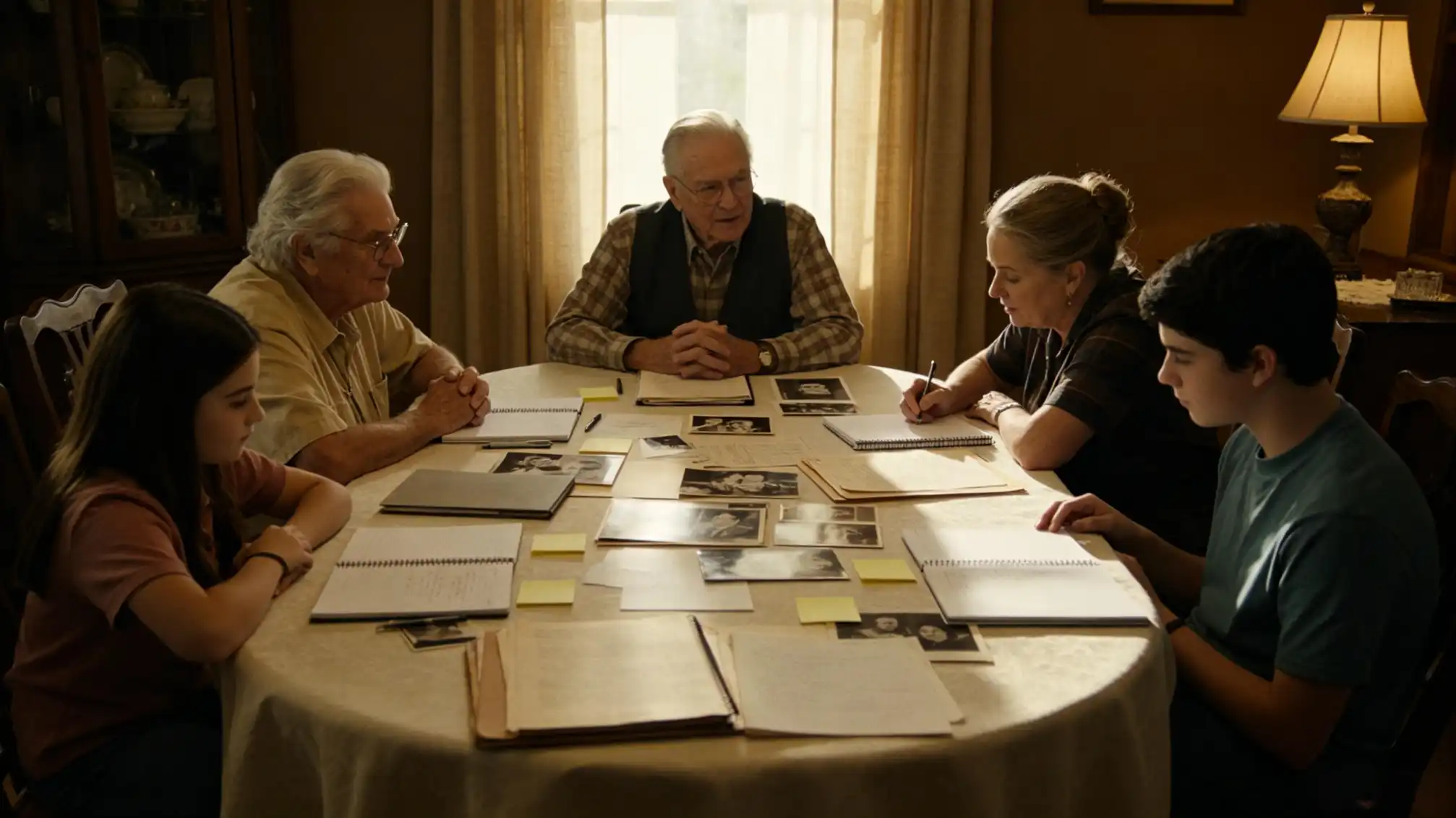
Family history is not just names and dates. It is the smell of your mother's childhood kitchen, the reason your uncle refuses to eat okra, and the story of how your great-grandparents survived a harsh winter. These details live inside your relatives, waiting for the right question to unlock them.
Start Before the Device: Build a Comfortable Setting
Before you worry about fancy recording tools, think about the environment. A noisy restaurant can make an older relative strain to hear. A formal dinner table might feel too stiff. The ideal setting is somewhere they feel in control - their living room, a familiar porch, or even while looking through old photo albums together.
When you bring out your phone or recorder, set it to the side and say something like, “I just want to make sure I don’t miss anything you say.” That small sentence does two things: it shows respect and takes the pressure off. No need to stare at the screen. Let the device be background furniture.
Begin with a broad invitation. Instead of asking a specific question right away, offer a gentle opener: “What is the first memory that comes to mind when you think about your childhood home?” That question alone can produce twenty minutes of family history. Then follow up with lighter prompts that keep the flow going.
Open-Ended Family History Questions That Unlock Stories
Closed questions like “Were you born in a hospital?” give you one-word answers. Open-ended family history questions give you stories. Try asking these:
- What did your parents worry about most when you were young?
- Who was your favorite relative when you were a child, and why?
- What is something you used to do for fun that kids today would not understand?
- What is the bravest thing you ever saw someone in our family do?
- What family rule did you hate then but understand now?
These questions work because they ask for opinions, emotions, and observations - not facts. Even a quiet relative can speak to a question about fairness or fear. Once they start, let them wander. A story about a lost dog might lead to a story about meeting your grandmother. That is the beauty of good questioning: you never know where the thread goes.
Specific Prompts for Grandparents
Grandparents often hold the deepest family history. They are the bridge between generations, but they may not know what you truly want to hear. Be specific enough to trigger memories, but not so specific that you put them on the spot.
Try these family history questions for grandparents:
- What did your wedding day cost, and how did you pay for it?
- What did you think my parent (their child) would grow up to be?
- What is something your mother or father told you that you still repeat today?
- What did you do on a typical Sunday when you were ten?
- Who was your best friend, and what happened to them?
Notice how these questions are gentle but personal. They are not about dates or locations. They are about the heart of a life. When a grandparent pauses and says, “Oh, that takes me back,” you know you have hit something good. Do not rush to the next question. Let the silence sit. Some of the richest family history comes after a thoughtful pause.
Questions About Childhood Places and Daily Life
Place and routine are powerful memory triggers. Instead of asking “Where did you go to school?” ask about the walk there, the classroom smell, or the teacher who terrified them. Family history lives in the tiny details that textbooks never capture.
Consider these prompts:
- What did your house smell like on a Sunday morning?
- What was in your pockets at the end of an ordinary day?
- What sound did you hear every morning before you woke up?
- What food did you love as a child but could not get very often?
- What did you and your friends argue about?
These family history questions are excellent for relatives of any age, not just grandparents. Your parents can answer them too. You might be surprised to learn that your quiet father once climbed a neighbor's fence to steal apricots, or that your meticulous mother kept a secret box of candy under her bed.
Record the Stories and Keep Them Alive
As the stories flow, you will need a system for saving them. A simple voice memo is fine, but consider adding notes about who said what and when. If you are lucky enough to gather several recordings, you can turn them into a written family archive. The goal is not to create a perfect documentary; it is to keep the stories from disappearing.
Some families choose to share these stories on a private blog or page. If you have already gathered stories, the family stories page is a warm, natural place to showcase a few highlights. That way, relatives who were not there can read the memories later. It also turns your Q&A session into something the whole family can enjoy.
Remember that the best family history questions are not just about the past. They are about relationship. Every time you ask a relative a meaningful question, you say, “Your life matters to me.” That is a rare gift in our busy world. So be patient, be curious, and be ready to hear things that surprise you.