Every family carries a story that no one else can tell. In a few generations, today's casual conversations and scrawled notes may become precious clues about who we are and where we came from. Starting to record your family history does not require a genealogical degree or a perfect archive; it simply requires a genuine desire to preserve the memories that matter.
Why Family History Matters Now
Family history is more than dates and names on a chart. It is the story of how your people survived, loved, moved, and changed. When you take time to record those stories, you give your children and grandchildren a sense of belonging. They begin to see themselves as part of a longer thread that stretches through joy, struggle, and resilience. This is why so many people wish they had asked their grandparents more questions while they could. Starting today, even with small fragments of memory, is better than waiting for a perfect moment that may never come.
Start With What You Already Know
You do not need to organize the entire family tree in one afternoon. Begin with yourself and work backward. Write down your own dates and places of birth, key life events, and the names of your parents and siblings. Then add your grandparents, great-grandparents, and the places they lived. This simple outline becomes your first family tree. Many beginners are surprised by how much they already hold in their memory: an aunt's maiden name, a grandfather's hometown, a wedding anniversary that everyone remembers because it fell on a holiday.
As you record these details, keep a notebook or a digital document. Do not worry about formatting yet. The goal is simply to gather what you know before exploring what you do not know. Later, you can sort the information into a family tree software or a printed chart. For now, let your curiosity lead.
Talk to the Storytellers in Your Family
The people who remember are your best living archives. Set up a quiet time to talk with parents, grandparents, aunts, and uncles. Ask open-ended questions that invite stories rather than one-word answers. Instead of asking, Did you grow up in a big house? try, What did the house you grew up in look like from the outside? What sounds did you hear in the morning? These gentle prompts often unlock vivid memories.
Record the conversation with permission. A smartphone is enough to capture the voice, laughter, and pauses. You can also write notes by hand, but audio preserves the warmth in a way that text cannot. After the conversation, return to the recording within a week to type up the highlights. You will likely catch details you missed while listening in the moment.
Use Photos and Heirlooms as Prompts
Old photographs are natural bridges to the past. Spread a few on the table and let your relatives tell you who was in each picture, where it was taken, and what was happening that day. You may learn that the stern face in the framed portrait was actually a softhearted person who loved to tell jokes. The story behind an object can be equally powerful. A favorite teacup, a worn toolbox, a handmade quilt, or a stack of letters can carry a family history that no official record will ever show.
Take photos of these heirlooms and attach notes to them. Note the owner's name, the approximate date, and any story that was shared about them. This practice turns ordinary objects into family history artifacts that future generations can appreciate.
Build Your Family Tree One Branch at a Time
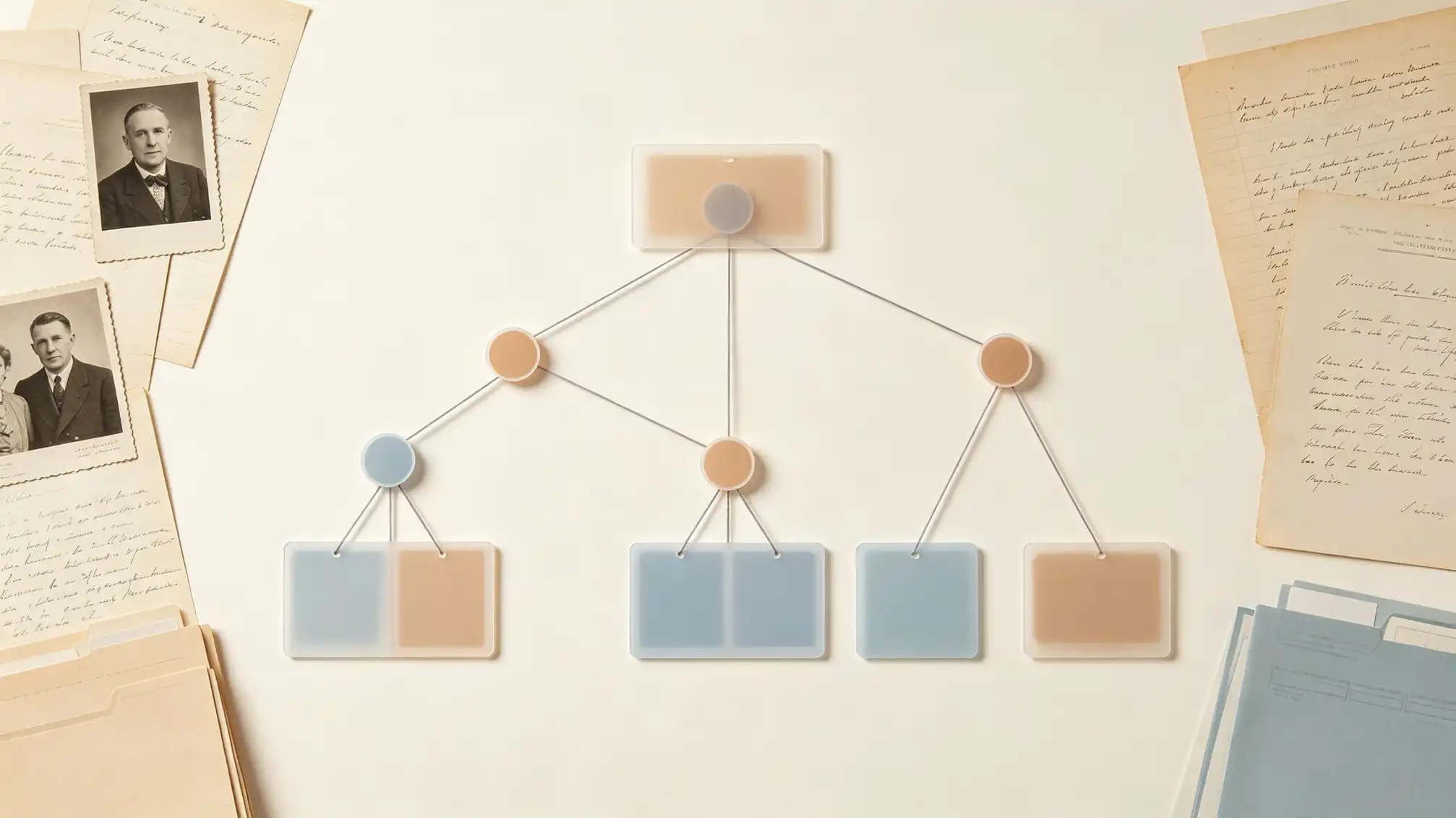
As you gather names and dates, start placing them on a simple family tree chart. You can draw it on paper, use an online template, or open a spreadsheet. The most important thing is to keep it manageable. Focus on one branch at a time, such as your mother's maternal line, and follow it as far as the records and family stories allow. Add sources as you go, even if the source is just a memory: Mabel said this is her mother's birthplace. This habit will save you from confusion later.
Do not be afraid to discover gaps or contradictions. Family history is rarely a straight line. The process of comparing memories with documents can be fascinating in itself. If possible, check public records, census entries, newspapers, and family Bibles. Even an old address on a letter can point you to the next clue.
Turn Research Into Family Stories
Once you have a list of names, dates, and places, breathe life into them by writing a short story about a moment in your ancestor's life. The story may be something you heard from a relative, or it may be your own respectful reconstruction based on known facts. Describe the season, the mood, and the choices they made. You do not need to be a professional writer; your voice matters more than perfect grammar.
If you are looking for inspiration, reading how other families shape their own narratives can help you notice details you might otherwise overlook. Our family stories page is a lovely place to begin, with personal accounts and memory prompts you can adapt for your own family history work.
Preserve Your Family History for the Future
Shared family history only survives when it is safe and accessible. Scan paper photos and documents that are at risk of fading or being lost. Add captions with names, dates, and places. Keep physical archives in a dry, secure place away from direct sunlight. For digital files, use a consistent naming system such as LastName_FirstName_Event_Year.jpg and store copies in two places: one on your computer and one in an external drive or cloud service.
Then share what you have collected. Send a printed album to a distant cousin, publish a short newsletter, or gather everyone for a listening evening. The purpose of preserving family history is not to lock it away; it is to let it keep speaking to the people who come after you.