When you start researching your relatives, the blank page can feel like the biggest obstacle. You know the names, dates, and stories are out there, but where do you put them? A family tree template gives you a clear framework so you can stop worrying about layout and focus on the fascinating work of discovering your family history. Whether you are helping a parent trace their roots or introducing your kids to their grandparents' world, a good template makes the process simpler and more enjoyable.
Why a Family Tree Template Beats a Blank Page
A blank page invites hesitation. A family tree template invites curiosity. Instead of asking, “Where do I start?” you ask, “What goes in this box?” That small shift changes everything. Templates help you see what you already know and, more importantly, what you are missing. You will quickly notice which grandparents lack birth dates or which migration stories need a source. That visual gap becomes your research to-do list.
You also avoid the classic problem of drawing your tree on paper and running out of space. Most family tree template options include multiple branches, so you can add aunts, uncles, cousins, and in-laws without squeezing names into margins. The goal is not just to record names. It is to build a usable family history template that you can update, share, and preserve for the next generation.
Choose the Right Free Family Tree Template
Not all templates are the same. A quick search for a “free family tree template” will give you dozens of options, from simple charts to elaborate scrapbook pages. Before you download anything, think about how you want to use your finished tree. The right choice depends on your project and your audience.
- Pedigree chart: Best for showing direct ancestors in a clean, linear format. It focuses on parents, grandparents, and great-grandparents, so you can trace your surname line quickly.
- Fan chart: Great for seeing many generations at once. A fan-shaped family tree template creates a striking visual and works well for presentations or wall displays.
- Family group sheet: Ideal for recording detailed information about one family unit, including spouses, children, dates, places, and notes. Use this alongside a larger chart to keep your research organized.
- Scrapbook style: If you prefer a family history template that includes sections for stories and photos, look for a scrapbook-style layout. It gives you space for anecdotes, letters, and images.
For most beginners, the smartest move is to start with a simple free family tree template that offers enough space for names and dates. You can always upgrade to a more decorative family history template later.
How to Use a Family Tree Template Step by Step
Step 1: Gather what you already know
Start with yourself and work backward. Write your own name, birth date, and birth place in the first box. Then add your parents, siblings, grandparents, and so on. Do not worry about gaps. The template will remind you exactly where information is missing. This first pass usually takes less than an hour and gives you a solid starting point.
Step 2: Fill in the skeleton first
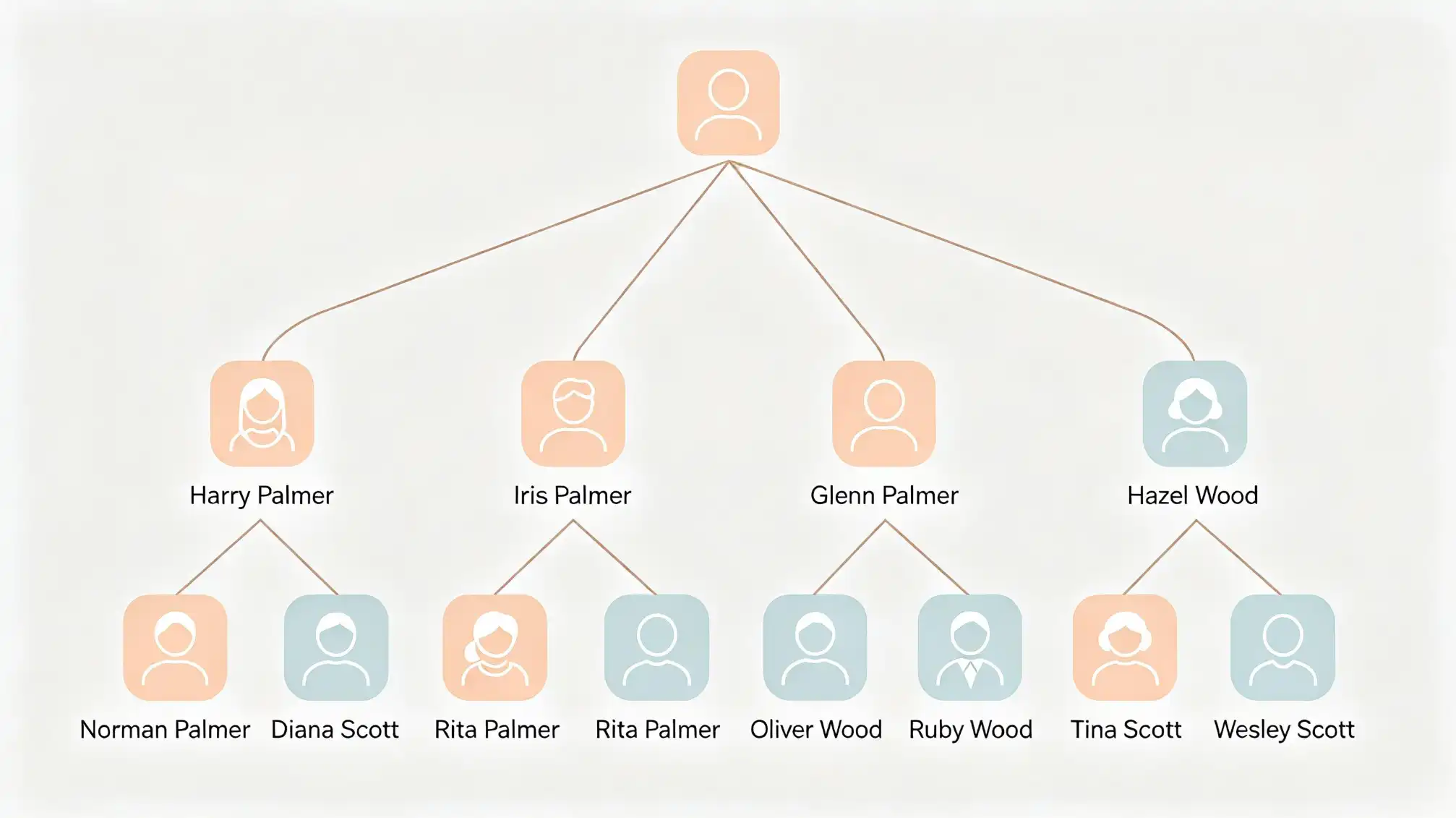
Your goal at this stage is to complete the branches with the names you already know. Leave dates and places for later if you need to check them. Seeing the skeleton of your family tree helps you understand relationships quickly. It also makes it easier to ask relatives for help, because you can show them exactly what you need.
Step 3: Add dates, places, and sources
Now you can begin adding the details that turn a simple chart into a reliable family history template. Write down birth, marriage, and death dates whenever you have them. Add city names and counties, not just countries. Most importantly, record where each piece of information came from. That could be a birth certificate, an elderly aunt's memory, or a census record. Noting the source now will save you hours of confusion later.
Step 4: Ask relatives to fill in the gaps
Once your family tree template is mostly complete, bring in reinforcements. Show it to your parents, grandparents, or favorite cousin. Ask them to look at the empty spaces and tell you what they remember. You will be surprised how a single conversation can unlock a whole branch of your family. These conversations also help you collect the stories behind the names, which are just as important as dates.
When your tree is ready, you can take it one step further by creating a shared family page at https://www.familylove.love/family where relatives can comment, share photos, and correct details. That turns your static template into a living collection of family knowledge.
Simple Ways to Keep Your Family History Template Accurate
Accuracy matters more than speed. A beautiful family tree template becomes worthless if it is full of unsourced guesses. Make a habit of checking every date and place against an official record or a reliable family member. If you are not sure about a detail, leave it blank or add a question mark. Do not let an incorrect fact spread through your family tree like a rumor.
Another smart practice is to use the same free family tree template format for all branches. Consistency makes it much easier to compare charts and spot mistakes. If you use a digital template, keep a backup file. If you prefer paper, consider scanning your finished tree so you have a digital copy.
Common Mistakes to Avoid With Any Family Tree Template
- Starting too far back: Work from what you know backward. Jumping to a famous ancestor may cause you to overlook closer relatives with richer stories.
- Ignoring female surnames: Always record maiden names. That is often the key to connecting the next generation of your family history template.
- Adding duplicates: If you use digital tools, check for duplicate entries, especially when two relatives share the same name.
- Skipping citations: Write down sources while the information is fresh. Future generations will thank you.
- Forgetting stories: Your family tree template should not be just names and dates. Add old recipes, funny memories, or migration details in the notes section.
Once you have finished your tree, you will realize that the process itself was a gift. It gave you reasons to call relatives, ask meaningful questions, and see your family as part of a larger story. A family tree template is only the starting point. The real treasure is the connection you create as you fill it in.