Old family photos are quiet treasures. They hold a grandmother’s smile, a great-grandfather’s Sunday suit, a house that no longer stands. But unless we act deliberately, these fragile windows into our family history can fade, crack, or disappear entirely. The good news? Preserving family photos doesn’t require expensive equipment or advanced skills. It simply asks us to pause, pay attention, and give the people in those pictures a place in our ongoing family story.
When we talk about saving family photos, we often worry about the physical object: the torn corner, the faded sepia tone, the sticky album pages. But the true goal is not to keep paper in a perfect box. The goal is to keep family memories alive so your children and grandchildren can still feel the presence of their ancestors. That goal changes the way we approach every step of preservation.
Start With the Story Behind the Photo
Before sorting boxes or opening scanner apps, begin with a simple step: listen. The most important part of any old photograph is not the print itself—it is the memory attached to it. Gather your parents, grandparents, aunts, and uncles while they are still here. Spread a handful of family photos on a table and ask, “Who is this? When was this taken? What was happening?” Jot down names, dates, places, and small details that no one else may remember.
These spoken recollections turn a rough print into a true family history. A photo of a young couple at a dusty train station becomes a story of migration. A faded birthday party becomes a memory of a grandmother’s famous sugar cookies. That context makes your archive valuable for generations who will never meet these ancestors in person. Keep a notebook beside you, or record the conversation on your phone with permission—future you will be grateful.
Handle With Care: Simple Ways to Protect Physical Prints
Prints are more fragile than most people realize. Humidity, sunlight, and rough handling can cause fading, mold, and tearing. Start by moving old family photos out of attics, basements, and garages. Store them in a cool, dry, dark place where temperature changes are gradual. Use acid-free albums, archive-safe boxes, or individual plastic sleeves made specifically for photos.
When handling originals, make sure your hands are clean and dry. Hold a photo by its edges, never by a crease or torn corner. If a photo is curled, leave it flat under a light weight for a day rather than forcing it. These small actions sound obvious, but they are the difference between keeping a photo for another year and keeping it for another full generation.
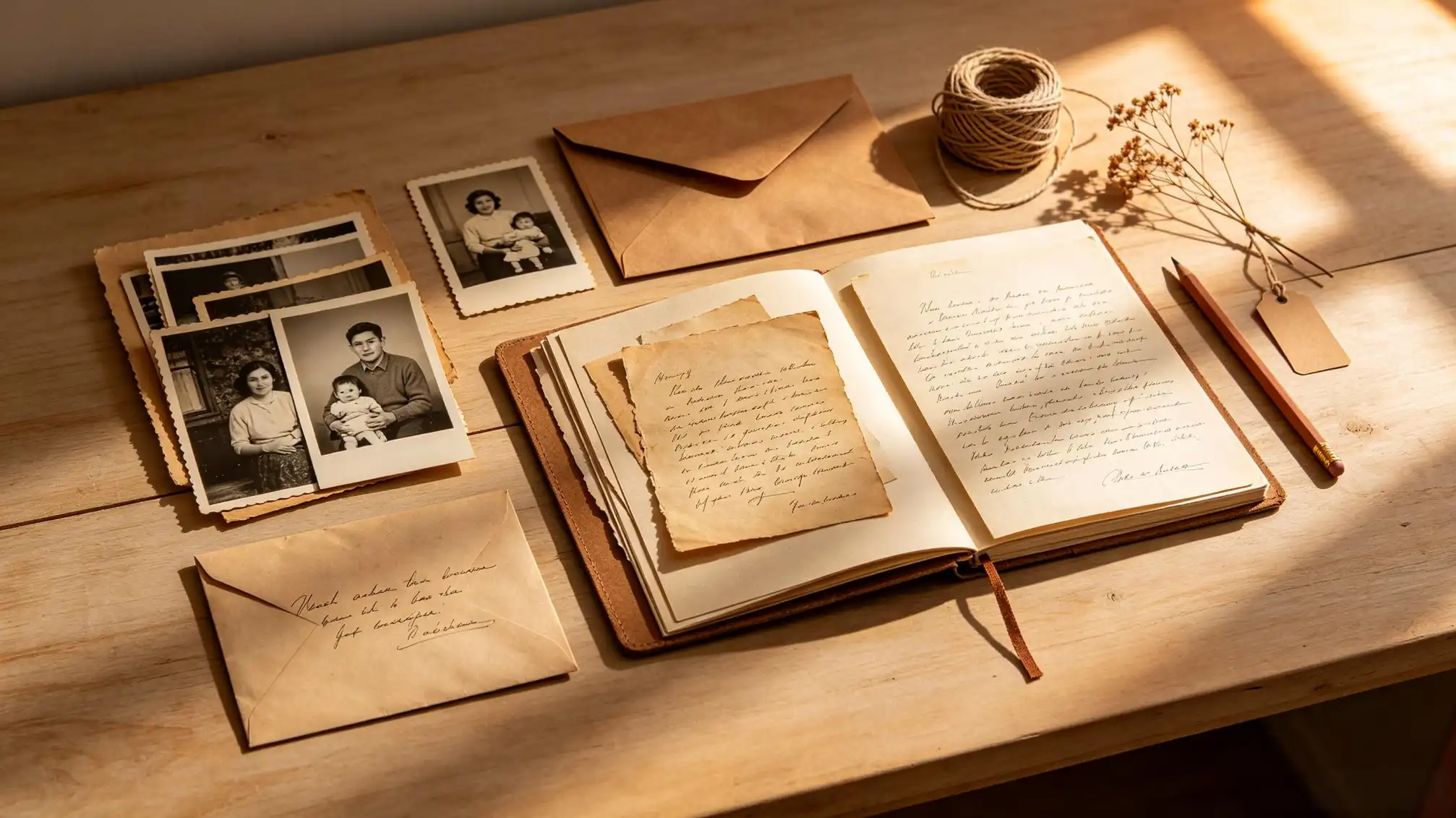
Digitize Your Family Photos the Right Way
Scanning old family photos is one of the most generous gifts you can give your family tree. A digital copy protects the original from daily wear and makes it easy to share with relatives around the world. When you scan, choose a resolution of at least 300 DPI for standard prints; go to 600 DPI for smaller photos or details you may want to crop later. Save each scan as a high-quality JPEG or TIFF file.
Name your digital files in a consistent way so future searches actually work. A simple pattern like Surname_Year_Description.jpg gives every photo a clear place. For example, “Mendez_1954_ImmigrationPhoto.jpg” is far more useful than “IMG_2045.jpg.” Once scanned, back up your files in at least two places—one external drive and one cloud service. Digital preservation is only as strong as your backup habit.
If you notice curly or brittle photos, wait until they are stable before scanning. For torn prints, do not try to repair them with regular tape. Place them in a clear, acid-free sleeve and scan them as they are. Honest damage tells its own family story, and a skilled conservator can always handle restoration later.
Organize a Family Archive That Tells a Story
After scanning, the real joy begins: turning a pile of images into a usable family archive. Sort photos by generation, event, or place. Make a shared album for each branch of the family so cousins, aunts, and younger relatives can add their own memories. Include not only portraits but also houses, streets, workplaces, farming tools, and everyday objects—the background details often become the most fascinating part of family history.
As you build this archive, don’t forget to ask relatives to identify unfamiliar faces. A photo with no names is a beautiful mystery; a photo with names is a foundation stone. If you are looking for ideas about how other families organize and share their photos, you can explore familylove.love/stories for thoughtful examples and inspiration.
What to Do With Photos You Can’t Identify
Not every face can be connected to a name, and that’s okay. Instead of throwing those photos away, group them in a folder labeled “Unknown Relatives” or “Unidentified.” Future DNA tests, old letters, or a distant cousin’s album may eventually solve the mystery. In the meantime, these images still carry emotional power. They show the clothes people wore, the rooms they lived in, and the expressions that appear again and again in your living family.
You can also use social media or a private family group to ask for help. Post a group of unidentified photos and let older relatives tag familiar places or people. You might be surprised by how much a single second cousin can remember. Family memories are collective, and identification often happens through conversation rather than solitary research.
Make Preservation a Family Ritual
Preserving family memories doesn’t have to be a once-a-year project. It can be as simple as a Sunday afternoon ritual. Choose one old photo each week, share it in a family group chat, and invite everyone to say what they see. Record a short audio note from an older relative while they describe the people in the picture. These tiny rituals keep the archive alive and make it easier to gather stories before they fade from memory.
Remember that family photos are not just documents of the past. They are invitations for future generations to walk through the same door of memory. By adding names, protecting the originals, digitizing them well, and organizing a shared archive, you are building a bridge from your ancestors to your grandchildren.