Genealogy is often presented as a hunt for names, dates, and birth certificates. But for beginners, it can feel more like stepping into a story that already exists — one that your parents, grandparents, and even distant cousins have been carrying in fragments for years. If you are ready to explore your family history but don't know where to begin, this guide will help you start with confidence and curiosity.
What Genealogy Is — and What It Isn't
Genealogy is the study of family origins and connections. It is the art of building your family tree and documenting who is related to whom. But family history is the fuller picture — the jobs, migrations, relationships, and everyday moments that make names real. A meaningful genealogy project combines both. You are not just collecting facts; you are reconstructing a life. Keep that in mind as you gather birth dates, marriage records, and census pages. Every data point is a doorway into the experiences of your ancestors.
Start With the Paper You Already Have
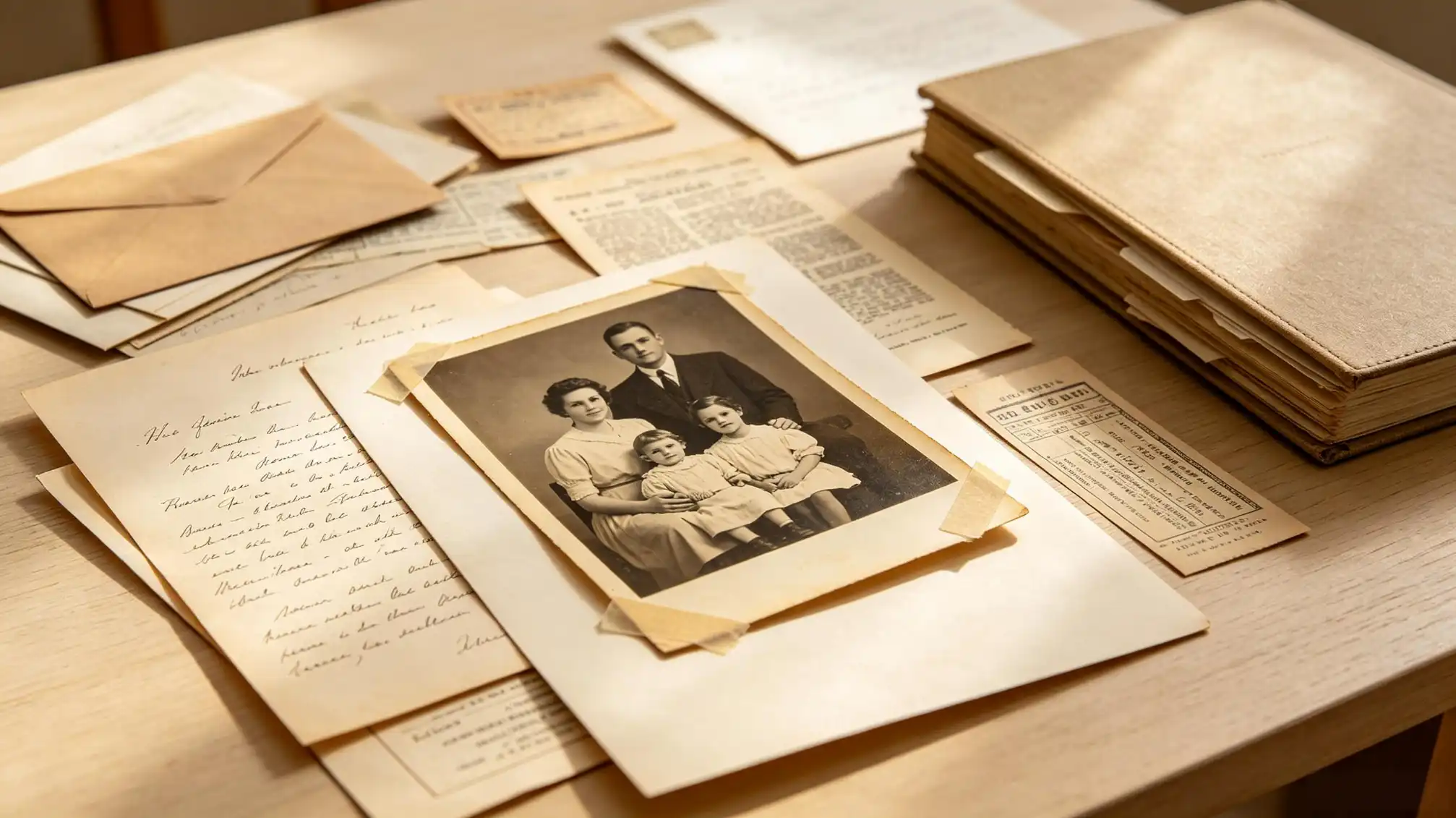
The best way to begin is not a library or an expensive website — it is your own home. Open a shoebox, drawer, or old album. Look at family Bibles, graduation programs, letters, greeting cards, and the backs of photographs. You will be surprised how much hidden detail lives in those places. A faded inscription on a photo can give you a location, a date, or the nickname an ancestor used every day.
Build Your Family Tree Step by Step
Start with yourself and work backward in manageable steps. Use a simple pedigree chart where each ancestor has a line for their full name, date of birth, place of birth, marriage date, and death date. If you don't know something yet, leave it blank. Blank spaces are not failures; they are your next research questions.
Add your parents, then your grandparents, then your great-grandparents. After each generation, stop and ask: What do I actually know, and how do I know it? That simple question keeps you honest. You can use a spreadsheet, a binder, or a free template. The format matters less than the habit of recording every detail as you learn it.
Find Clues in Documents You Never Considered
Once your basic tree is outlined, turn to records that take you beyond names. Census records can show who lived next door — and neighbors were often relatives. City directories reveal where an ancestor worked and when they moved. Passenger lists can point to the ship they sailed on and the village they left behind. Land deeds may mention family members by name. Marriage records often list parents, witnesses, and hometowns, giving you the next bridge to an older generation.
Whenever you find a new document, record the source carefully. Write down the title, date, page number, and repository. This is how you keep your genealogy trustworthy for others who will come after you.
Watch Out for Common Beginner Pitfalls
New genealogists often assume that spelling was consistent in the past. It was not. The same person might appear as Katarina, Katherine, and Katy in separate records. Names can also be translated or shortened. Instead of correcting everything automatically, copy the exact form from the document and note possible variations.
Do not accept online family trees as proof. They can point you in the right direction, but always return to the original source yourself. A birth date on a family tree that has no citation is just a rumor. Cite every fact. This may feel tedious at first, but it will save you from rebuilding the same research later.
Make It Meaningful: From Names to Narratives
Genealogy becomes unforgettable when you write down the stories behind the facts. A birth date is just a number until you know that your great-grandmother was born during a snowstorm on the family farm. A census page becomes more human when you notice that a widowed grandfather took in his grandchildren after their mother died. Those details do not always appear in official records; they live in the memories of your relatives and in the small artifacts you inherited.
As you collect these moments, consider turning your research into a family narrative that others can enjoy and continue. If you want a supportive place to practice storytelling and share what you have found, the family stories area on familylove.love is a natural next step. It lets you preserve your favorite memories and invite relatives to add their own recollections, making genealogy a shared family project rather than a solo hobby.