Family History Questions: A Conversational Roadmap for Interviewing Relatives
You have a rare window of time with your grandmother, an uncle who loves to talk, or a parent who suddenly feels nostalgic. You know you should ask about the old days, but your mind goes blank. That's where a thoughtful set of family history questions comes in. The right question at the right moment can unlock a story you've never heard, a laugh you'll replay for years, or a detail that changes how you see your entire family.
This guide is not a dry list of interrogation prompts. It's a conversational roadmap built around how real memories surface, especially when you're talking with grandparents and older relatives. Use these questions to warm up, dig deeper, and leave with more than just names and dates.
Why Family History Questions Matter More Than You Think
We often assume we already know our relatives. But the stories we hear at holiday dinners are just the highlights. Beneath them are layers of life experience, quiet struggles, and small daily routines that shaped your family. When you ask structured yet natural family history questions, you do three things: you show genuine curiosity, you give your relative permission to remember out loud, and you create a record that future generations can hold onto.
Don't wait for a formal occasion. A quiet afternoon, a car ride, or a shared meal can be the perfect moment to start. If you need a little inspiration before you begin, browse family stories shared by others to see how different people frame their memories. It can give you ideas for your own conversation.
Start with Easy, Sensory Questions
Grandparents often respond best when you start with something tangible. Instead of “What was your childhood like?” (too broad), try asking about a place, a smell, or a routine. These family history questions are gentle and inviting:
- What did your kitchen smell like on a weekday morning?
- Where did you sleep as a kid, and who shared the room?
- What was the first meal you remember your mother or father cooking?
- What did the street outside your childhood home look like?
- What was your favorite hiding spot?
Sensory questions work because memory is often stored in the body. The scent of bread, the sound of a screen door, the feel of a wooden floor. Once your relative begins describing these details, the conversation naturally shifts toward stories.
Ask About Daily Life, Not Just Big Events
Weddings, births, and moves are important, but the texture of daily life is what makes family history vivid. These questions help you understand what it actually felt like to live in another era:
- What was your daily routine when you were 10 or 12 years old?
- How did your family get around, and what did a trip to town look like?
- What chores did you hate, and which ones did you secretly enjoy?
- What did you do for fun with your friends or siblings?
- How did your family celebrate small milestones like a good report card?
These questions often lead to surprising moments. A grandparent may mention a part-time job, a neighbor who became a lifelong friend, or a simple game that everyone played for hours.
Deeper Family History Questions About Identity and Choices
As the conversation warms up, you can gently move into questions about decisions, values, and turning points. These require a little more trust, so pace them based on how your relative feels.
- What was the hardest decision you had to make when you were young?
- Who was the person who influenced you the most, and why?
- What did you believe as a child that you later changed your mind about?
- Was there a moment when you felt your life took a different direction?
- What made you choose the path you did for work or family?
With grandparents specifically, you can ask about how they saw the world change. “What was something that seemed impossible when you were 20 but is normal now?” This invites both perspective and a sense of wonder.
Family History Questions About Love, Loss, and Resilience
Not every memory is happy. But some of the most powerful family history questions involve moments of grief and recovery. Frame them carefully, and always let your relative decide how much they want to share.
- Who were you closest to in your family, and what did you learn from losing them?
- What was the most difficult period of your life, and how did you get through it?
- What did your parents argue about, if you remember?
- What is a story your family tells about you that you don’t fully agree with?
- What does happiness mean to you now, compared to when you were young?
If your relative becomes quiet, don’t rush. Sometimes a long pause is part of the story. Let them know you’re grateful for anything they choose to share.
Questions That Preserve Practical Family History
Beyond emotional memories, you'll want to capture practical details that future generations will value. These family history questions are simple but essential:
- What schools did you attend, and what were they like?
- What jobs did your parents or grandparents have?
- Did your family practice any traditions or rituals that aren't common today?
- What languages were spoken in your home?
- What recipes or crafts were passed down in your family?
You can turn these answers into a written sheet, a voice memo, or a short video. Even a few notes jotted on your phone can become the core of a family archive.
How to Keep the Conversation Flowing
One of the best ways to get more than a yes-or-no answer is to follow up with phrases like “What happened next?” or “How did that feel?” Another trick is to ask for a story your relatives has never told before. That often unlocks a hidden gem.
Also, don’t be afraid to let the conversation wander. A good interview is not a strict quiz. Allow your relative to talk about tangents, because those tangents often contain the most meaningful memories.
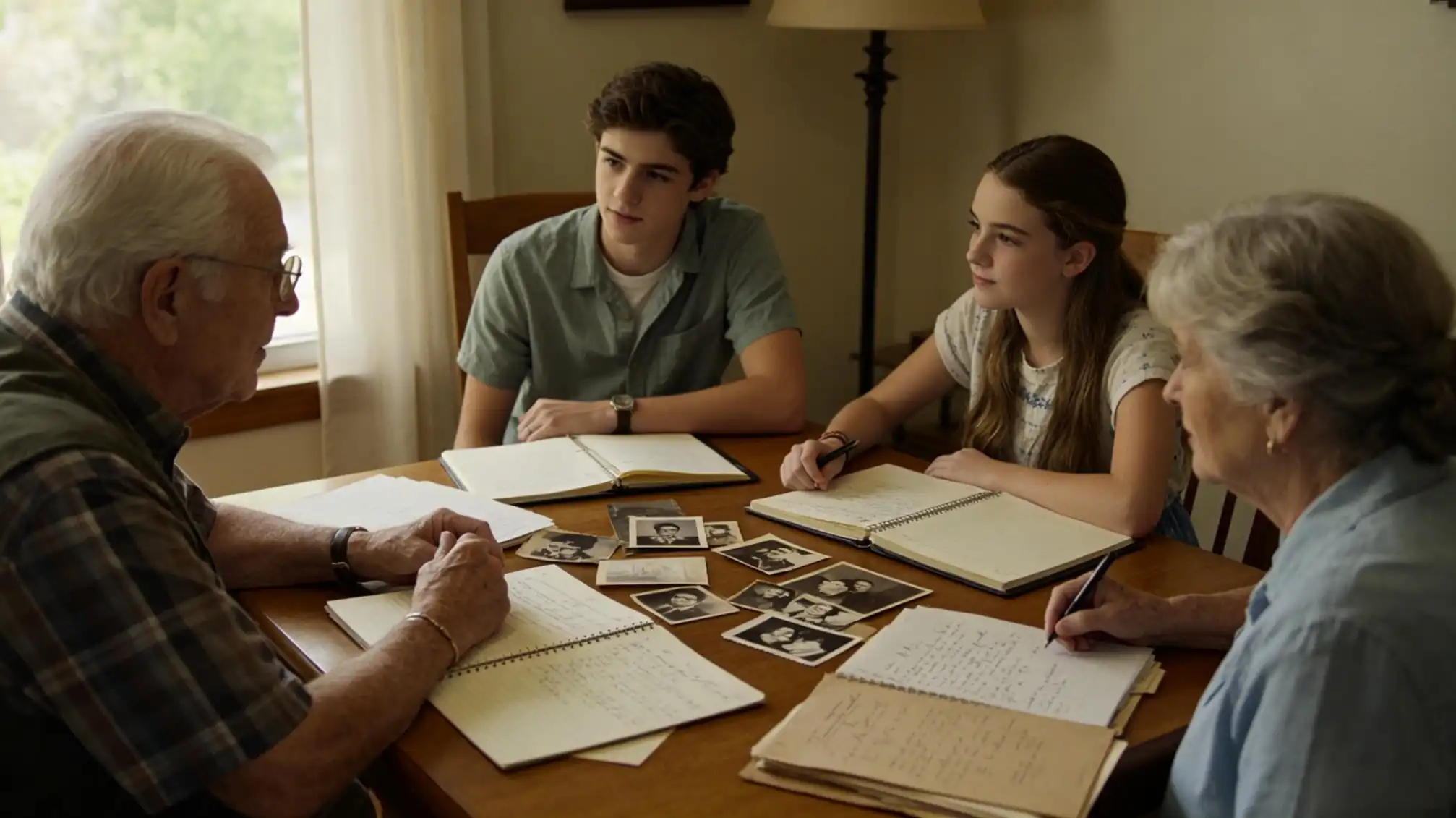
What to Do With the Memories You Gather
Once you’ve asked your family history questions, the real work begins: preserving what you heard. Save the audio or video file in at least two places. Write down the key stories and names. If you want to go a step further, create a simple scrapbook or digital document that you can share with siblings, cousins, and future generations.
You can also add your favorite memory to a shared family space, like the collection of real family stories, to inspire others. Remember that the goal is not perfection. It's connection.