How to Begin Recording Your Family History
Every family has a trove of stories waiting to be told. The way your grandmother laughed when she remembered her first job, the song your grandfather hummed while fixing the car, the recipe your aunt guarded for decades—these moments are the heartbeat of your family history. Yet most of them live only in memory, fading a little more with each passing year. The good news? You don't need to be a professional archivist or a gifted writer to capture them. You just need intention, a few simple tools, and a willingness to start before it feels perfect.
Why Your Family History Matters More Than You Think
Family history isn't just a list of names and dates on a family tree. It's the texture of lives lived, the small decisions that shaped generations, and the resilience that runs through your bloodline. When you record your family stories, you do more than preserve the past—you give your children and grandchildren a sense of belonging. Knowing where they come from helps them understand who they are and gives them strength during their own challenges.
Research in psychology confirms that children who know stories about their relatives have higher self-esteem and greater emotional resilience. But this isn't about statistics. It's about the feeling you get when you hear your father talk about his first trip to the ocean, or your great-aunt describe the dress she wore to her wedding in 1958. Those moments connect you to something bigger than your own daily concerns. They remind you that you are part of a continuing story.
Start With a Single Conversation
The most meaningful family history recording often begins not with a database or a scanner, but with a simple conversation. Pick one relative—the one whose stories you always loved or the one who seems quiet but holds a lifetime of memory. Ask to sit with them over tea, a meal, or a video call. Have your phone or a small recorder ready, but don't let technology take center stage. The goal is to make them feel heard, not interrogated.
Begin with open-ended questions: “What is the first thing you remember about your childhood?” or “What was your mother like when she wasn't working?” or “If you could tell today's young people one thing, what would it be?” Follow their lead. When a story reminds them of another, let them wander. Those detours are often where the magic hides.
If you're nervous about recording, just take notes. But if you can, record the audio or video—you'll be grateful later for the sound of their voice, the way they pause, the little laughs. And always, always ask permission before sharing anything publicly.
Gather the Scattered Pieces
Once you've begun collecting stories, you'll quickly notice that history hides everywhere: in shoeboxes of photos, old letters, a christening gown, a faded newspaper clipping, a handwritten recipe card. Make it a project to gather these items, one drawer or box at a time. You don't need to organize everything immediately. Just create a “memory pile” in a safe place—a large envelope, a basket, or a dedicated shelf.
As you go through physical items, label them lightly in pencil on the back of photos, noting names, dates, and places. For digital files, rename them with a consistent pattern, like “2023-04-15_Mom_and_Dad_at_Beach.jpg.” This small habit will save you hours later and make it easier for other family members to contribute their own treasures.
Build Your Family Tree Without Getting Lost
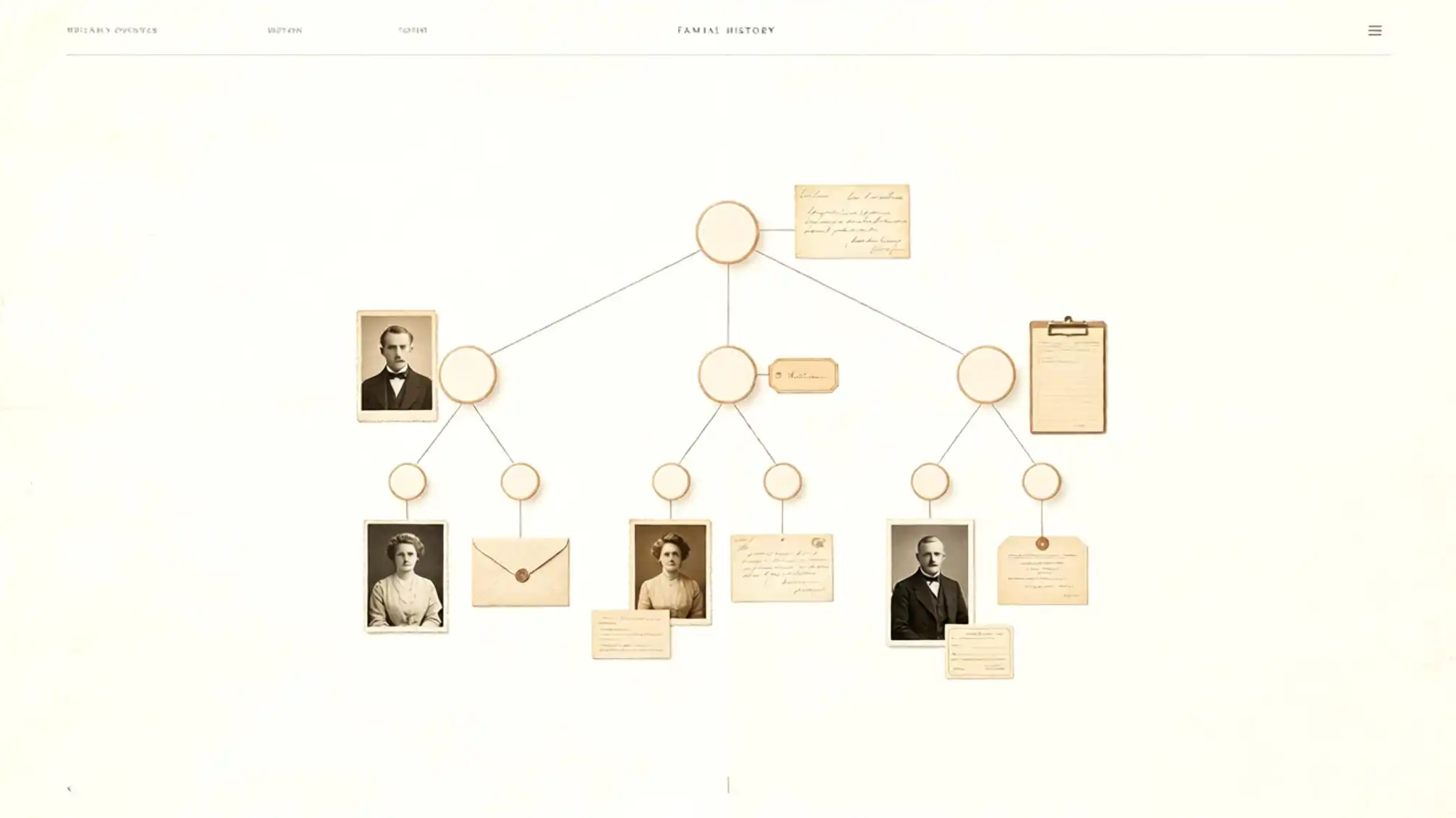
While your ultimate goal may be preserving stories, a family tree is a wonderful visual anchor for all those tales. Start with what you know: your parents, grandparents, and great-grandparents. Write their birth dates, marriage dates, and places. Then reach out to older relatives to fill the gaps. You'll be surprised how many people enjoy helping once they understand you're not just gathering data—you're honoring their memories.
Don't feel pressure to create a perfect, professionally researched genealogy. A simple family tree document or an online template is enough. The point is to create a scaffold that helps you place stories in context. When you know that your great-grandmother was born in 1901 in a small village, her story about walking three miles to school becomes vivid and precious.
Give the Stories a Home
As your collection grows, you'll want to decide where these stories will live so future generations can access them. Options include a private family website, a digital scrapbook, a printed book, or a shared cloud folder. Each has its strengths. A physical book is beautiful and permanent, but it takes time to design. A digital site allows you to add stories continuously and invite relatives to contribute.
If you're ready to share what you've collected with your family, consider creating a dedicated space for your family stories at FamilyLove Stories. There, you can begin uploading memories, photos, and anecdotes in a simple, heartfelt way—so your family history becomes a living place, not just a dusty archive.
Turn Everyday Moments Into Family History
Recording family history doesn't always require special occasions. Some of the best recordings happen on ordinary afternoons. Cook a family recipe with your mother and let her talk about the grandmother who taught her. Take a walk through your old neighborhood and ask your father what has changed. Record your child asking questions to a grandparent—their laughter and curiosity will become part of the family story itself.
You can also create small rituals: at every holiday gathering, set aside fifteen minutes to ask one question and record everyone's answer. “What was your favorite winter memory?” or “What job did you want when you were ten?” Those tiny slices of time become a mosaic of your family's heart.
Embrace the Gaps and Imperfections
One of the biggest blocks people face is the fear of getting it wrong. Maybe you don't know a date, or you're unsure which William in the 1880 census is your great-great-grandfather. That's okay. Your family history is not a legal document; it's a living portrait. You can note uncertainties, ask others to help, and correct things later. What matters is that you start.
It's also normal to feel sadness when you realize how much has already been lost. Gently remind yourself: you are doing your part now. Future generations will know more than you do today because you took the first step.
Practical Steps
- Start your own family story collection and share it with loved ones—explore the FamilyLove Stories page as a related place to begin.
- For more hands-on help, templates, and guidance on preserving your family history, visit FamilyLove Help & Guidance.