A family tree template can feel like a blank spreadsheet waiting for names, but it actually works best when you treat it as a research map. Instead of trying to memorize every aunt, uncle, and cousin, you let the template show you what you know and where you have gaps. This guide gives you a fresh, practical way to use a family tree template so that collecting your family history becomes a calm, step-by-step process.
Why Start With a Family Tree Template?
When you first start researching your roots, the amount of information can be overwhelming. You might have boxes of photographs, old letters, and half-remembered stories from a grandparent. A free family tree template gives those pieces a place to land. It turns scattered facts into a visual structure that you can fill in gradually.
Think of your family tree template as a living document, not a final exam. You do not need to complete every branch in one sitting. You just need a clear starting point. A good family history template will remind you which generations you have already covered and which ones still need attention.
Choose the Best Free Family Tree Template for Your Goal
Not all templates are the same. Some are designed for beginners, while others are made for deep genealogy research. Before you download anything, ask yourself: what do you want this family tree template to do for you?
- Simple pedigree chart: This is the classic five-generation tree. It works well if your main goal is to see your direct ancestors at a glance.
- Family group sheet: This layout focuses on one couple and their children. It is perfect for capturing births, marriages, and death dates in detail.
- Fan chart: A fan-shaped family history template is great for printing and framing, but it often gives you less space for notes.
- Portrait-style template: If you want to add photos, choose a family tree template with larger boxes or circular spaces for each relative.
A free family tree template is a wonderful first step, but you may need more than one format. Many researchers keep a pedigree chart for the big picture and a family group sheet for each couple. That way, your family history template is both a summary and a detailed record.
Gather Clues Before You Fill In Names
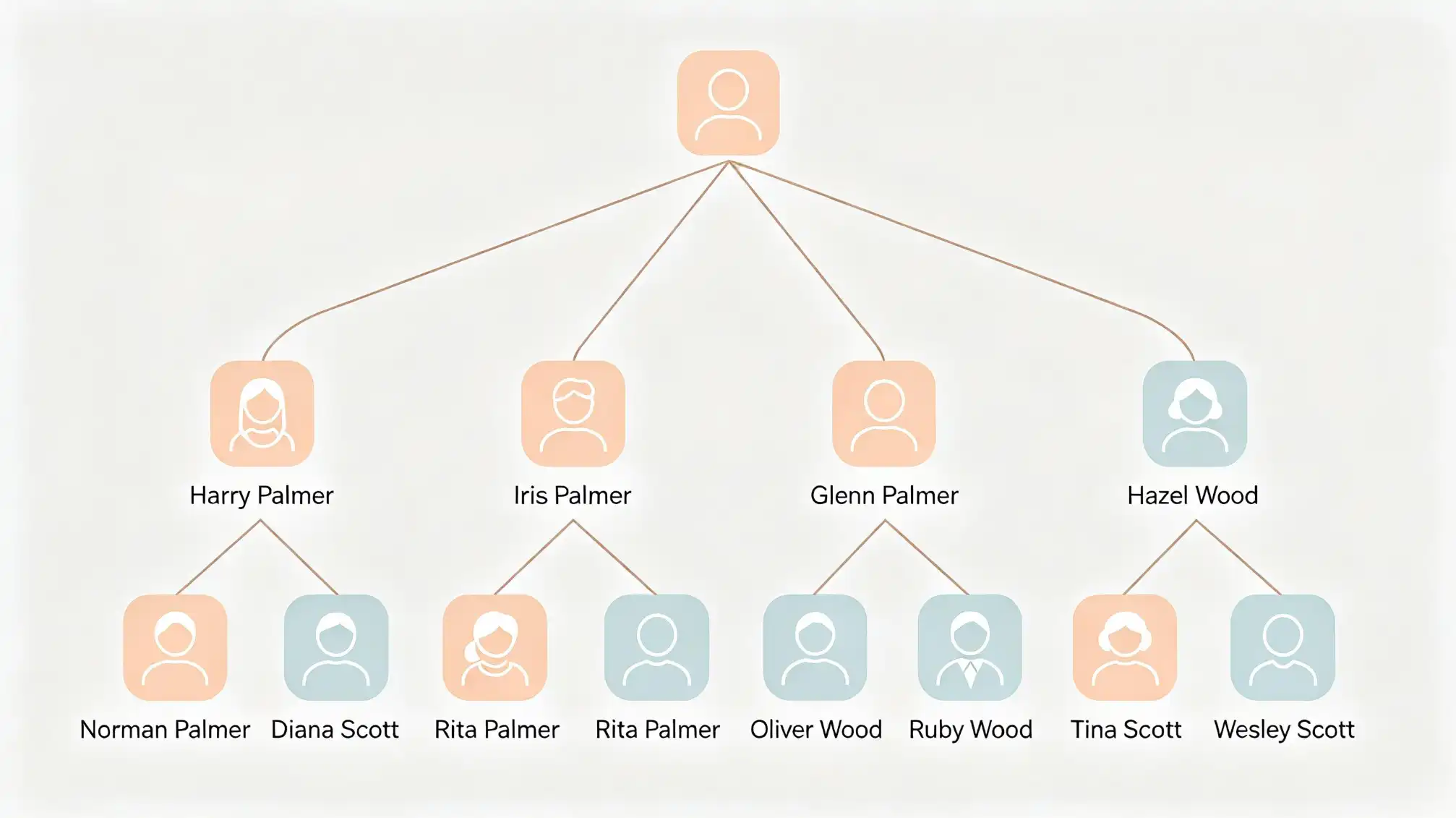
The biggest mistake people make with a family tree template is trying to fill it out from memory alone. Instead, spend one session gathering clues. Look through drawers for birth certificates, marriage licenses, obituaries, and old address books. Ask relatives to name the people in printed photographs.
As you collect clues, write each piece of information on a small sticky note or in a note-taking app. This keeps the research process separate from the template. Once you have a good pile of evidence, you can start transferring details into your free family tree template with confidence.
Fill In Your Family Tree Template One Generation at a Time
Open your template and place yourself at the bottom or left side, depending on the layout. Then work backward one generation at a time.This is the most reliable way to avoid confusion.
Start with your parents. Add their full names, birth dates, and birthplaces if you know them. Next, add your grandparents. For each person, leave a small space for notes like nickname, military service, or migration story. These notes turn a family tree template into a real family history template.
When you do not know a date, write “unknown” instead of skipping the spot. That small mark reminds you to search again later. It also prevents you from guessing. Guessing can create errors that are very hard to correct later.
Use Consistent Formatting to Keep Your Family History Template Clear
One simple habit will save you hours: choose one date format and stick to it. For example, use 14 Mar 1925 instead of 03/14/25. This removes confusion, especially if you have ancestors from countries that put the day before the month.
Also, use the same format for female relatives’ maiden names. Write a note such as “Mary Smith, born Mary Jones” so that the family tree template records the correct birth surname. This is a small detail, but it makes your family history template far more useful for future research.
Keep Your Family Tree Template Connected to Your Family
A family tree template becomes even more powerful when you share it. If you want relatives to help confirm names or add missing photos, create a simple family page where everyone can see the progress. You can read more about building that shared space on the family page at familylove.love/family. It gives your research a natural home for collaboration and makes the family history template feel alive.
When you share your tree, ask each relative to focus on one branch. Maybe your cousin knows the names of the three siblings of your great-grandmother. Another aunt might have a copy of an old wedding invitation. These small contributions turn a free family tree template into a truly shared project.
Review and Update Your Family Tree Template Regularly
Family history is never really finished. A new record may appear online, or a relative may remember a forgotten story. Set a simple reminder to review your family tree template every few months. Check whether new clues have surfaced since your last update.
During your review, also look for repeated names or missing places. If you see a gap, write one question you want to answer next. For example: “Where was my grandmother in the 1940 census?” That one question gives you a clear research goal for your next session.