Comparing digital family tree tools is no longer just about storage. It is about choosing a system that helps you actually complete research and include the whole family. The shift from paper charts and desktop-only software to an online family tree is not a small convenience. It changes how genealogy is done: from a private collection of notes to a shared, evolving family project. This guide explains the benefits that matter most when you are deciding between platforms, and why a digital family tree often beats traditional methods for long-term success.
From Scattered Papers to a Living Database
Most of us start family history with a box of old photographs, a few handwritten notes, and maybe a family Bible. The problem is not a lack of information; it is that the information is everywhere and nowhere. An online family tree solves this by giving every record, source, and date a permanent place. You can attach a census scan to one ancestor, a marriage certificate to a couple, and a baby photo to a child. Everything is linked, searchable, and visible on one chart.
This structure saves hours. You no longer have to turn over envelopes to read notes or wonder whether a date came from a death certificate or a cousin’s email. The source is right there, attached to the fact. That also means your research becomes easier to verify. If you need to ask a relative “where did you find that,” the answer is already in the record list.
Collaboration That Actually Works
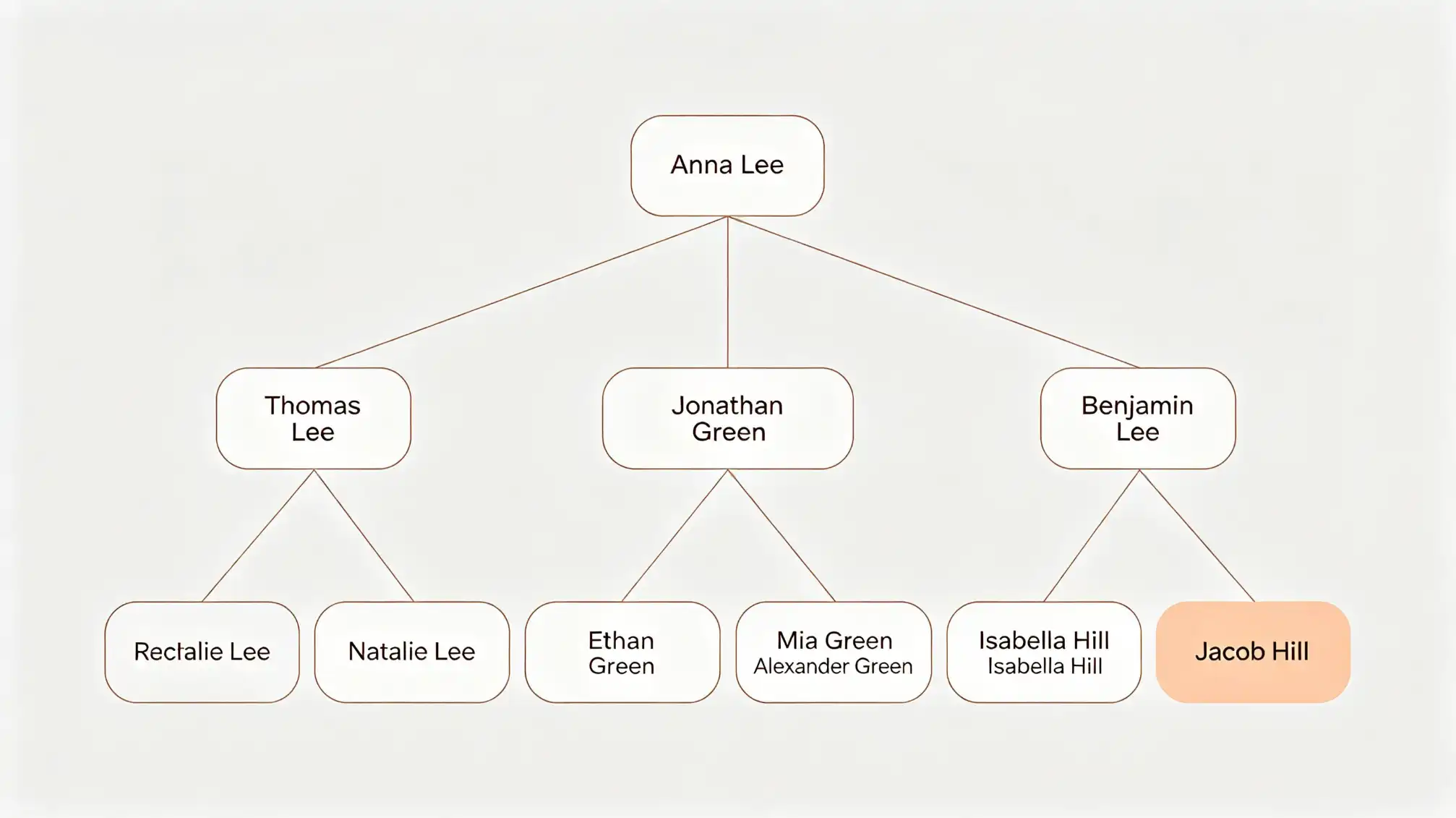
Genealogy is a team sport, but only if the tool lets people play. With an online family tree, you can invite relatives to view or edit entries from their own phones or computers. A great-aunt can add her mother’s maiden name from her tablet. A cousin in another country can attach a photo of a grave marker. Because updates are synced instantly, everyone sees the same version of the tree. That removes the old problem of multiple people keeping separate, conflicting files.
Collaboration also makes research more accurate. When several family members contribute, mistakes are easier to catch. One person may notice that a birthday does not match a military record, while another remembers a nickname that explains an alternate surname. If you are comparing family tree tools, look for comment threads, edit history, and role-based permissions. Those features give you confidence that your shared family history stays correct.
If you want to test collaboration without committing to a full genealogy platform, set up a shared family page first. For instance, our family page at familylove.love/family is designed as a space for relatives to share updates and stories. It is a simple way to show your family how easy digital sharing can be before you start adding detailed records.
Faster Research With Built-In Genealogy Hints
One of the biggest selling points of an online family tree is the ability to discover new records automatically. Many services scan their archives of birth, marriage, death, census, and immigration documents, then suggest matches for names in your tree. These hints can break down walls you have been staring at for years. Instead of manually searching every database, you open a list of potential records and evaluate each one.
That does not mean you should accept every hint without question. Records can be misindexed or belong to someone with the same name. But even a false hint teaches you something about where to look next. The real gain is speed: a hint gives you a target to verify, rather than a blank search box and a stack of microfilm.
When comparing digital family tree tools, check which record collections each service covers. A platform with international coverage is not always better than one with strong local data for your ancestors’ country. Try adding a few known relatives and see which hints come back. That practical test will tell you more than any feature list.
Stories and Media Stay With the Person
A family tree often ends up as a list of names and dates, but the people in it were much more than that. An online family tree lets you attach photographs, letters, audio recordings, and even video clips to individual ancestors. This changes how future generations experience your research. They will not just see “John Albert Miller, 1898–1965.” They will see his face, hear his voice, and read the letter he wrote home during the war.
This is also a preservation strategy. Physical photos fade, negatives crack, and paper documents get lost in storage. When you upload them to a reliable service with cloud backup, the digital copies are available to the whole family. The original still matters, but the digital version becomes the working copy. If you are choosing a tool, pay attention to storage limits and supported file formats. A platform that lets you attach unlimited media is worth more than one with prettier charts and a small storage cap.
Privacy, Ownership, and Future-Proofing
The idea of putting personal details online makes some people nervous. It should. Birth dates, marriage records, and relationships are sensitive. That is why you need a platform with strong privacy controls. The best online family tree services let you keep living people hidden from public searches, restrict access to invited family members only, and control who can edit each branch. You can often mark recent generations as private while allowing distant ancestors to be visible for research.
Ownership is another key factor. You should be able to export your entire tree and all attached sources in a standard format such as GEDCOM. This ensures you are never trapped in a service you dislike. A good rule is to export your tree at least once a year and store a copy on your own device. That small habit protects years of work.
If you are involving relatives, decide early who will manage the master account. A single owner who controls permissions can prevent accidental edits. That person can also act as the main point of contact when a dispute arises about a family story. It is a simple governance step that saves headaches later.
What to Look for in a Digital Family Tree Tool
Not every online family tree is the right fit for your family. As you compare options, consider the features that affect daily use:
- Ease of use: Can a family member who is not tech-savvy navigate the tree without a tutorial?
- Collaboration tools: Are there comment threads, edit history, and permission levels?
- Record hints: Does the service search the archives that are most relevant to your ancestors?
- Media storage: Can you attach photos, audio, and documents without paying a fortune?
- Privacy controls: Can you hide living people and set viewing restrictions?
- Portability: Can you export your data easily if you decide to switch?
These factors matter more than flashy charts. A tree that sits unused because it is difficult to share is not a successful family history project. Choose a tool that your least technical relative can open and understand. If they can add a memory or correct a date, you have built a system that will last.
Going Digital Is a Long-Term Family History Strategy
An online family tree is more than a substitute for a paper chart. It is a long-term strategy for keeping your family history alive and relevant. Every time a relative adds a photograph or corrects a date, the tree becomes more complete. With cloud storage, that work is protected from fire, flood, and the simple passage of time. With collaboration, it is not dependent on one person’s lifetime. The next generation can continue the research because the tools are familiar and accessible.
Genealogy has always been about connecting past, present, and future. A digital family tree makes that connection easier. You can compare records from a library computer, add a story from your phone at a family gathering, and share a new discovery with a cousin across the world in the same afternoon. That immediacy is what keeps people engaged. It turns family history from an archive into an active relationship with your ancestors.