Building a family tree can feel overwhelming when you think about all the branches, generations, and long-lost relatives. The trick is to start where the roots are most visible: with your parents and grandparents. That simple beginning turns genealogy from a research project into a personal conversation with the people who shaped your family story.
Why Start with the Generations You Already Know
Your parents and grandparents are the bridge between your own life and the generations that came before. They hold the names, dates, and small memories that make a family tree more than a list of names. When you begin with them, you reduce mistakes and build a solid foundation for ancestors who may be harder to track down.
This three-generation approach is also easier to verify. You can ask your parents to confirm details about their parents. You can check documents your grandparents have kept for decades. And as you move outward, those verified names become reliable clues for deeper research.
Step 1: Gather What Is Already at Home
Before interviewing anyone, take a quiet look around your own house. Family history is often hiding in boxes, drawers, and old albums. Search for:
- Birth certificates and baptism records for your parents and grandparents
- Marriage licenses and anniversary announcements
- Old photo albums with names or dates written on the back
- Funeral programs, obituaries, or memorial cards
- Letters, diaries, and address books that mention relatives
These items give you a starting set of names and dates. Even a handwritten note from a grandparent can confirm a maiden name or a birthplace that other records miss.
Step 2: Interview Parents and Grandparents First
One of the most natural ways to build a family tree is to have a conversation. Sit with each parent and grandparent and ask gentle questions about their childhood, siblings, parents, and places they lived. Record the conversation with permission so you can listen again later.
Useful questions include: Where were you born? How did your parents meet? What were their full names, including maiden names? What did your grandparents do for a living? Did they ever mention older relatives? You will be surprised how quickly a simple chat becomes a rich family record.
If you can, invite relatives to join. A parent might remember a story differently from a grandparent, and the comparison can reveal details about ancestors that neither would recall alone.
Step 3: Draw the Three-Generation Map
Now it is time to put names on paper. Start with you in the center. Add your parents above or beside you. Then add your four grandparents above them. This is the core shape of your family tree.
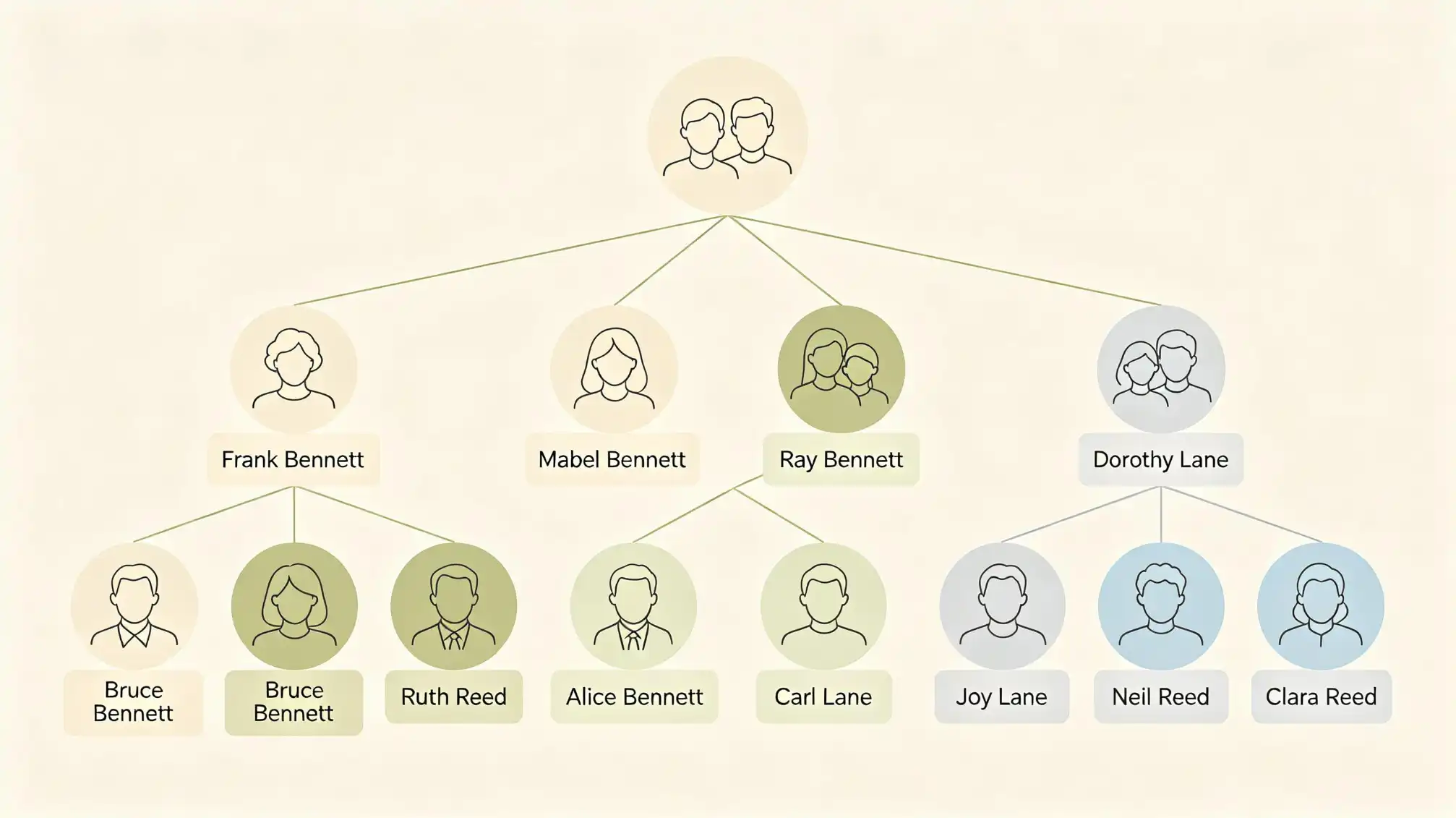
For each person, write their full name, date and place of birth, and if relevant, marriage date. Leave room for more details later. You do not need a perfect chart yet. A simple hand-drawn diagram or a digital grid works fine at this stage.
Step 4: Add Dates and Places
Dates and places are the anchors of any family tree. Without them, names can blur together. Ask each relative for exact birth dates, marriage dates, and hometowns. If you learn that your grandfather was born in a small town, write that town down. It may help you later when you search census records or city directories.
You should also note relationships. In a family tree, relationship lines matter because they show who belongs to which branch. Adding a simple line between spouses, and connecting children to parents, makes the tree readable for everyone.
Step 5: Invite Relatives to Contribute
Building a family tree is more accurate when more people help. Older relatives often hold memories that younger generations have never heard. Share your draft with them and ask what needs to be corrected or added. That simple act can save you from chasing wrong branches.
If you want a central place where relatives can collaborate, the family hub at https://www.familylove.love/family is a practical next step. It gives your family a shared space to exchange photos, updates, and stories while you continue building the tree.
Step 6: Choose a Format That Fits Your Family
There is no single right way to present a family tree. The best format depends on how you plan to use it. Consider these options:
- A simple wall chart showing three or four generations
- A spreadsheet with columns for names, dates, and places
- A scrapbook with photos and handwritten notes under each relative
- An online tool that lets you link records and share branches
- A family binder with copies of documents and interview notes
Whichever format you choose, keep it organized. Label each branch clearly, save digital copies of old photos, and store your research notes with the tree so future relatives can continue the work.
Step 7: Expand to Ancestors After the Foundation Is Solid
Once your parents and grandparents are recorded and verified, you can confidently move back another generation. Look for great-grandparents and great-aunts, then use their names to find missing relatives and ancestors in public records, church registers, and family histories.
The same method applies at every level: start with what someone remembers, confirm it with documents, then use that information to ask the next question. By building from the known to the unknown, you avoid the guessing that creates fragile family trees.