Every family has a vault of grandparents family history that hasn't been opened yet. It sits in the way they laugh at a certain joke, the way they pause before answering a question about their childhood, or the quiet pride in their voice when they mention a place that no longer looks the same. Those stories are not just memories—they are the bridge between you and every relative who came before you. And the good news? You don't need a camera crew or a list of formal family history questions to capture them. You just need a warm afternoon, a little curiosity, and the willingness to listen.
Start With Comfort, Not a Checklist
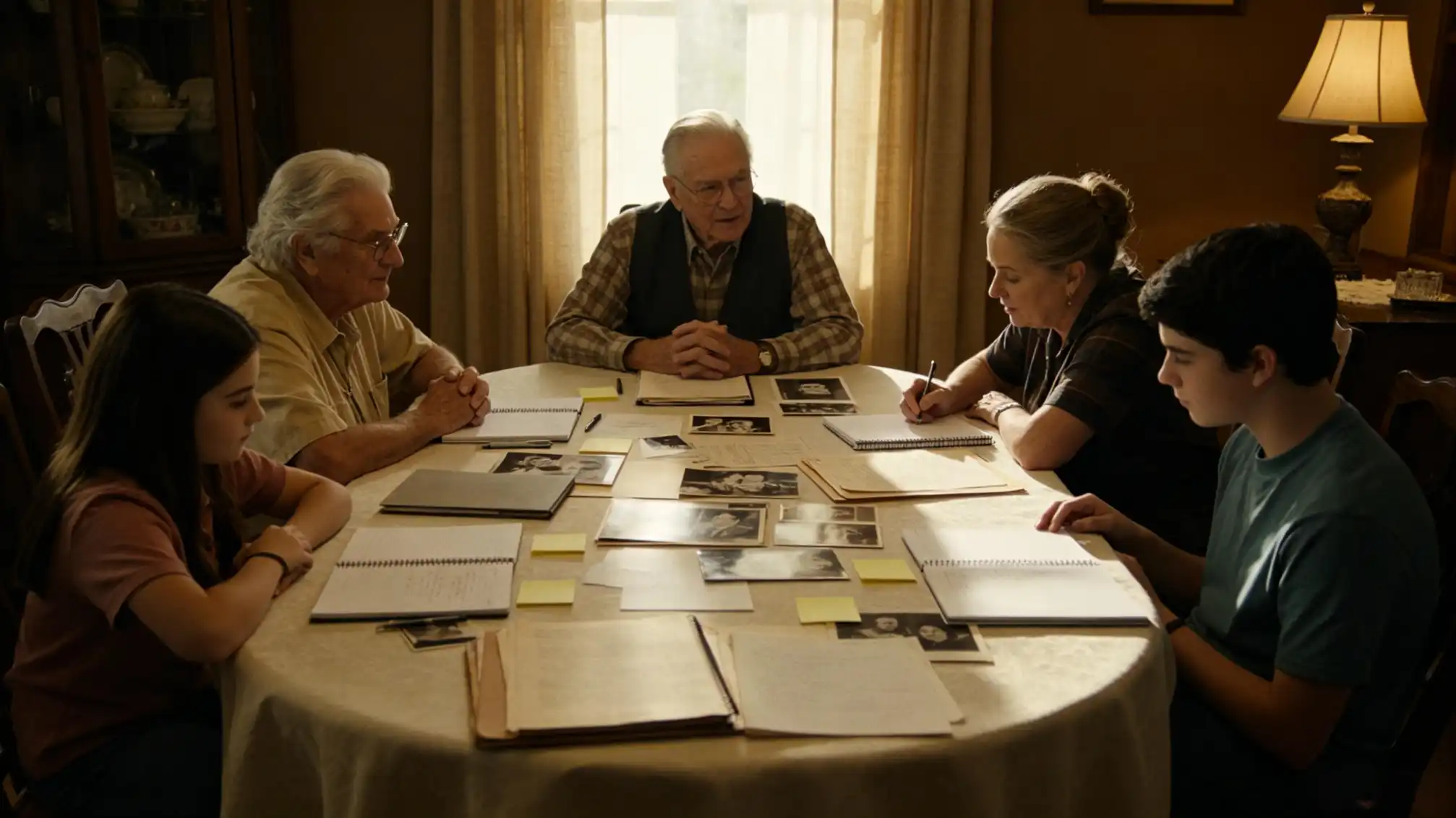
Before you pull out a recorder, sit with your grandparent and let the conversation wander. Make tea. Look at old photos together. Let them talk about the weather, the neighbor's dog, or the way the kitchen smelled when they were small. The deepest family stories rarely come from a formal Q&A; they come from a relaxed moment when your grandparent feels like you genuinely want to hear about their life, not just check off family history questions.
If you're worried about forgetting something, don't let that worry make you stiff. Keep a small notepad nearby, but let your grandparent set the pace. Sometimes the best question is simply, "What do you remember that nobody ever asks about?" You'll be surprised how quickly a simple prompt opens the door to the past.
Questions That Open Childhood Doors
Childhood is where grandparents family history becomes vivid. Instead of asking a broad question like "What was your childhood like?"—which can feel overwhelming—try specific, sensory prompts that invite them to step back in time:
- What is the earliest sound you remember, and where were you when you heard it?
- What did your mother or father always say before you left the house?
- What was a typical Saturday morning like when you were eight?
- Who was your favorite relative, and why did you love being around them?
- What did you eat that you never see anyone eat anymore?
These questions are less like an interview and more like a key turning a lock. Your grandparent may start telling a story about a sibling, a family trip, or a holiday tradition that you've never heard before. Let them wander—that's where the gems hide.
When They Were Young and Untethered
As your grandparent grows comfortable, move into the years when they were becoming themselves. This is a part of family history that's often skipped because it feels less "family" and more "personal," but those personal moments shaped who they became as a parent, a partner, and a grandparent. Try questions like:
- What was the first job you ever had, and what did it teach you?
- Who was your best friend when you were twenty, and what did you do together?
- Tell me about the first time you left your hometown. Where did you go?
- What did you dream about for your future before life took its own turns?
- Was there a moment when you realized you were not a child anymore?
These prompts often lead to stories about relatives and friends you've only heard mentioned in passing. When they name someone, ask follow-up questions: "What happened to them?" "Do you still think about them?" These small threads weave together a rich family stories quilt.
Love, Work, and the Everyday
Now you're ready for the most tender part of the interview. Talk about love, partnership, and the ordinary routines that made up daily life. Your grandparent may share something you've never heard before—how they met, what their wedding day was really like, or how they managed the hard years. The goal is not to pry; it's to honor the path they walked.
Here are some questions to ask grandparents about family history without making it feel like a press conference:
- How did you and Grandpa / Grandma meet? Were there any obstacles?
- What was the first meal you cooked for someone you loved?
- What did your parents think of the person you married?
- What was the hardest decision you had to make when you were young?
- What was a regular weekday like for your family after you had children?
Sometimes these questions bring up painful memories. That's okay. You don't need to fix anything—just be present. If your grandparent gets quiet, gently ask, "Would you like to talk about something else?" The love you show in that moment becomes part of their legacy too.
Record It So You Can Revisit It
Once the conversation feels natural, think about recording. You don't need professional equipment—a smartphone in a quiet room works beautifully. Just place it on a soft surface, set it to voice memo, and let your grandparent know it's there. Most people forget about the recorder within a few minutes.
After you have the recording, don't let it sit in a file forever. Transcribe it, or at least write down the most important family stories in your own words. This is where our family stories page can help: it gives you a warm, organized space to share recollections with relatives and preserve them for future generations. You can bring siblings, cousins, and even grandchildren into the process, building a living archive that grows with every new memory added.
And don't forget the smallest details. That weird holiday tradition, the nickname only your grandparent used, the recipe that never made it into a cookbook—these are the fragments that make your family history feel real. They also become beautiful gifts for other relatives who may have never heard these stories.