Your Family History Is Closer Than You Think
You don’t need a mountain of old documents or a finished family tree to begin recording your family history. In fact, one of the most surprising truths about preserving family stories is this: you already have everything you need. Somewhere in your home — tucked in a drawer, stacked on a shelf, or held in a recollection that surfaces during Sunday dinner — are the starting points of a legacy worth saving.
Recording family history isn’t about being exhaustive. It’s about being deliberate. When you capture small moments, names, and the texture of everyday life, you give future generations a gift that no online archive can replace: a personal sense of belonging. If you’ve been waiting for the “right time” to get started, let this be your gentle nudge. Today is full of enough tenderness and enough history to begin.
Start With One Drawer, Not a Genealogy Project
The biggest mistake people make when they want to record family history is treating it like a research assignment. They feel they must trace every branch of the family tree, locate birth certificates, and interview all relatives before doing anything. That pressure can stall you before you start. Instead, choose a single drawer, a shoebox, or a stack of loose photos. Sit down with a cup of tea and simply look.
Let curiosity guide you. Which photo makes you pause? Whose handwriting appears on the back of that postcard? What does that worn recipe card tell you about a grandmother’s quiet patience? These objects aren’t just clutter — they are portals. As you look, jot down names, places, and any fragments of stories you remember. Don’t worry about order. You are warming up your memory, and every line you write is a small act of preservation.
Ask Questions That Open Doors
When you sit down with a family member, the usual questions — “What was your childhood like?” — can sometimes produce one-word answers. A better way to gather family stories is to ask questions that connect to sensory details. Ask about the smells of an old kitchen, the sound of a hallway, the feel of a Sunday dress. These questions invite storytelling rather than report-taking.
Try prompts like: “What did your father always say before he left for work?” or “What was the first thing you remember cooking?” Even a simple sentence like “Tell me about the house you grew up in, room by room” can unlock an afternoon of memories. Record the conversation on your phone if comfortable, but always ask permission. Keep the interview loose. You are not chasing dates; you are listening for meaning.
Map Your Family Tree Without Pressure
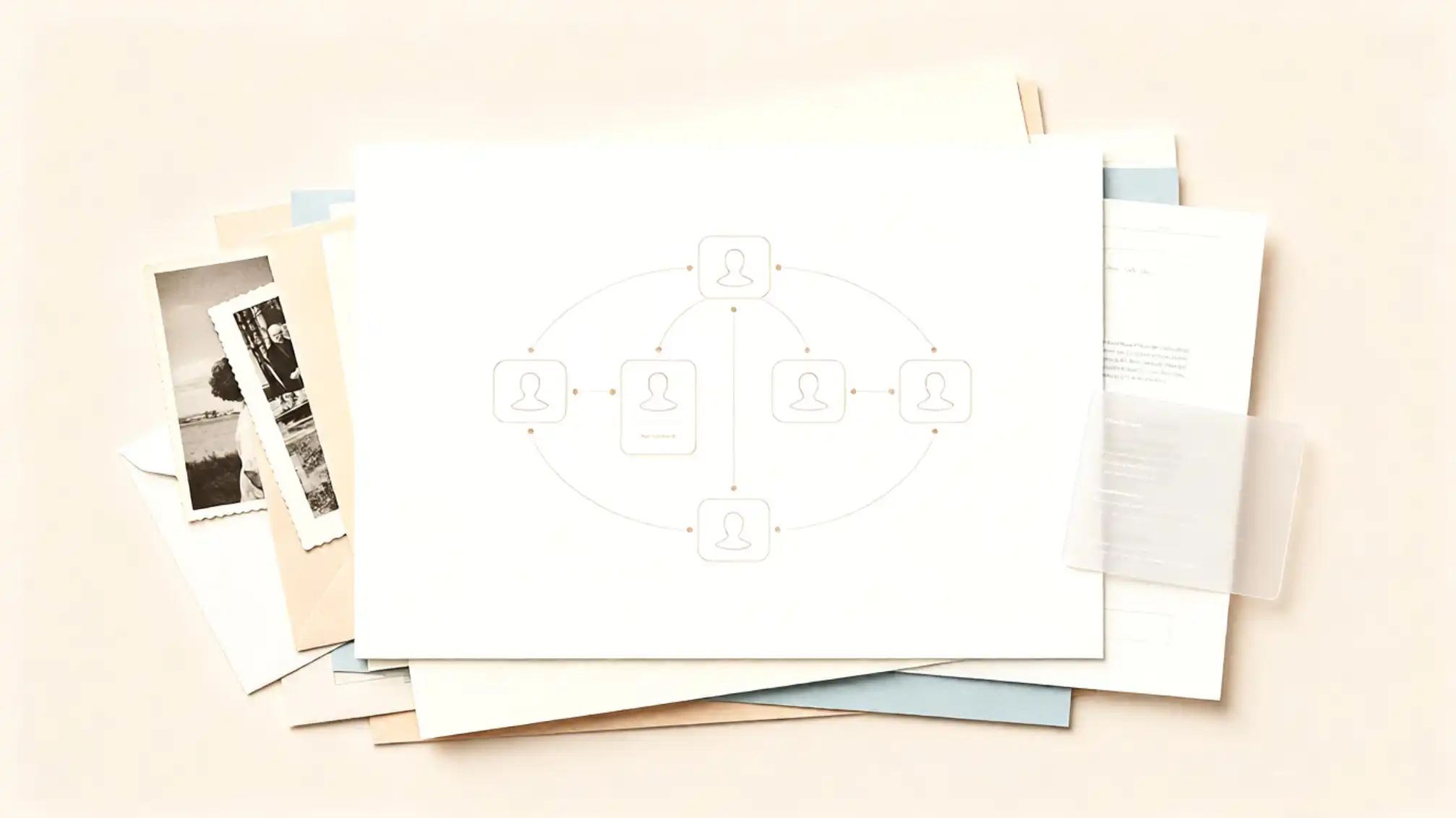
A family tree can feel like a formal document, but it can also be a living drawing that reflects your current knowledge. Use a piece of paper or a simple online tool to fill in what you know: parents, grandparents, aunts, uncles, cousins. Leave blanks for what you don’t know. Those blanks are not failures; they are invitations to ask one more relative, search one more box, or make a phone call you’ve been putting off.
As you add names, include small annotations. Next to a great-aunt’s name, write “sang in the church choir” or “loved red shoes.” These details are what turn a family tree from a chart into a story garden. And when you feel ready to share a few of those stories, consider contributing to our family story gallery at https://www.familylove.love/stories. It’s a warm, welcoming space where memories are honored and preserved for others to enjoy.
Preserve the Voices Behind the Names
Photographs give us faces, but voices give us presence. If you have an older relative who is willing to talk, record them. You don’t need expensive equipment — a modern phone can capture beautiful audio. Place the phone in a stable spot, sit close, and let the recorder run while you chat. The background hum of a kettle or a neighbor’s dog is part of the memory. Future listeners will feel the room around the voice.
Also collect the spoken phrases of day-to-day life. Did your grandfather have a saying he repeated every time it rained? Did your mother call you a special nickname? Write these down faithfully. They are verbal heirlooms. Years from now, hearing these words will bring your loved ones closer than any perfectly scanned document ever could.
Keep It Manageable: A Little Every Week
Recording family history doesn’t require a dedicated home office or a weekend-long organizing session. It thrives on rhythm. Set a weekly reminder for fifteen minutes. During that time, you might scan one photo, write a half-page memory, or follow up with a relative. These gentle increments accumulate into a rich archive without the burnout that comes from marathon efforts.
Remember, you are not aiming for perfection. Some weeks you will only write two sentences. That’s enough. The goal is to remain connected to the past, one small act at a time. You are building a bridge between generations, and even a narrow footbridge is more beautiful than a grand bridge that was never built.