When you compare family history websites, you may notice they all promise a place to put your ancestors. But an online family tree is more than a digital chart. It is a working system for preserving evidence, connecting with relatives, and keeping your research alive.
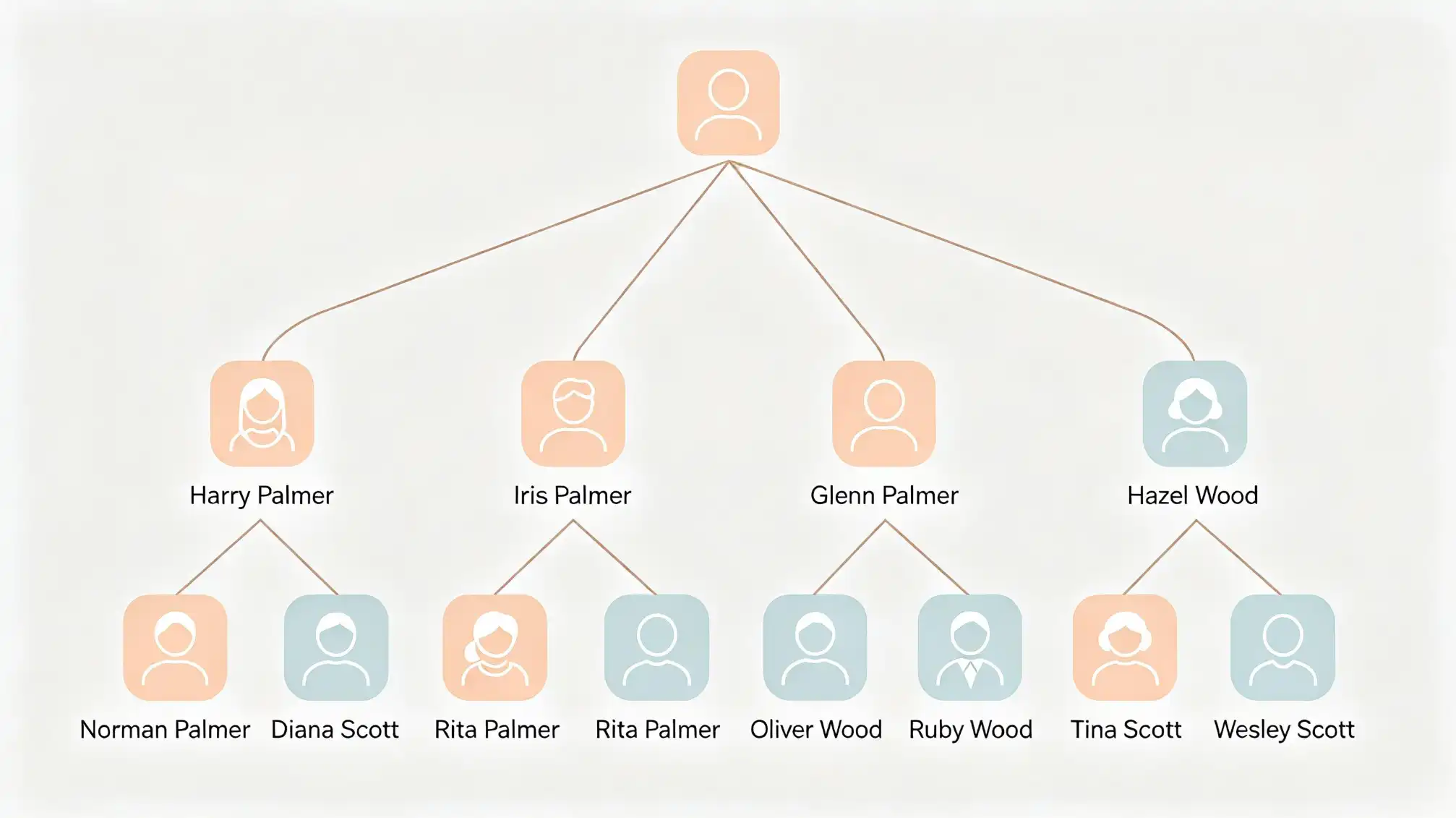
From Paper Charts to a Living Database
Paper trees are static. Once you write names and dates on a sheet, the information stops moving. By contrast, an online family tree treats every entry as part of a connected record. When you update one person, that change appears everywhere they appear. When you attach a census record, a birth certificate, or a photo, it becomes a reusable source for every descendant on that branch.
For people comparing digital tools, the real question is not which one has the prettiest interface, but whether the platform lets you store evidence alongside each ancestor. The best options make that relationship visible.
A digital tree can also reveal gaps. When a generation has no source or date attached, that empty space becomes obvious. On paper, it is easy to overlook a missing fact. In a well-designed online family tree, the structure itself reminds you where to focus next.
Understanding the Workflow Differences
When you compare online family tree platforms, you are also comparing workflows. Some platforms are designed around record matching, so they encourage rapid data entry. Others are designed around source-driven research, so every fact must be accompanied by evidence. You need to know which style matches the way you think about genealogy.
Try entering the same great-grandparent in two services. Watch how each platform handles the event date, the place name, and the attached source. You will quickly see which one feels logical to you.
Benefits to Look For When Comparing Online Family Tree Tools
As you evaluate options, focus on practical outcomes. Here are the benefits that matter most for serious family history work.
- Source integration. A useful online family tree lets you link records to individuals without losing the original context. This prevents you from copying a name from a hints list without checking whether it is actually your ancestor.
- Privacy controls. You should be able to decide who sees living people and who only sees historical data. Compare how each tool handles living individual visibility before adding personal details.
- Media and document storage. Old family photographs, letters, or scanned documents can live inside the tree. This makes the tree a family archive, not just a collection of names.
- Simple collaboration. Inviting relatives to add memories or correct details is one of the main reasons to go digital. Make sure the sharing link is easy to understand and control.
- GEDCOM import and export. If you ever move to another service, you need a standard file format such as GEDCOM to avoid losing your research. Check whether the platform supports it.
Accuracy and Evidence Are More Important Than Hints
Many online family tree tools suggest matches from other user trees or historical records. These hints can save time, but they can also introduce errors. A reliable platform lets you review the evidence before accepting a match. Look for a tool that encourages source citations and shows why a record was attached.
You should also be able to separate verified data from unconfirmed assumptions. Some tools mark relationships as confident, possible, or unverified. If you value solid genealogy, choose a service that makes that distinction part of the workflow.
Using an Online Family Tree as a Shared Workflow
The clearest benefit of a digital family tree is that it creates a shared workspace. You can assign tasks to relatives, ask questions about an old photograph, or connect with a distant cousin who has already solved the same puzzle. Instead of sending spreadsheets by email, you work from one living document.
Sharing also helps with oral history. You can record your aunt's memory and attach it to the relative she is talking about. Later, the tree becomes a place where family stories remain connected to the people they describe.
If you are looking for a natural place to begin this shared effort, your immediate family circle is the obvious first step. You can explore the FamilyLove family page to see how a family space can support the conversations behind your tree.
Comparing Costs and Long-Term Storage
Free accounts often have limits, such as a restricted number of people or low-resolution photo storage. Paid tiers may give you unlimited records, larger file uploads, and advanced search filters. Before subscribing, think about how much material you already have and how quickly it is likely to grow.
You also need to check the provider's export policy. A genuinely useful online family tree should never trap your data. The ability to download your tree and all attached sources is a fundamental feature, not a luxury.
Common Mistakes to Avoid
One mistake is trusting a hint without opening the original record. Another is adding a relative only by name without a date or place. A third is keeping your own research locked in a PDF instead of entering it into a tool that can connect it to other records.
Avoid these traps by making small entries regularly. Ten minutes of focused work each week is more useful than a full weekend data-entry marathon.
What a New User Should Do First
If you are just starting, resist the urge to enter every name you are unsure about. Begin with three generations and add sources for each person. Then invite one relative to review the tree and fill in a few gaps. This gives you immediate feedback and makes the tree feel useful right away.
Once you see how quickly information can be connected, you will understand why so many genealogists prefer an online workflow. It does not replace careful research; it simply makes that research easier to follow.