The Stories Behind the Names
Every family has a story that never gets told — not because it’s secret, but because no one ever asked the right family history questions at the right moment. You sit at holiday tables with grandparents, listen to your mother’s childhood jokes, nod at your uncle’s old photographs. Yet somehow the details that matter most stay buried under small talk.
That changes the day you decide to ask something real. Not a list of dates and places, but the kind of questions that make your grandmother pause, look past you, and remember. This guide is built for exactly that: practical, warm, and surprisingly effective family history questions to ask relatives before their stories fade.
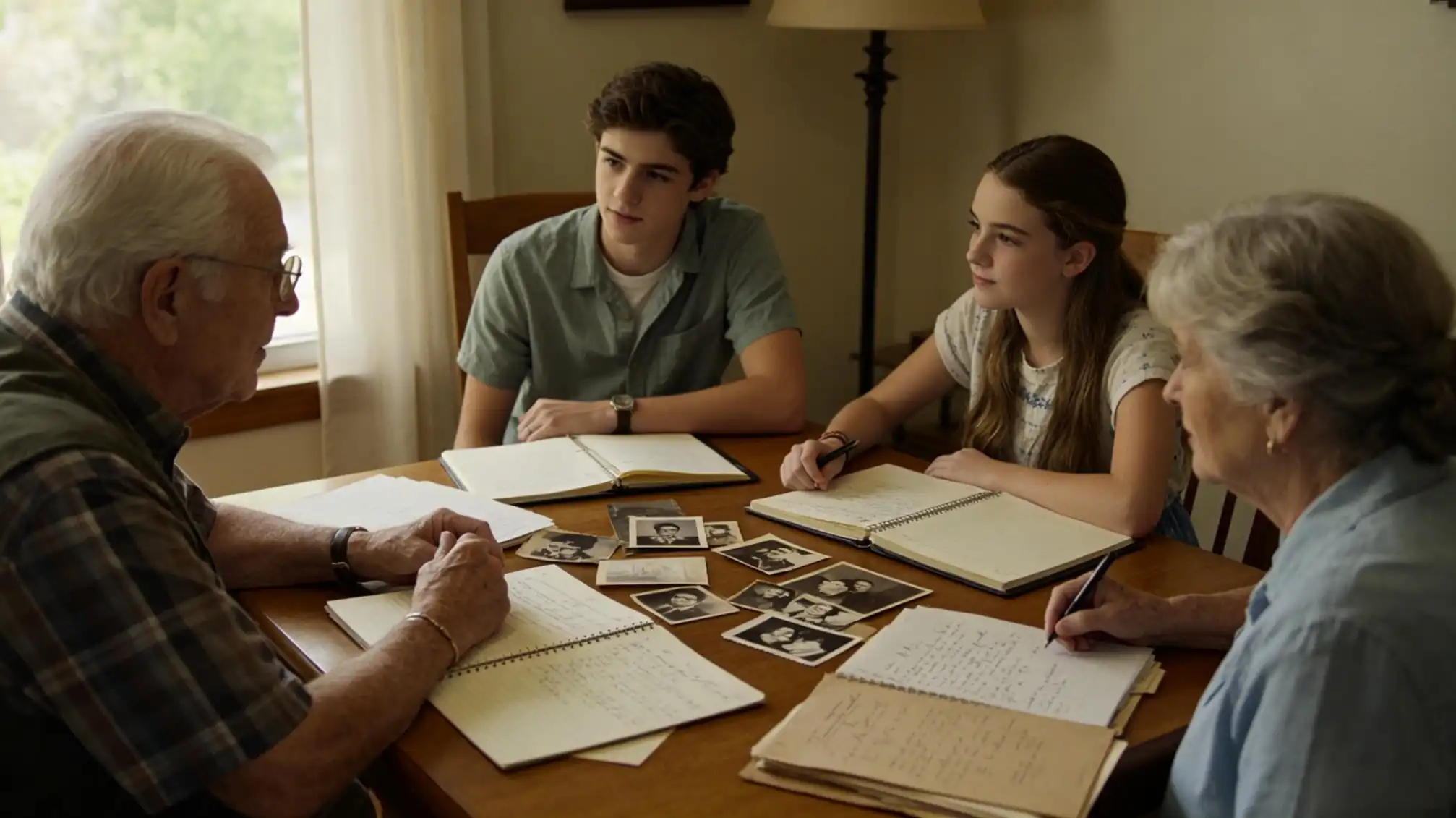
Why Most Family History Questions Fail
If you’ve tried to interview a grandparent before, you know the pattern. You ask, “So what was Grandma’s maiden name?” They answer. Then silence. Lists of facts don’t create stories — they create resumes. The best family history questions are not about names and dates. They are about feelings, choices, and tiny moments that sum up an entire life.
You also need the right setting. A noisy kitchen or a rushed lunch won’t work. Choose a quiet afternoon, bring a good recording device on your phone, and keep a notebook nearby. Let your relative know there’s no wrong answer. The goal is not a perfect archive; it’s an honest conversation.
Open-Ended Family History Questions for Parents
Parents are often the hardest to interview because they think you already know their story. Remind them that you only know the edited version — the one that happened after you arrived. These questions open the door:
- What did your parents argue about — and what did they agree on?
- What was the hardest decision you made before I was born?
- What did you dream about at my age, and how did that dream change?
- What moment made you realize you were no longer a child?
- Who was your favorite relative, and why did they understand you so well?
Ask one question at a time. Let silence stretch. When a parent says “That’s a long story,” do not interrupt. That is exactly when the good parts begin.
Grandparent Questions That Go Deeper
Grandparents hold the longest memory of your family’s arc. They also tend to speak in fragments — a funny line, a quick memory, a shrug. Your best tool is to ask for sensory details. Instead of “What was the war like?” try “What did the train station smell like when you left home?”
These family history questions for grandparents have worked well in real interviews:
- What is the first time you remember feeling truly loved?
- What did your mother’s voice sound like when she was angry versus when she was happy?
- How did you meet the person who became your closest friend?
- What meal did your family eat when you were poor, and what meal did you eat when things got better?
- If you could ask your own grandfather one thing now, what would it be?
These questions are not about extracting information. They are invitations. Your grandparent may answer in a rambling way — that’s a gift. Let the story take detours. You are collecting the texture of a life, not a Wikipedia entry.
Relatives Who Are Not Grandparents
Aunts, uncles, cousins, and even family friends often know the parts your grandparents never mention. They saw different sides of the same events. Include them in your family history project. You might ask:
- What was I like as a child that my parents never noticed?
- What family legend do you suspect is not true?
- Who in the family was always underestimated, and what did they go on to do?
- What did you learn about marriage by watching your parents?
- What do you wish someone had asked you twenty years ago?
Different perspectives will overlap and clash. That is normal. Your job is not to find one true version; it is to preserve the way each person remembers. Later, when you compare answers, you may discover the quiet feelings that ran under your family’s public story.
How to Keep the Conversation Going
You do not need to finish all your questions in one sitting. Split your interview into two or three sessions. After the first one, review the recording and write down the names, places, and small phrases that appear. Use those details to build the next round of questions. This makes your relative feel heard — and it often unlocks memories they thought they had forgotten.
If you feel stuck, look at how other families have handled their conversations. A great place to start is the family story collection on FamilyLove, where real people share how they recorded their own histories. Let their approaches inspire yours.
Turn Answers Into Keepable Stories
Recording is only the first step. After the conversation, you need to save it. Create a simple folder on your computer with the audio file, a transcript, and a one-page summary. You can also make a short video clip of the best moment. If your relative agrees, upload a few highlights to a private family page. This way, the stories do not stay trapped on a phone they will eventually lose.
Remember that the goal is not to finish the project. The goal is to show your relatives that their lives matter to you. That alone turns a list of family history questions into a bridge between generations.