How to Build a Family Tree: Start with the Stories of Parents and Grandparents
One of the most meaningful ways to connect with your own history is to create a living map of your family. A family tree is more than a diagram of names; it is an invitation to sit down with the people you love and collect the stories, dates, and details that make your relatives real. If you are ready to begin, the best place to start is not a genealogy archive or a DNA test. It is closer than you think: inside the memories of your parents and grandparents.
Why Begin with Your Closest Relatives?
When you start with your closest relatives, you build a foundation that is both personal and verifiable. Your parents know their own parents, aunts, uncles, and cousins. Your grandparents hold memories that reach back another generation, often including names and places you have never heard. By interviewing them early, you capture not only dates but also the flavor of their lives, which makes your research feel alive.
Starting small also prevents overwhelm. Many people freeze when they try to map every branch at once. Instead, focus on the core vertical line: you, your parents, and your grandparents. Once those three layers are solid, you can widen outward to siblings, aunts, uncles, and cousins. This method keeps you grounded and gives you a clear, repeatable process for every new branch you pursue.
Prepare Your Family Tree Toolkit
Before you pick up the phone or open a notebook, gather a few simple tools. You will need a notebook or a digital note-taking app, a voice recorder for interviews with older relatives, and a spreadsheet or a dedicated family-tree app. A physical folder for documents is also helpful so you can store old photos, certificates, and letters in one safe place.
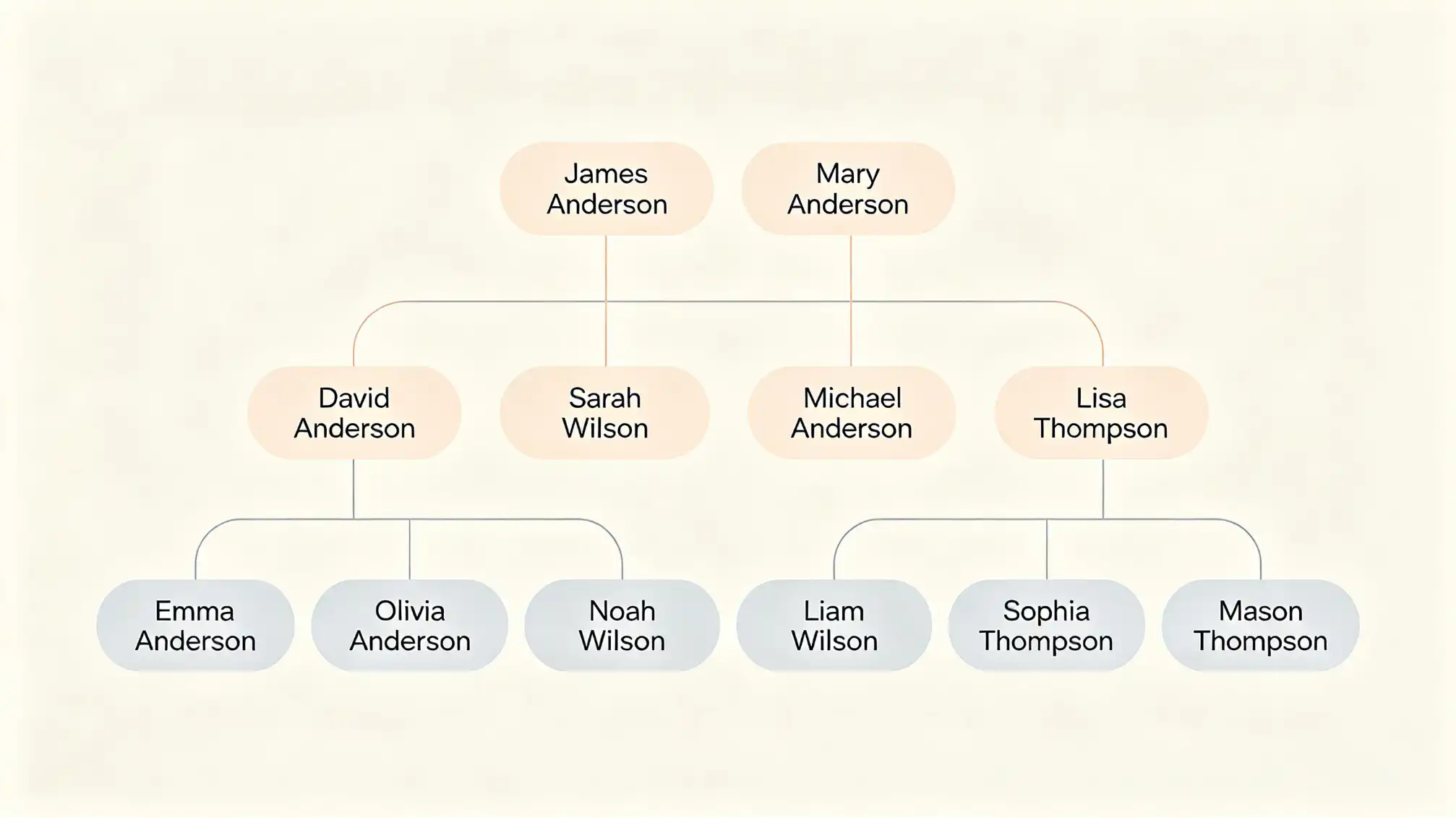
If you prefer a visual layout, draw three columns on a large piece of paper. Put yourself in the middle, with your parents above you and your grandparents above them. Leave empty spaces for birth dates, marriage dates, and places. This blank chart will guide you during conversations and help you spot what is missing.
Interview Your Parents First
Your parents are the natural bridge between you and your grandparents. They can confirm basic facts and share personal stories that humanize each name. Schedule a relaxed conversation rather than a formal interrogation. Ask open-ended questions like, “Where did you grow up?” or “What did your mother love to cook?”. These answers may lead you to unexpected relatives or reveal migration patterns you never knew existed.
Write down every detail, even if it seems unimportant. A tiny mention of a small town or a nickname can later unlock official records. If a parent shares a document, photograph it immediately and return the original. Keep all digital images in one folder named by family line, such as “Maternal Grandparents” or “Paternal Grandparents.”
Turn to Grandparents for Deeper Roots
After your parents have given you a solid base, move upward to your grandparents. This is where your tree starts to feel deep. Grandparents often remember their own parents and can clarify relationships that your parents only vaguely know. Ask them about their parents’ occupations, religious traditions, and the reasons their families moved from place to place. Those motivations create a richer context than a birth certificate alone.
Record the interview with their permission. A voice recording captures tone and laughter, which later generations will treasure. While recording, ask them to spell names and places slowly. This is also the moment to ask about missed branches: did your grandmother have siblings who passed away young? Did your grandfather have cousins who emigrated? These names are just as important to your tree as the direct line.
Collect Documents That Confirm Your Tree
Memory is a wonderful source, but paper evidence makes your tree trustworthy. Ask relatives if they have birth certificates, marriage licenses, military records, or old family Bibles. A family Bible often contains handwritten birth and death entries that were never officially recorded. Photocopy or scan these documents and note where you found them. Your tree becomes more credible when each name is tied to a source.
As you gather materials, you may notice small disagreements between stories and documents. That is normal. Record both versions and keep a note explaining the discrepancy. Later, you can research census records or obituaries to decide which is more accurate. Do not erase a relative’s memory just because a paper disagrees; instead, preserve the human story alongside the factual record.
Use a Family Tree App or Template
Once you have a few generations mapped on paper, transfer everything into a digital format. There are many free and paid family-tree applications that allow you to add photos, notes, and sources. A digital tree makes it easy to share with relatives and continue collaborating. You can also use a simple spreadsheet if you prefer not to learn new software. The key is to keep the same structure across all platforms: name, birth date, birthplace, marriage date, and a notes column for stories.
While you are building your tree, you might want to see how other families structure their shared memories. Take a moment to explore the family hub at familylove.love/family; it is a practical reference for organizing relationships and keeping everyone connected.
Expand Carefully to Relatives and Ancestors
With your parents and grandparents firmly placed, you can begin to expand. Start with siblings and aunts, then move to first cousins. Each person you add gives you another pathway to older generations. For ancestors, you may need public records, cemetery lists, or genealogy websites. But before spending hours in archives, make sure you have exhausted the knowledge of your living relatives. They are the fastest and most enjoyable source of family history.
Remember that a family tree is a project of inclusion. It should represent not only the famous lines but also the quieter branches, including step-relatives, adopted children, and close family friends who became kin. This makes your tree an honest reflection of the love that shaped you.
Share and Preserve Your Growing Tree
Once you have a few generations, share your draft with the people who helped you. Relatives may correct a middle name or add a missing wedding date. Their feedback protects your work from small errors that would become larger problems later. You can also print a large physical chart for a reunion or family dinner, giving everyone a chance to gather around and point out their own branch.
Preservation is the final step. Store digital copies in cloud storage and on a local drive. Keep original documents in acid-free folders. If you recorded interviews, transcribe them and attach the recordings to your family-tree entries. Your future descendants will be grateful that you thought beyond the diagram and protected the voices behind every name.