The Family Tree Explained: A Beginner’s Guide to Mapping Your Ancestors
If you’ve ever wondered about the people who came before you—your grandparents, great-grandparents, or the distant relatives whose names appear in old letters—a family tree is the perfect place to start. For beginners, the idea of genealogy can feel overwhelming, but a family tree is actually one of the most approachable tools for understanding your ancestry. It turns scattered names, dates, and stories into a clear visual map of your family history.
More Than Just Names and Dates
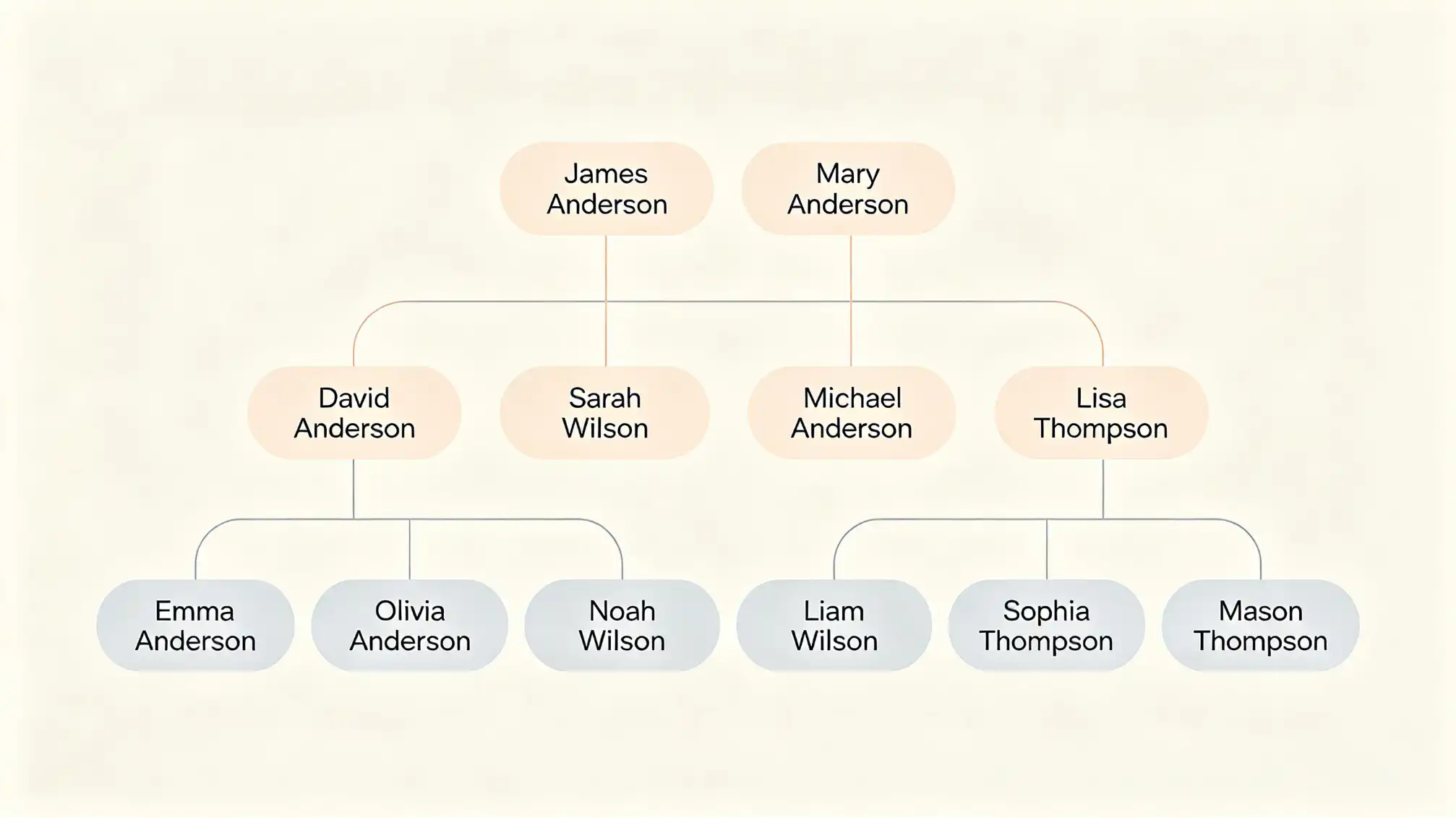
A family tree is a structured representation of your relatives, typically organized by generation. At its most basic level, it starts with you and expands outward to your parents, grandparents, and great-grandparents. But a meaningful family tree does more than list names—it captures relationships, births, marriages, and sometimes even migration patterns or occupations.
Think of it as a living document. Every branch represents a family line, and every leaf is a person. When you begin adding details—like where someone lived, what they did for a living, or a favorite family story—your family tree becomes a richer portrait of your ancestors and their world.
The Core Elements of a Family Tree
To build a useful family tree, it helps to understand the basic building blocks. Most genealogy charts include the following:
- Individuals: Each person is a node, usually with their full name, birth date, and death date if applicable.
- Partnerships: Marriages or long-term relationships connect pairs of individuals.
- Parent-child links: These lines show descent and form the “branches” of the tree.
- Generations: Rows or levels represent different eras in your family history.
- Sources: Records such as birth certificates, census entries, and photos that back up each fact.
As a beginner, you don’t need to fill everything at once. Start with what you know and add gradually. The goal is accuracy and clarity, not speed.
Why a Family Tree Matters for Family History
Mapping your family tree is often the first step into the larger world of family history. It gives you a bird’s-eye view of where you come from, and it can help you spot patterns—like migrations, naming traditions, or recurring occupations—that may have shaped your family for generations.
Understanding your ancestors also helps you understand yourself. Many people find that learning about a great-grandparent’s resilience or a grandmother’s creative spirit gives them a new appreciation for their own traits. A family tree can be a bridge between generations, making family history feel personal and immediate.
Moreover, building a family tree is a collaborative act. When you share your progress with relatives, they often contribute stories, photographs, and documents you’ve never seen. It becomes a shared family project that strengthens your sense of belonging.
A Fresh Way to Think About Your Family Tree
Instead of viewing your family tree as a rigid chart, consider it a timeline of love and survival. Each branch is a line of choices made under different circumstances. Your ancestors were not just names—they were people who lived through joy, hardship, and change. Their journeys led to you.
This perspective can make genealogy less about chasing dates and more about honoring the lives that made yours possible. It also encourages you to ask better questions: Why did my great-grandparents move to this city? What did they leave behind? How did they celebrate holidays? These questions turn names into stories.
Starting Your Own Family Tree
Begin with yourself and your immediate family. Write down your own full name, birth date, and birthplace. Then add your parents, siblings, and grandparents. Ask older relatives for information—they are often the most valuable resources. You might be surprised by how much they remember.
Next, organize what you’ve learned. You can use digital tools, a notebook, or a dedicated genealogy software program. The format doesn’t matter as long as you can see the connections clearly. If you’re looking for a structured way to record your findings, you may want to explore resources like family-focused guides and templates that can help you keep your research tidy.
Branching Out: From Family Tree to Deeper Ancestry
Once you have the basic structure, you can begin expanding outward. Look for public records such as census data, birth and death certificates, and immigration documents. Many libraries and online archives offer free access to these records. As you add sources, always note where each fact came from—this is a core habit in genealogy and prevents confusion later.
Your family tree will gradually grow beyond grandparents and include great-aunts, cousins, and distant ancestors. At this point, you’re no longer just drawing a tree—you’re reconstructing a family history that reaches across centuries.
If you feel stuck, remember that every genealogist was once a beginner. Reaching out to relatives, joining genealogy forums, or consulting local historical societies can give you the support you need. The important thing is to keep asking questions and stay curious.