Why an Online Family Tree Makes Family History Easier
For decades, family history lived in shoeboxes, binders, and the memories of the eldest relatives. You knew the stack of photographs mattered, but there was no practical way to organize it all. Today, an online family tree changes that. It turns a scattered collection of names and dates into an interactive map of who you are and where you come from.
If you are evaluating digital genealogy platforms, the choice can feel overwhelming. Dozens of tools compete for your attention, each with its own interface, pricing model, record collections, and collaboration features. Some platforms are built for serious researchers who want every census image attached to a person. Others are designed for families who simply want a visual chart they can share at reunions. This guide is written for people in the middle: those who want a reliable tool that respects their time, protects their data, and grows with the family.
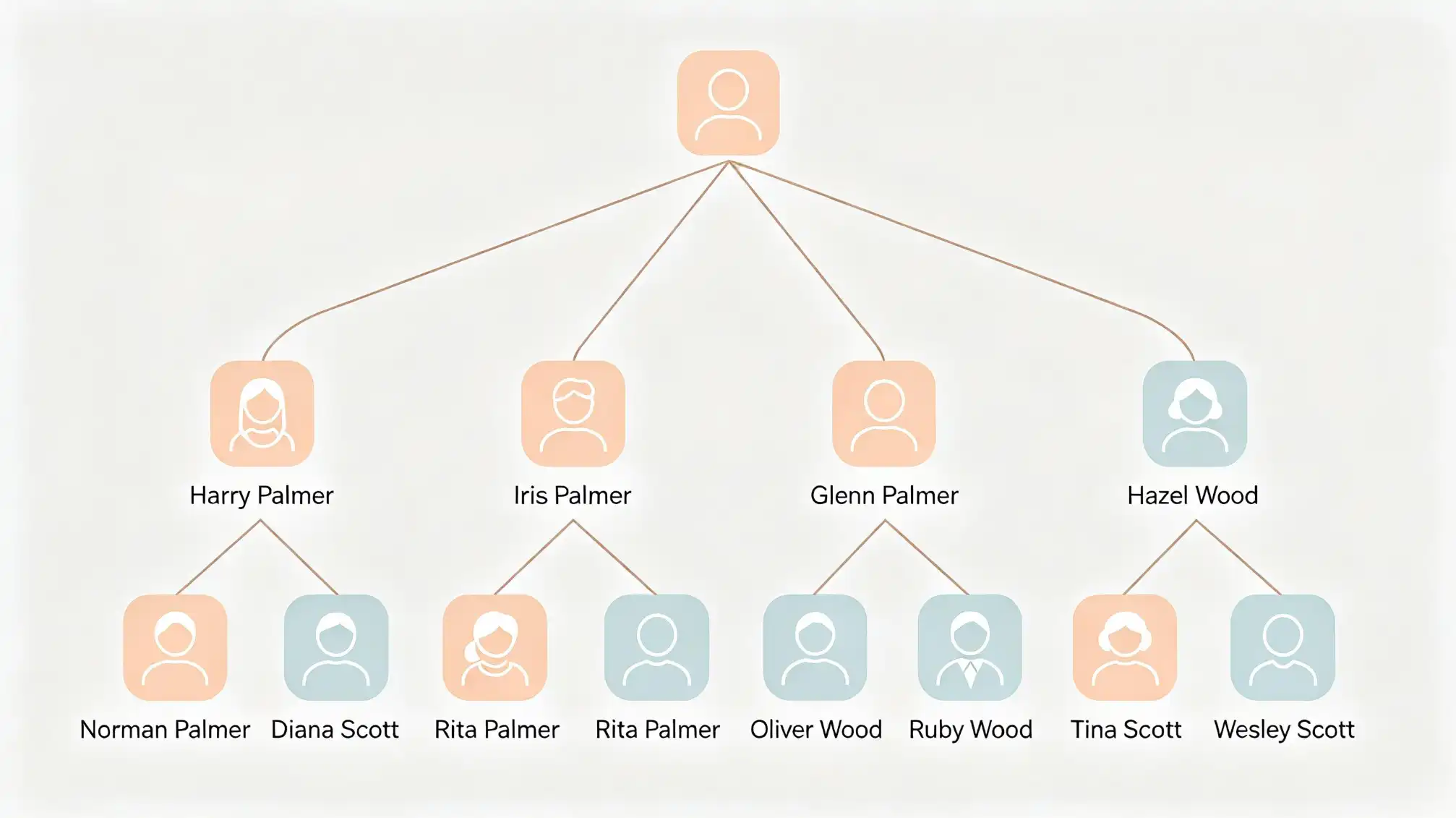
Why Paper Family Trees Fall Short
A paper family tree is limited in ways we do not always recognize at first. It reflects only what the creator knew at the time. When a new cousin shares a set of birth records, the chart is already outdated. When a grandmother remembers that a surname was spelled differently on a census form, editing the whole page becomes a chore. If you move, the chart folds awkwardly in a box. If there is a fire or a water leak, decades of work disappear.
Beyond these practical problems, paper charts never answer the follow-up question. You write down a great-grandfather's name, but there is no space for the ship manifest that proves he arrived in 1907. An online family tree gives each person a profile with attached sources, notes, photographs, and even audio recordings. The chart becomes a window into evidence rather than a simple visual summary.
The Practical Advantages of a Digital Approach
When you compare online family tree tools, the benefits cluster around five areas. Keeping these in mind will help you evaluate features rather than flashy interfaces.
1. Real-Time Collaboration
The biggest shift in modern genealogy is collaboration. An online family tree allows grandparents, parents, and grandchildren to work in the same place at the same time. A cousin in another city can fix a birth date while your aunt scans letters from the 1940s. There is no need to email file versions back and forth, and there is never a question of which chart is the most current. If your family is looking for meaningful ways to connect, a shared family tree is a natural starting point. At FamilyLove, the family connection hub offers ideas for turning shared history into conversations and traditions.
2. Automated Hints and Record Matching
Most genealogy platforms scan indexed historical records and suggest matches for people in your tree. Instead of searching rolls of microfilm, you click a hint, verify it against the evidence, and attach it as a source. This feature compresses years of archival research into a few weekends. It is especially helpful for beginners who do not yet know where parish records are stored or how military draft cards are indexed.
3. Preservation and Backup
Fire, flood, or simply a stranger's garage sale can destroy paper records forever. An online family tree stores your work in the cloud, and most platforms back up continuously. For the first time, your family's entire history exists independently of any single household. Even if every printed copy is lost, the digital version remains.
4. Privacy Controls
Comparing tools means looking at how each handles privacy. A strong platform lets you mark living relatives as private and limit what guests can see. Accounts for younger family members can be curated so they see photos and stories without access to sensitive information. The balance between openness and control should be one of your primary decision points.
5. Portability
Genealogy happens in many places. A reliable online family tree offers a mobile companion app, so you can capture stories at a family wake, scan a document at a grandparent's home, or check a birth date before you phone an archive. Offline access to key pages and the ability to upload photos directly from a phone are features worth comparing carefully.
What to Look for When Comparing Online Family Tree Tools
With those benefits in mind, your comparison process should focus on three structural elements rather than on decorative templates.
- Data ownership and export: Does the platform let you export your entire tree in a standard format like GEDCOM? If you ever switch providers, your work must come with you. Also review what happens to your data if you cancel the paid subscription. Some platforms switch you to read-only mode, while others promise permanent export rights.
- Source handling: The best tools treat sources as attachments tied to individual facts, not as a generic note in a sidebar. Look for the ability to upload PDFs, images, and clickable external links directly to a birth, marriage, or death event.
- Search depth: A platform's real value rests on the historical record collections it can search. Some tools excel at national censuses and military records. Others have deep regional collections, parish registers, or immigration papers. Pick a service that covers the specific regions where your family tree has roots.
Comparing Costs and Subscription Tiers
Pricing models vary significantly. Some genealogy platforms offer a free tree with limited storage, then charge for record access. Others charge a premium fee but include nearly all worldwide records. Before committing, map out the size of your family and the number of digital documents you expect to upload. A free tier might be enough for a small family tree of fifty people and a handful of photos. A larger, multi-generational project with thousands of records will quickly need a paid plan. Consider whether a monthly subscription or an annual plan better suits the pace of your research.
The Emotional Side of Documentation
An online family tree is more than a storage system. It is also a communication tool. When a younger generation reads the story of an ancestor who emigrated, served in a war, or survived a difficult winter, that name becomes a person. Many platforms allow you to write short biographies, attach video interviews, and mark important events on a shared timeline. In this way, the tree becomes a living family history journal rather than a dry directory.
This is the angle that separates a dynamic online family tree from a static chart. It is not merely a record of births and deaths. It is a working conversation between generations. The document is never finished. Each new discovery adds a branch, and each source deepens the story.
Making the Transition Without Losing the Past
Moving from paper to digital does not mean abandoning physical documents. Scan photographs at high resolution, record the names and dates written on the back of each image, and attach those scans as sources. Organize the work in stages: first import the basic names and dates, then add sources, and finally write short biographical stories for each generation. This sequencing prevents the process from feeling like an endless chore.