Building a family tree can feel like a sprawling, overwhelming project—especially when you imagine all the branches, generations, and distant relatives waiting to be discovered. But the secret to a successful family tree is not to start in the past. The smartest approach is to begin with the generation you already know: your parents and grandparents. They are the bridge between your everyday life and your deeper ancestry. In this guide, you will learn how to build a family tree with parents and grandparents as your anchors, turning scattered information into a clear, visual story you can pass down.
Why Parents and Grandparents Are the Perfect Starting Point
Your parents and grandparents are the easiest people to interview, verify, and connect. They hold living memory—dates, places, names, and stories that no archive can fully capture. When you place them at the base of your project, you create a reliable foundation. You do not need to guess about your great-grandparents yet. Instead, you build outward from known facts. This makes the process less intimidating and far more accurate.
Another advantage is that parents and grandparents can fill gaps in each other's stories. A name your father forgot, your grandfather might remember. A birthplace your mother is unsure about, your grandmother might recall with a story attached. These small cross-checks are your first quality-control system.
Gathering the Raw Materials Before You Draw
Before you open a blank template or write down a single name, collect what is already around you. Look for:
- Birth, marriage, and death certificates
- Old family photographs with names on the back
- Religious records, military documents, or passports
- Letters, diary entries, or newspaper clippings
- Phone numbers and addresses of relatives who can verify a fact
Keep these in a single folder, physical or digital. You can even take photos of paper documents. The goal is not perfection; it is to have enough material to start asking the right questions.
Interviewing the Living Generations First
A family tree is more than a list of names. It is a web of relationships, and the people who carry those relationships are your best sources. Set up a short conversation with your parents and grandparents. Ask open-ended questions like:
- “Who were your parents, and where did they grow up?”
- “What do you remember about your grandparents?”
- “What is the earliest family name you can recall?”
- “Do you know any family stories about moving to a new town or country?”
Record the conversation with permission, or take detailed notes. These interviews will become the skeleton of your tree. They also make the process personal. You are not just collecting data; you are preserving voices.
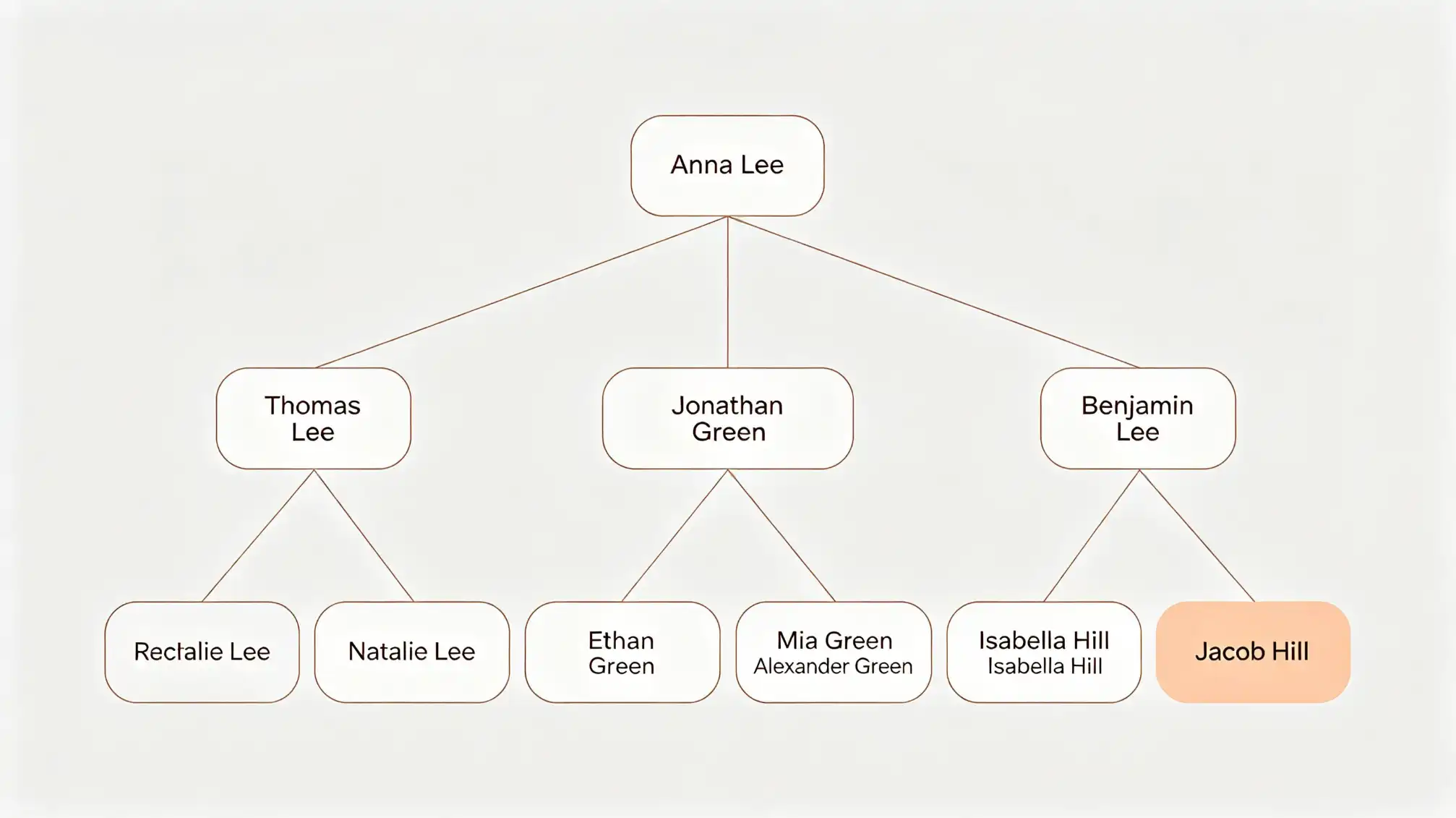
Create a Simple Two-Generation Core
Now that you have recorded the basics, sit down and create the core. On the first line, place yourself and any siblings. Above that line, place your parents. Above them, place your four grandparents. This is the classic “parents and grandparents” launch pad. It gives you a direct visual of the seven people who form your closest family structure.
For each person, fill in four fields:
- Full legal name (including maiden names)
- Date and place of birth
- Date and place of marriage (if applicable)
- Date and place of death (if applicable)
Do not worry if you leave blanks. A blank cell is simply a clue for your next interview or archive search. The act of writing down what you know will reveal exactly what you still need.
Branch Out to Relatives and Extended Family
Once your two-generation core feels solid, start adding siblings of your parents and grandparents. These are your aunts, uncles, and great-aunts. Adding them immediately shows how your tree begins to widen. Relatives are not just side notes; they are the connective tissue that can link you to marriage lines, cousins, and even unexpected family names.
When you add a relative, always note how they connect to the core. For example, instead of simply adding “Uncle John,” write “John Michael Anderson, brother of Martha Anderson (your grandmother).” This habit keeps your sources clear and prevents confusion later.
Move Up Toward Ancestors One Generation at a Time
Your grandparents are the doorway to your ancestors. Once you have confirmed their parents—your great-grandparents—you can safely step into the past. Avoid skipping generations. If you do not know a great-grandparent's full name, ask your grandparents or check census records. Taking it one step at a time preserves accuracy.
As you move inward and upward, you will start noticing patterns: the same first names appearing across generations, a consistent region of origin, or a family occupation that repeated. These patterns make your ancestor list feel alive.
Use the Family Hub to Keep Everyone Engaged
A family tree grows faster when other people can contribute. You can use the family hub on Family Love to organize names, birthdays, and contact details for your living relatives. Share your early findings and invite them to correct or add details. Not only does this make your research better, but it also reconnects people with each other.
This kind of collaboration turns a solo hobby into a shared family project. When everyone feels ownership, the tree becomes a living document rather than a dusty chart.
Maintain Your Tree with Simple Habits
Accuracy matters more than speed. Develop a habit of adding the source next to every fact. A simple note like “birth certificate, 1952” or “interview with grandmother, March 2025” will save you from confusion later. Set a monthly reminder to review your tree and add any new details you have learned.
Digital tools make this easier. Spreadsheets, dedicated genealogy software, and online family tree templates all allow you to attach documents and photos. Pick one that feels intuitive. The best tool is the one you will continue using.