Why a Life Story Is the Missing Branch on Your Family Tree
When a family tree is hung on the wall, it is usually a clean, ordered chart. Names and dates, birth and death, marriage lines connecting one generation to the next. At first glance, it looks complete. But look closer and you will notice something quiet and important missing: the person behind each name. A life story fills that gap. It turns a genealogical chart into a record of real, breathing human beings. For anyone who is just beginning to explore a family member's life, understanding this distinction is the first meaningful step.
Why a Name in a Chart Carries Only a Sliver of Your Family History
Genealogy is built on facts. Census entries, baptismal records, passenger lists, marriage certificates. These documents give you the architecture of a life: a date of birth, a place of residence, a set of relationships. As a beginner, you may find it thrilling to connect those dots, and rightly so. Each new record feels like unlocking a small piece of your lineage.
Yet the facts can only tell a partial truth. Your great-grandmother's name might appear in a 1910 census as a housewife. That is a fact. But it will never tell you that she arrived in a new country at age fifteen, unable to speak the language and carrying only a single suitcase. The census will not tell you about the lullaby she sang to her children, or the letter she kept under her mattress for fifty years. Those things belong to the realm of life story, not statistics.
When you move from the narrow data of a family tree to the wider terrain of personal narrative, you begin to understand your ancestors not as distant figures but as complex individuals. You may even discover that the choices they made, the fears they carried, and the hopes they held are still echoing in your own habits and instincts. That discovery is one of the deepest rewards of this work.
The Life Story as a Bridge Between Ancestry and Identity
Family history often starts with ancestry. You want to know where you came from. Ethnic backgrounds, migration routes, historical events. This is important, but it covers only half of the journey. The other half is identity: how your family has shaped who you are today. A life story is the bridge between these two territories.
Consider an ancestor who was a blacksmith in a small village. Your family tree may list him in a church register. But it is his life story, discovered through a descendant's letter or an old journal, that reveals the strength of his arms, the patience he taught his son, and the way his profession shaped the family's reputation in the community. That awareness gives you an emotional connection to your family history that a list of dates never could.
For beginners, the good news is that you do not need to be a historian to capture this. You already have access to the most important source: living family members. Their memories are the raw material from which a genuine life story is made.
The Listening Gift: Why Recording a Life Story Changes Both People in the Conversation
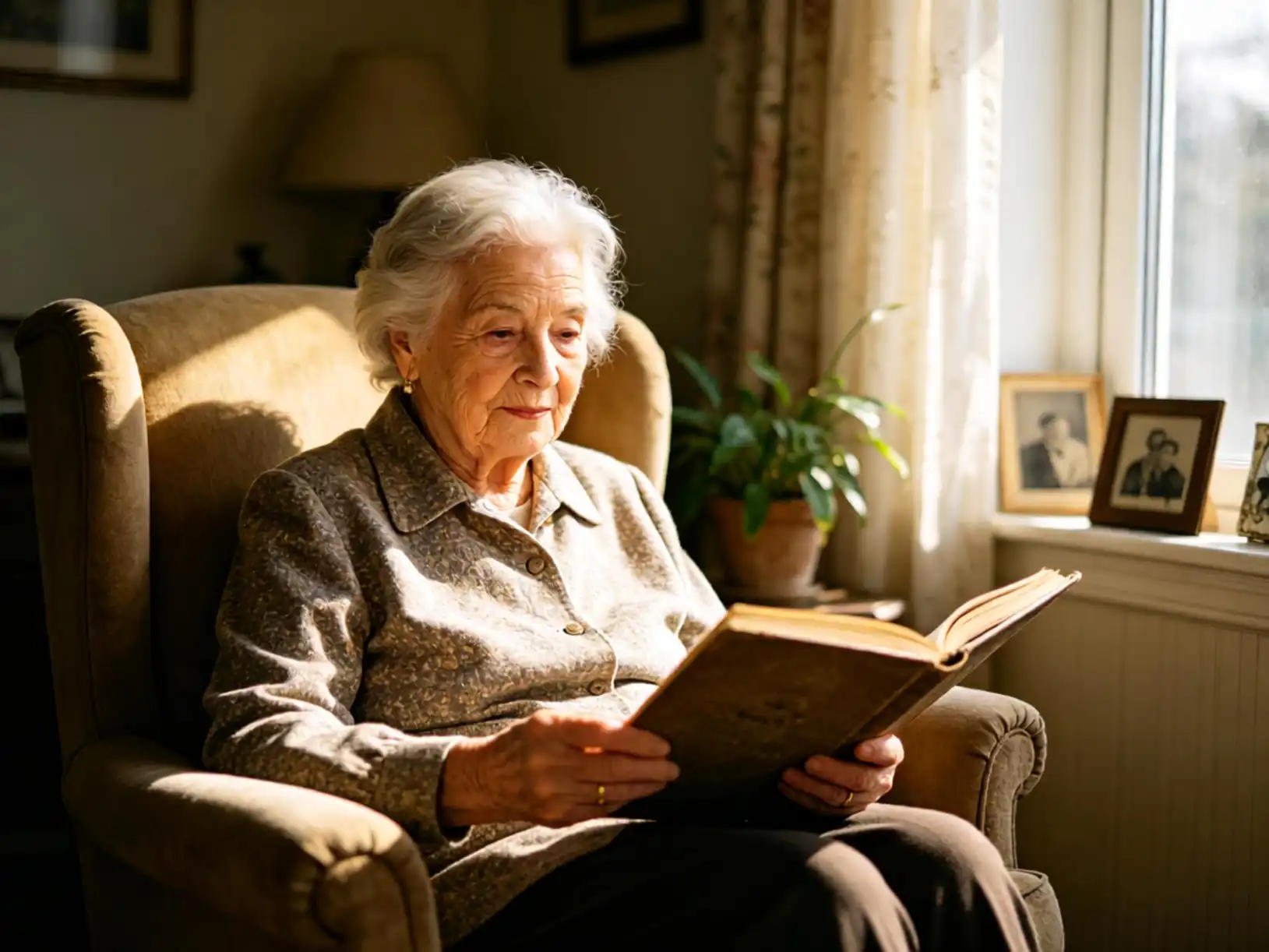
One of the gentlest reasons recording a life story matters is the effect it has on the storyteller. Older relatives often feel overlooked. The world rushes past them, and no one seems interested in the decades they carry. When you sit down with a recording app, a notebook, and a mind that is genuinely curious, you are saying something without words: your life matters to me.
This kind of attention is rare. During the interview, you may notice a relative's posture change, their voice soften, their eyes brighten as they remember a childhood rooftop or a first encounter with the sea. These moments matter in a way that goes beyond genealogy. You are building a relationship that will shape the final phase of their life and the foundation of your own memories of them.
There are also practical benefits. A life story often includes details that can lead to new genealogical discoveries. A mention of an uncle who ran a corner store could point you to city directories. A story about a mother who worked in a textile mill could guide you to old business registries. Recording personal history is not only an act of love; it is also a powerful research strategy.
How to Begin: Practical Steps for First-Time Memory Keepers
If you are a beginner, the prospect of recording a whole life can feel intimidating. You do not need a professional studio or a list of two hundred questions. You just need willingness. Start small and slow.
Choose a comfortable setting, preferably the relative's own home if that feels safe to them. Bring your phone or a simple audio recorder. Sit beside them rather than across a table, because the conversation should feel natural, not like an interview. Begin with a broad invitation: "Tell me about the earliest thing you can remember." Then let the story unfold without interruption. Your role is not to guide, but to listen.
If the silence gathers too long or the conversation stalls, keep a few prompts nearby. Favorite childhood games, the first day of school, the smell of a grandmother's kitchen, the journey to a first job, the day they met their spouse, the hardest season of their life, the proudest moment. These are not script lines; they are doorways. The real story lives in the rooms behind them.
From Recording to Family Tree: Weaving Personality into Genealogy
Once you have a recording, do not let it sit as a solitary file on your phone. Bring it back into your family history work. Write a short profile for each person you interviewed. Attach the timeline of their life to the family tree you are building. Include a favorite quote beside the list of their vital dates. These small acts transform your genealogy into a living record.
You can also inspire other branches of the family. Share a segment of an interview at the next family reunion or in a private online group. Encourage a cousin to ask their own questions to the same relative. One conversation tends to unlock another. Over time, you will develop a layered portrait of your family that no single document could offer.
If you are looking for more structured ways to connect these conversations to family bonds, the family section of FamilyLove offers further ideas and reflection points that can enrich your approach. The work of recording a life story is always easier when you know you belong to a larger community of families doing the same thing.
Preserving Your Own Place in the Chain
Recording the life story of an older relative is a gift they receive now and future generations receive later. But there is another story you are responsible for: your own. If you want your descendants to understand their roots, they will need to know who you were, not just what you did. Keep a simple journal on your own or set aside a few minutes each month to record a voice memo about the season you are living through.
This might feel strange at first. It will not feel strange to the people who come after you. They will read your words the way you now read the recollections of your grandparents. The practice of preserving a life story is not a task for a single afternoon. It is a set of small, deliberate actions stretched across a lifetime, each one fitting into the larger architecture of your family history.
The Quiet Power of a Story That Was Almost Lost
Some of the most moving stories in any family are the ones that almost collapsed into silence. The story a grandmother refused to tell for decades. The story a great-uncle mentioned only once, in passing. The story that no one recorded because everyone assumed someone else would handle it. You have the chance, right now, to make sure that does not happen again.
Recording a person's life story does not require impossible effort. It requires a phone, a question, and the wisdom to listen without hurry. Every time you capture a moment of memory, you are adding a branch to the family tree that no archive could ever grow. That is why this work matters. It is not about perfecting a document. It is about honoring a person who once lived, and in the telling, keeping them alive for everyone who will come after.